Advertisement
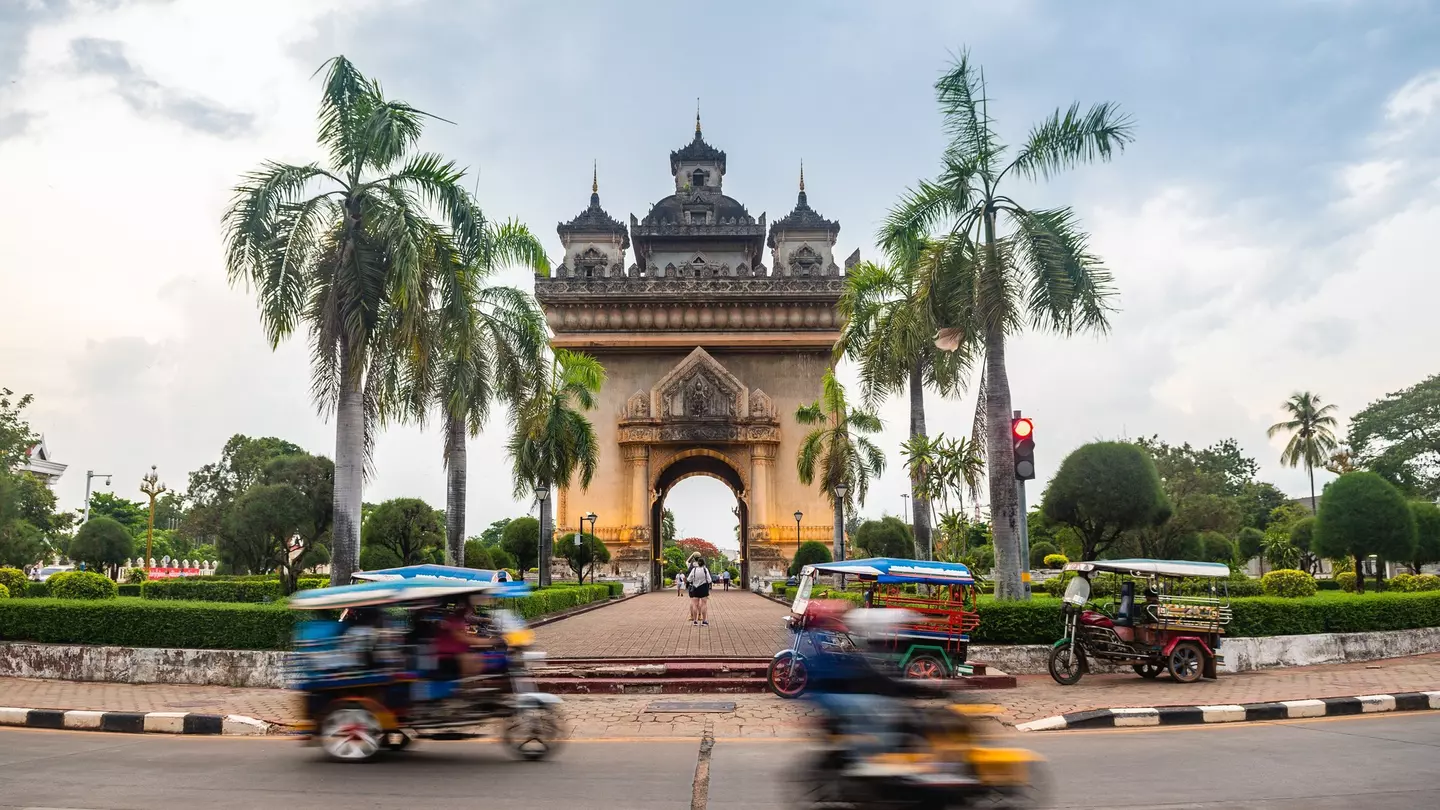
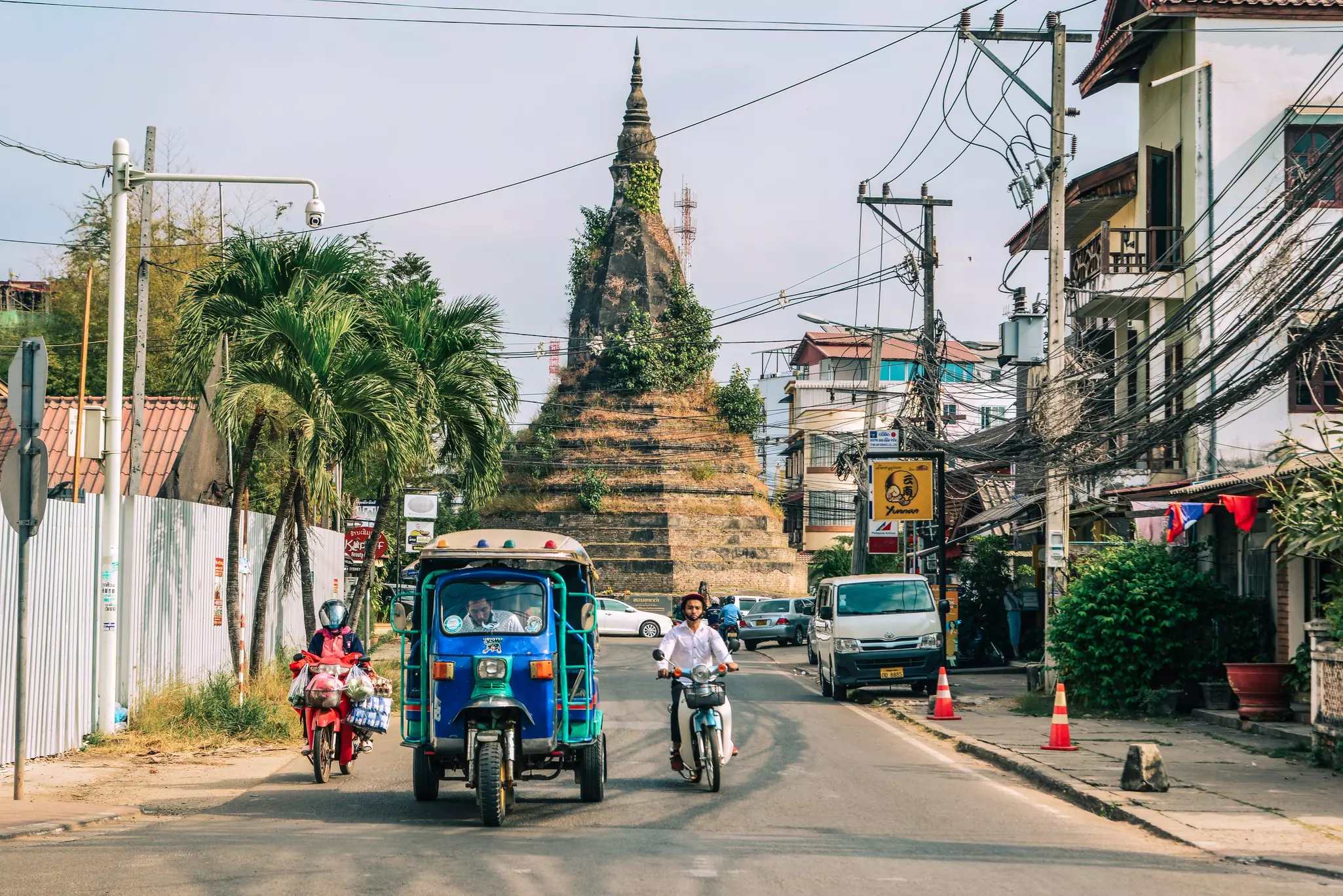
Tuk-tuks pass the Patuxai monument in central Vientiane, Laos. Jon Chica/Shutterstock
On the banks of the mighty Mekong River, Vientiane, Laos, stands out among its fellow Southeast Asian capital cities. For unlike the traffic-choked, action-packed metropolises of Bangkok and Hanoi, Vientiane is decidedly on the sleepy side.
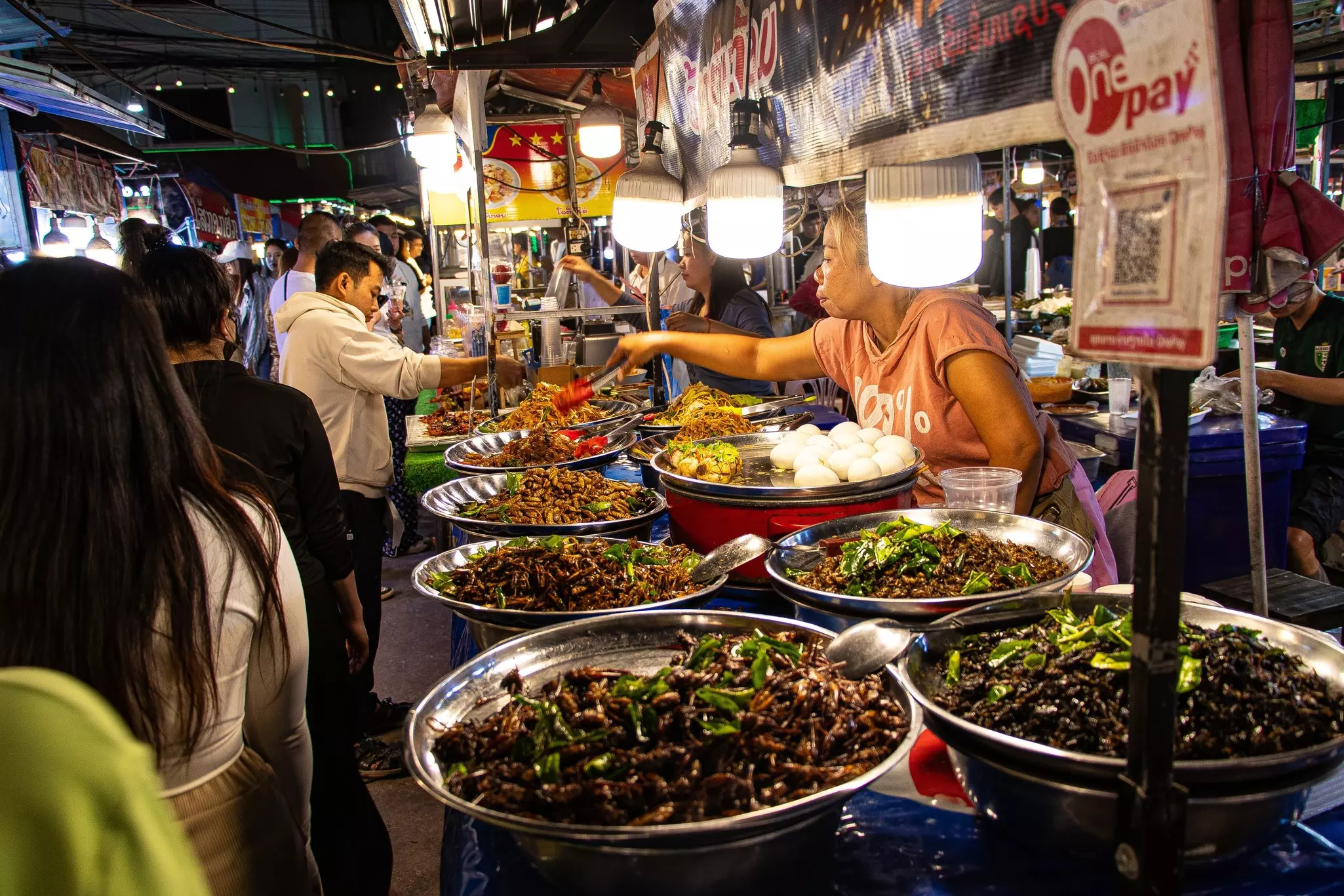
For many, its appeal lies in quiet mornings spent by guesthouse pools to escape the heat, before things get going later in the day. By dusk, vendors begin setting up food stalls and booths at markets, riverside bars and restaurants turn up the music, and retro-style carnivals open up their gates.
Rather than treat Vientiane as merely the gateway to Laos and its range of wonders, we recommend spending a few days in the city to understand its rhythms, getting beyond its top (and admittedly can’t-miss) attractions. With impressive museums opening up and lesser-known outdoor activities found a short distance from the city, it’s worth doing a bit of research to discover what the city offers, beyond the usual recommendations.
Advertisement
Here’s all you need to know before your first visit to Vientiane, Laos.
When should I go to Vientiane?
The best time to visit Vientiane is during the dry season, from November to February, when temperatures are most bearable. April and May are the hottest months, while the rainfall in July and August brings some much-needed relief from the scorching heat. While they can be torrential, showers usually only last for an hour or two – so either embrace the rain or dart into a coffee shop to wait it out.
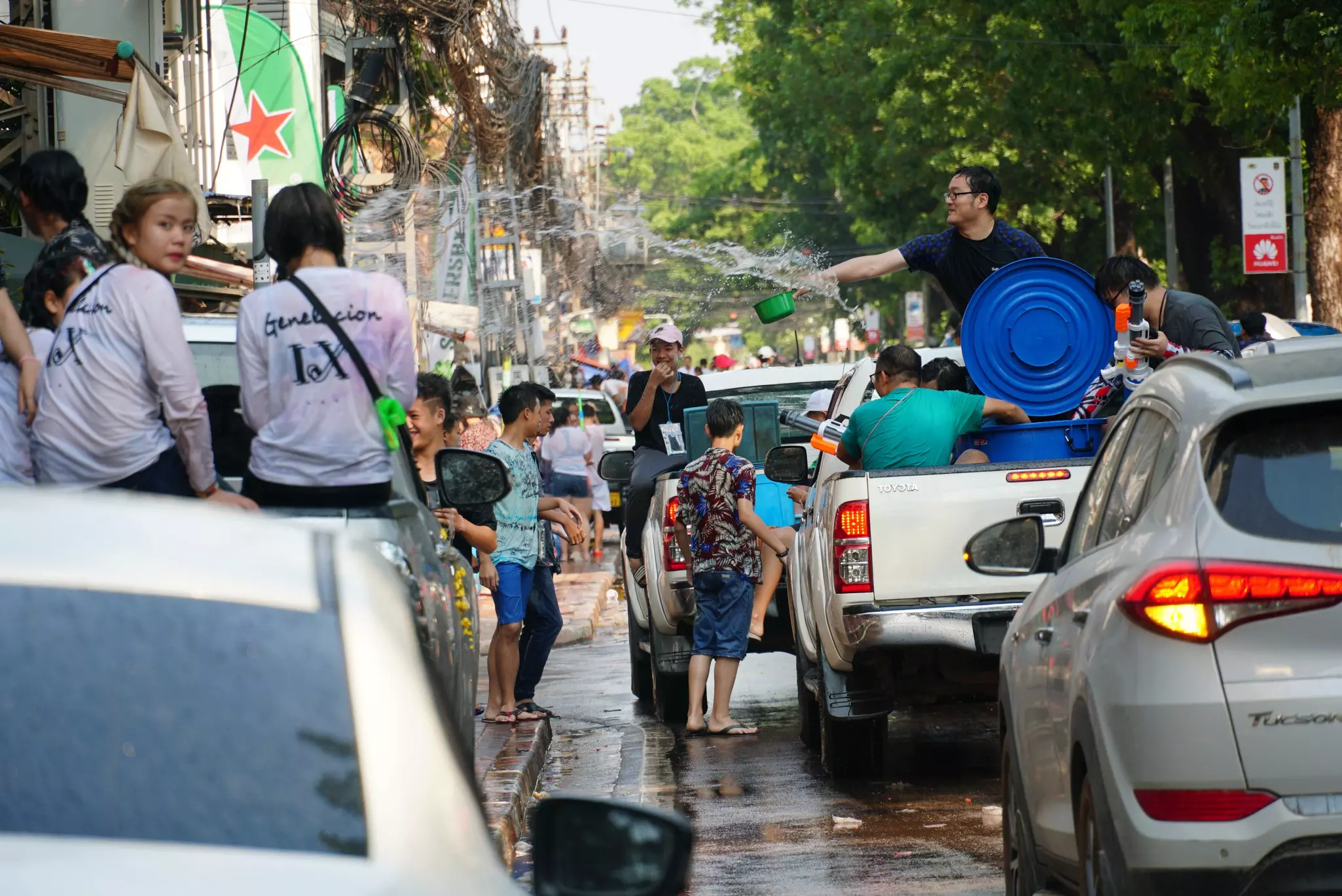
Major festivals are scattered throughout the year. The Lao New Year (also known as the Pi Mai Lao), with its water-fueled revelry, falls in mid-April; the Dragon Boat Festival in October; and the Buddhist That Luang Festival in November.
How much time should I spend in Vientiane?
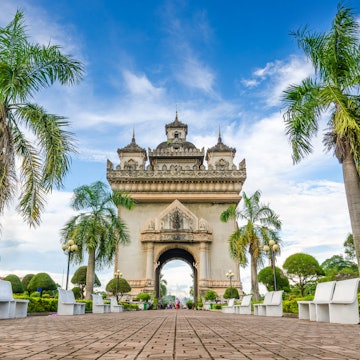
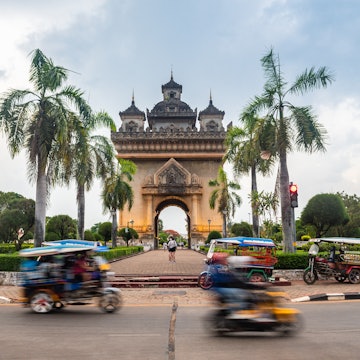
If you’re flying into and/or out of Laos, you’re almost certain to travel via Vientiane. Adding 2 days to a longer Laos itinerary will give you an introduction to the city, with enough time to visit temples, nightly food markets, Buddha Park, the Arc de Triomphe–esque Patuxai monument and an art museum or two. An additional 2 days – perhaps tacked on to the tail end of your trip – will bring you beyond the usual tourism spots. Think islands a short boat ride from the city, or outdoor activities a quick drive away. La Forêt, for example, is an immersive nature experience that offers canopy walks, zip-lines, and a 21m-high Treehouse Cafe – all just 20 minutes from Vientiane’s center.
Is it easy to get in and around Vientiane?
Yes. From Wattay International Airport, bus number 44 (the “green bus”) will whisk you to the center of town in 30 minutes, for 40,000 kip. Airport taxis have fixed rates for in-town transfers, beginning at 57,000K for a sedan.
In town, you can find tuk-tuks on almost every corner. The Kokkok Move app is a great way to arrange tuk-tuks – though unlike typical fixed-price rideshares, you’ll negotiate and agree upon a price in the app, before you book the ride. Similarly, inDrive lets you agree upon a price with drivers of motorcycles and cars. The LOCA app offers motorcycle and other types of taxis, at a bit of a premium, as their taxis have fixed fares.
Advertisement
If you’re planning on taking Laos’ new high-speed railway, which traverses the country from Vientiane to the border with China in the north, we recommend downloading the LCR Ticket app (for iOS and Android) to get tickets in the form of a QR code. Starting from Vientiane, the train is a fast and inexpensive way to reach major cities like Vang Vieng and Luang Prabang, with the route ending at the border with China. Note that seats can only be purchased 3 days in advance, and sell out fast – so plan accordingly.
Also note that the travel apps above require a Laos phone number and a Lao Telecom or Unitel SIM card, available at the kiosks at the airport.
Top things to do in Vientiane
Say a prayer at Pha That Luang
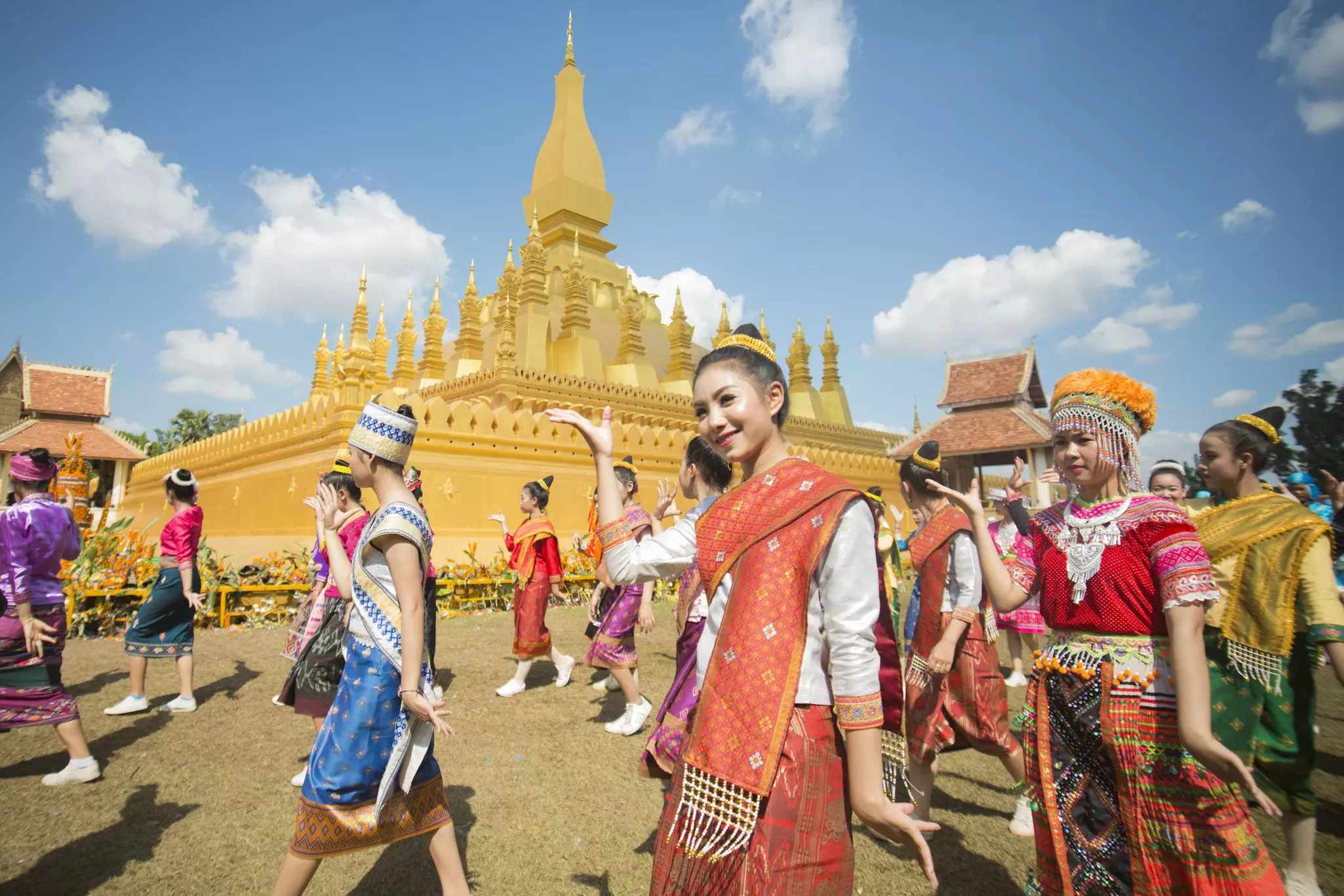
Built in the mid-16th century, Pha That Luang is one of the most historically significant monuments in all of Laos. The temple is unmissable in downtown Vientiane, thanks to its 150ft-tall Grand Stupa, which is covered in gold leaf; the centerpiece of its grounds is a golden reclining Buddha. It’s best to visit Pha That Luang in the early morning, as you won’t find much shade here – though you can take cover in the buildings as you admire the multiple ancient statues on display.
If you’re in town in November, you’re in luck: one of Vientiane’s largest and most important religious ceremonies, the Boun That Luang Festival, takes place then, with live music, traditional dances and lively parades.
Escape to the island of Don Xing Xou
Just a short boat ride from the center of town, the tranquil island of Don Xing Xou offers a getaway of which few visitors are aware. After hopping on the boat at Kao Liao Boat Pier on the Mekong, you’ll alight on the island to spend a morning walking down calming paths and past verdant gardens. Don’t miss the seven-headed naga statue, before ending your trip at the island’s highlight, the temple of Wat Phayanak.
Greet the monks at Wat Si Saket
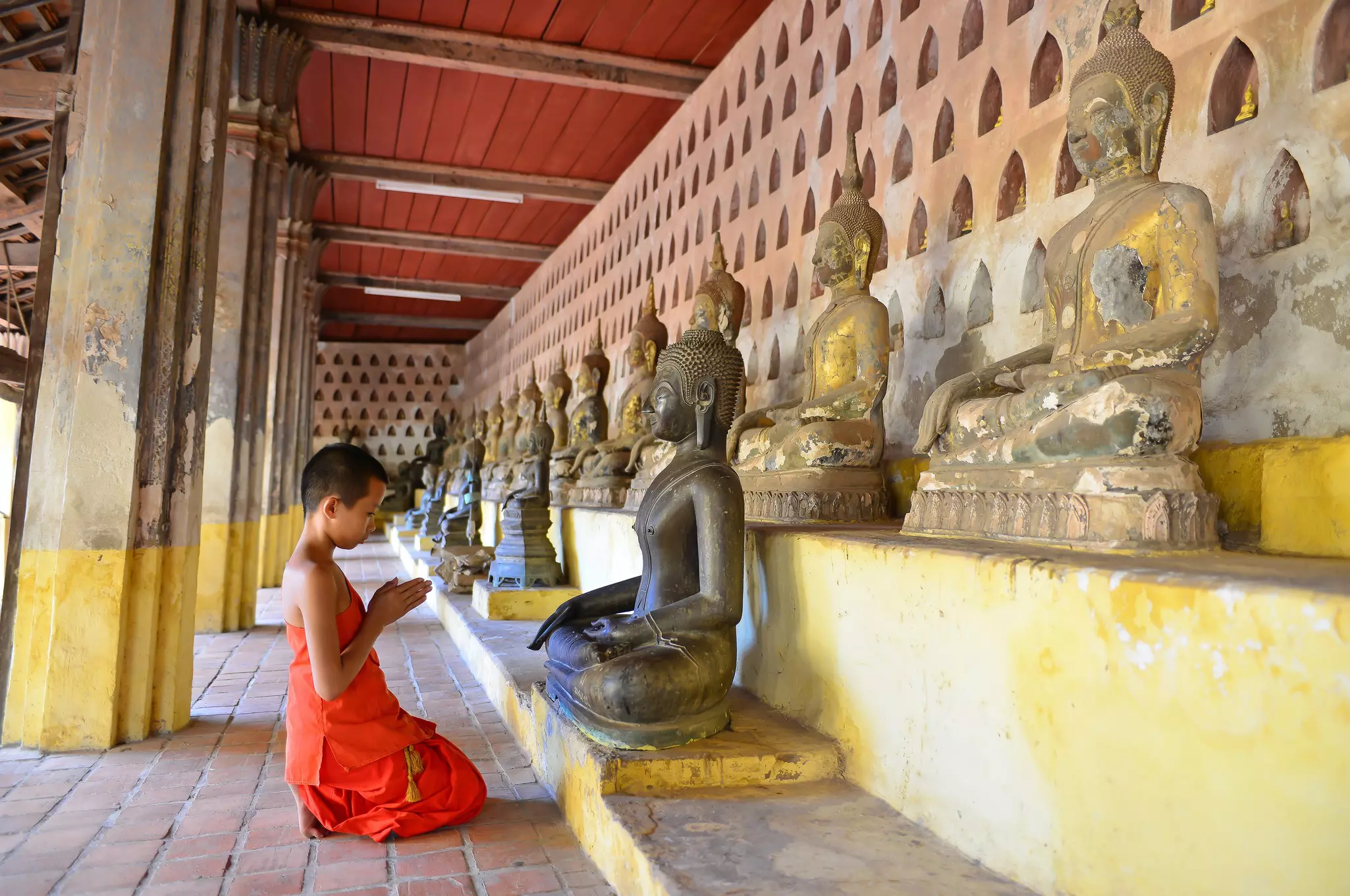
Near the Presidential Palace, the temple-monastery of Wat Si Saket dates to the 19th century. Mornings are the best time to visit, when locals come to pay their respects and salute the monks. The most impressive temple in the complex has a wall with thousands of small buddhas set in triangle-shaped niches; hundreds of sitting larger buddhas can be found out front, as can a collection of paintings and Buddhist texts. Indeed, the temple is officially known as Wat Satasahatsaham, or the “Temple of over 10,000 Buddhas” – and is said to house nearly 7000 today.
Take in the sculptures of Buddha Park
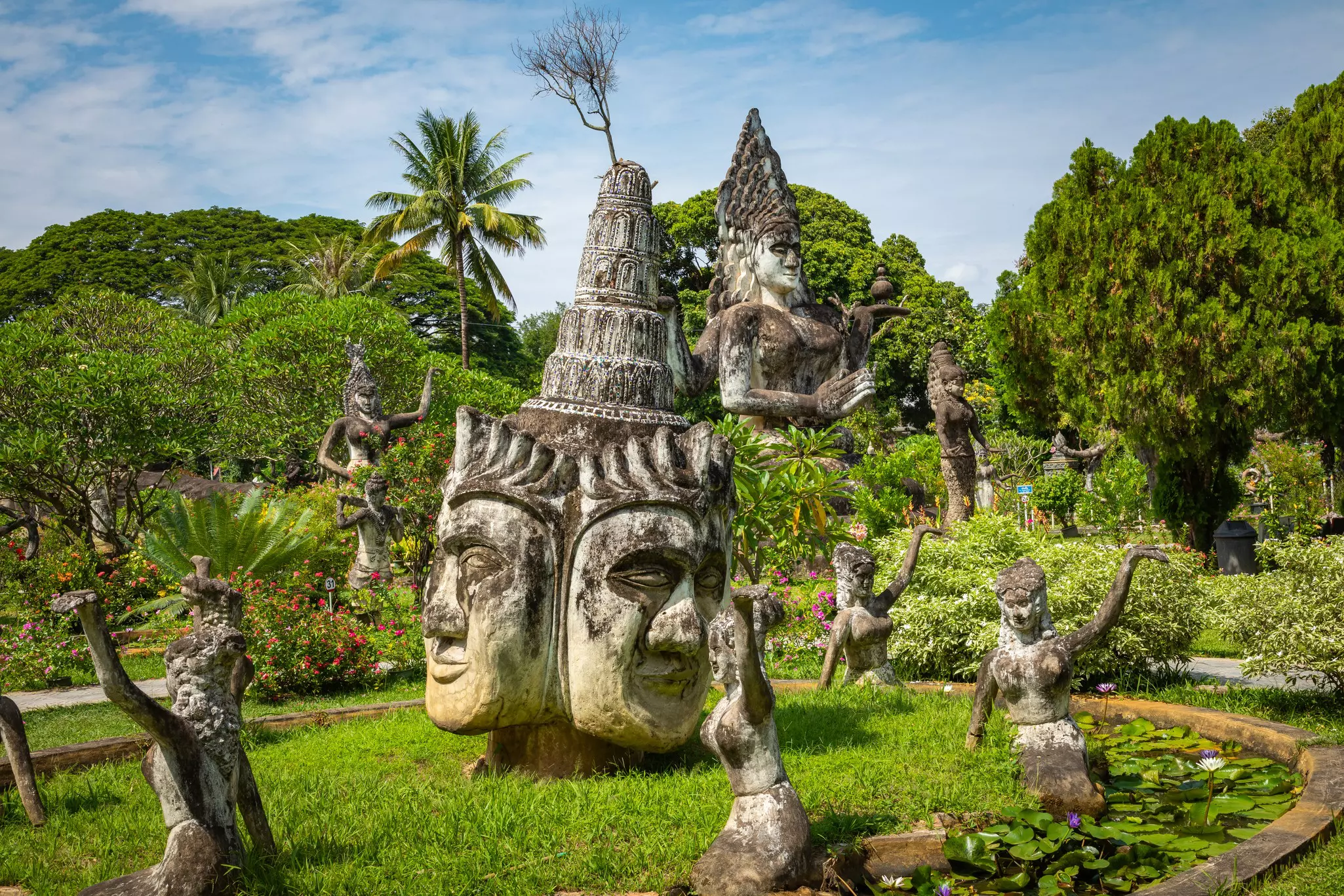
Part sculpture garden, part amusement park, Xieng Khuan (or Buddha Park), 25km from the center city, is well worth the trip. Founded by a monk in the 1950s, the park has grown over the years, and today contains more than 200 statues, from giant reclining Buddhas to Hindu deities. One of the quirkiest sculptures is a pumpkin-like structure that visitors can enter through a small hole that resembles a demon’s mouth. On several interior levels, you’ll see artwork and sculptures symbolizing earth, heaven and hell. After climbing a small staircase, you’ll emerge on a small platform offering a panoramic view of the entire park.
It’s easy to get to Xieng Khuan via well-advertised tuk-tuk tours, which run about US$15.
My favorite thing to do in Vientiane
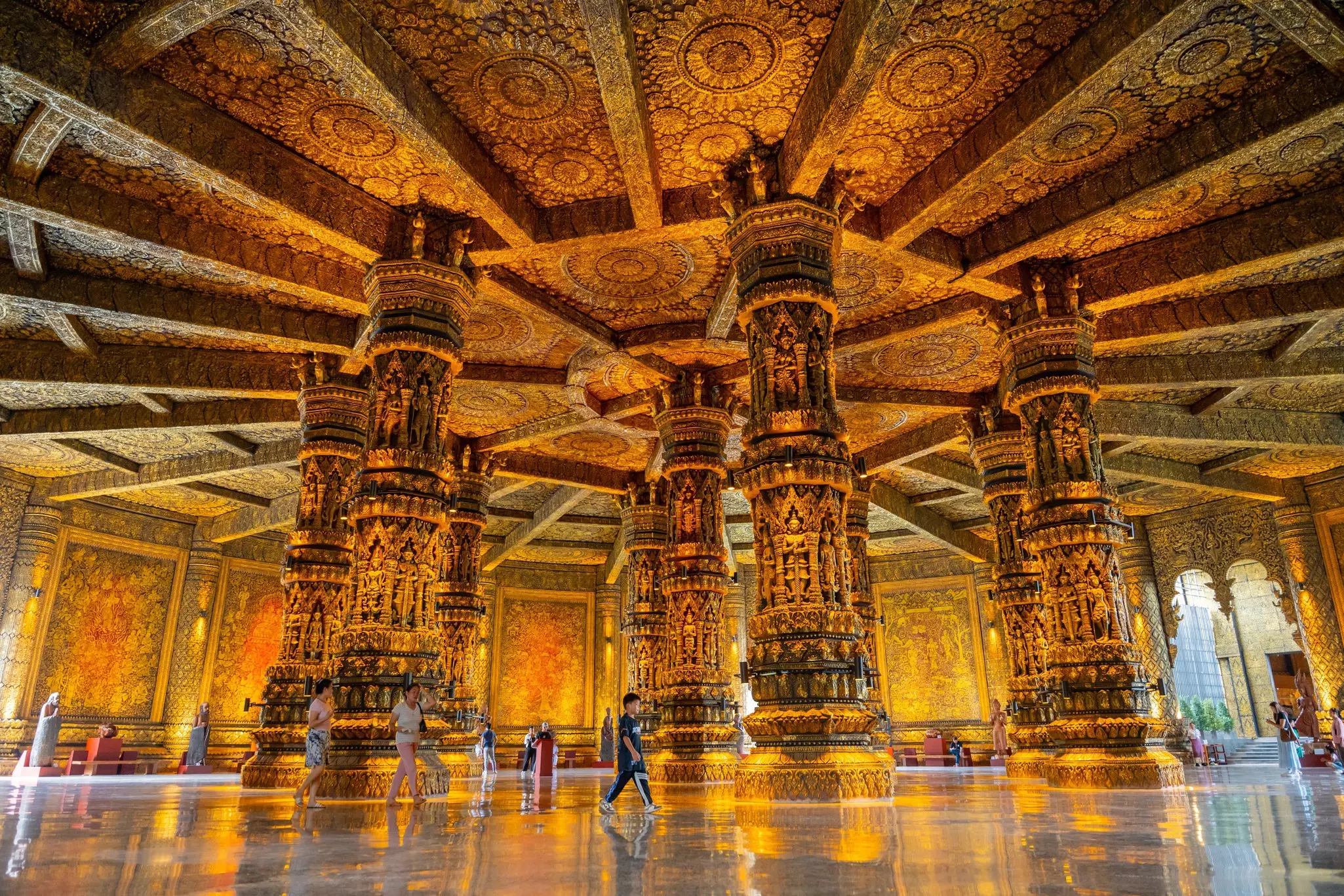
Some 20km from the central riverside area, the recently opened Lao Art Museum provides a great introduction to the country’s traditional art, in particular beautifully handcrafted woodwork. The outside of the building features massive wooden columns and is surrounded by serene gardens. Yet it’s the interior that truly dazzles.
The grand, gilded main hall amazes with its high-vaulted ceilings; ornately painted, wood-paneled walls; and intricately carved columns. The stars of the surrounding exhibition galleries are traditional Lao woodcarvings; sculptures, paintings, lacquerware and Buddha statues are also on display. While wall texts and other information about the art on view are sparse (improvements are reportedly underway), the effect of such brilliant craftsmanship is powerful indeed, and well worth the trip out of town.
How much money do I need in Vientiane?
While a handful of newer cafes, hotels and shops accept international card payments, you should expect to pay for most things in Lao kip. Cash always works, but these days QR payments via app are common, even for small street vendors, tuk-tuks and night-market stalls.
Popular payment apps include EzyKip and LOCA Pay. The former is a favorite among travelers, since it doesn’t charge transaction fees, only a small top-up fee when loading funds from your credit card. Since kip is almost impossible to exchange into another currency after leaving the country, you can transfer any leftover EzyKip balance back to your international card just before you leave.
If you need cash, keep in mind that most ATMs charge a 30,000K fee, and often have low maximum-withdrawal amounts. BCEL ATM withdrawals top out at 2,000,000K per day, for example.
Hostel with basic breakfast: 130,000–220,000K per night
Basic room for two: 545,000–980,000K per night
Room for two at an upscale hotel: 2,000,000K–3,800,000K per night
Americano iced coffee: 30,000K
A pint of IPA beer from Kating Craft Beer Brewery: 60,000K
Large bottle of Beer Lao: 24,000K
Lao khao soi soup at Ban Anou Night Market: 40,000K
Admission to Lao Art Museum (for foreigners): 320,000K
Arrange your Laos visa and immigration paperwork in advance
Whether you arrive in Vientiane at the airport or over the Thai-Lao Friendship Bridge, you’ll need to obtain a visa on arrival, or have applied in advance for a Laos eVisa. To ensure everything goes smoothly, we recommend the eVisa, which costs $50 USD for most eligible nationalities. If you prefer the visa on arrival, you’ll need to make sure you have two passport photos, an onward flight ticket, proof of sufficient funds (the meaning of “sufficient” is up to the border officer), and crisp new bills (in exact change) to pay the US$40 fee. To speed up the process, you should also fill out the Lao digital immigration card ahead of time – at least 5 days prior to your arrival.
Advertisement