Advertisement
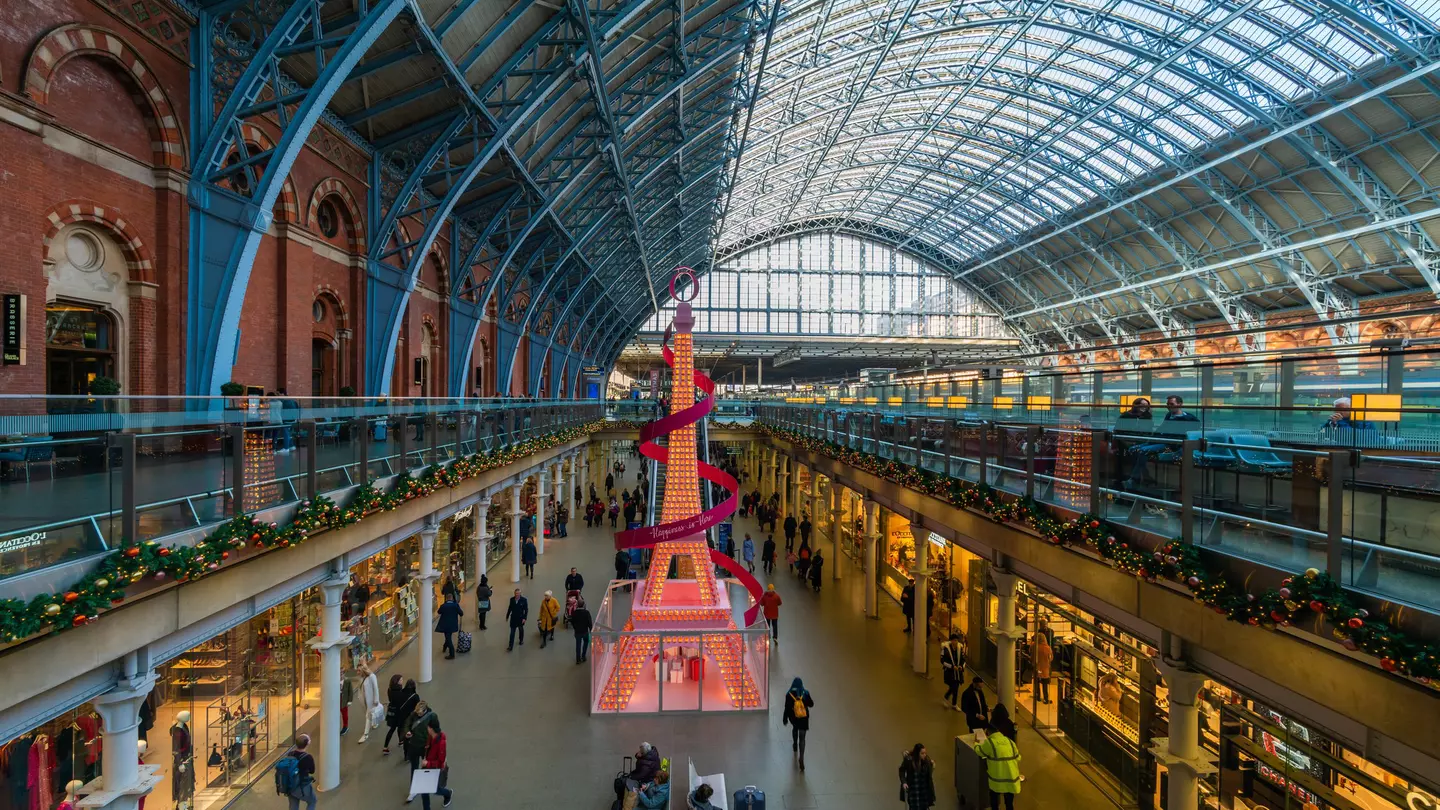
Catch the Eurostar from London's St Pancras International station. BBA Photography/Shutterstock
It’s been over 30 years since the Eurostar first connected Great Britain to mainland Europe via the Channel Tunnel – and even after multiple economic crises, the drama of Brexit and new visa requirements, passenger numbers continue to hover near all-time highs.
What explains such success? Convenience, comfort and speed all play their part. It's a thrill to be whisked between the city centers of thriving European capitals in a matter of hours. Plus, the fact that you can travel from Britain to Europe without getting on a plane saves you time and money otherwise spent getting to and from airports (not to mention carbon miles).
From check-in times to whether to BYO food and drinks on board, here’s everything you need to know if you’re traveling on the Eurostar.
Which destinations can I travel to with Eurostar?
Eurostar train services operates directly between London and Paris, Brussels, and Amsterdam, with stops in Lille and Rotterdam along the way. Connecting services then continue on to other destination in Belgium, France, Germany and the Netherlands such as Marseille and Ghent.
How long does the Eurostar take?
A Eurostar trip between London and Paris takes about 2.5 hours. Count on 2 hours for trips between London and Brussels, and just 1 hour 20 minutes between Paris and Brussels. Add about 2.25 hours to reach Amsterdam from Brussels (or vice versa).
Which railway stations does Eurostar serve?
In London, you take the Eurostar from St Pancras International, directly next to King’s Cross Station. The station is well served by public transportation, and you’ll find dozens of places to eat and drink before you board, whether inside the ornate terminal itself or nearby at Coal Drops Yard (just north of the station).
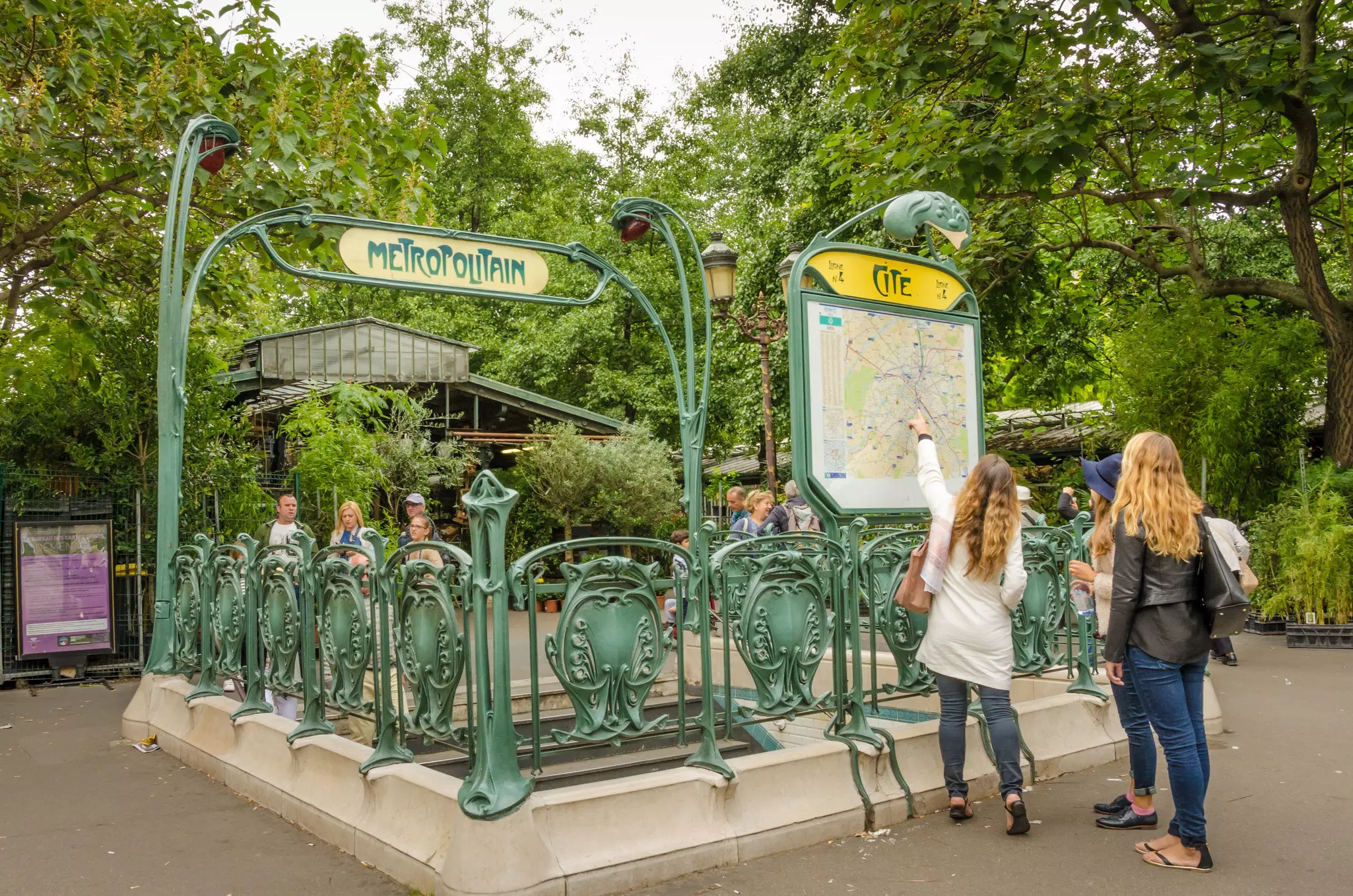
In Paris, the train departs from Gare du Nord, located in the 10th arrondissement, from which it’s easy to continue onward in the city by metro or bus.
Note that the queues to purchase metro tickets at Gare du Nord are notoriously long – beat them by purchasing a 10-ticket carnet aboard the Eurostar (in the cafe car). We should also point out that pickpockets and scam artists are usually at work at this international hub; hold your belongings tight and don’t get distracted as you move through and away from the station.
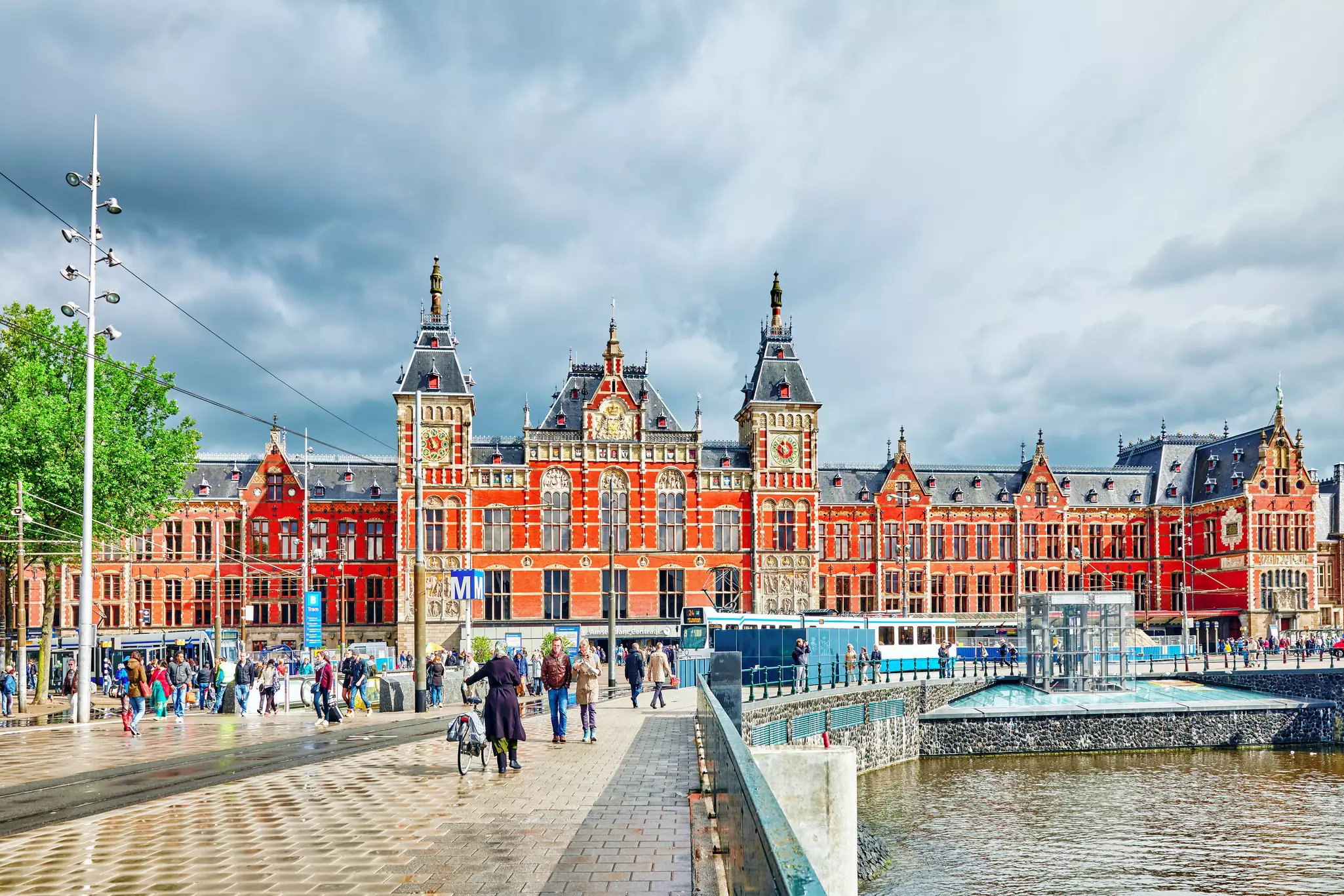
When catching the Eurostar from Amsterdam Centraal, follow the signs to the UK Terminal, which lies somewhat apart from the other platforms. The area around the station is busy, so keep your wits about you – and be sure to look out for trams and cyclists, who the have right of way no matter what.
At Brussels‘ Midi Station, you may notice a police presence due to heightened security in Europe. The station area is fairly safe, but it can feel less so after dark when fewer people are around.
The smaller cities of Lille, Antwerp and Rotterdam have train stations smack in the city center, with shops, cafes and sights nearby. Public transport is easy to navigate; these are also very walkable cities (if you’re not carrying a lot of luggage, that is).
Top tip: Be sure to stock up on provisions before you go through passport control as choices are limited to nonexistent once you enter.
What can I take on board the Eurostar?
Each Eurostar passenger can bring aboard two bags, each up to 85cm/33.5" long (75cm/30" for non-London routes), plus one piece of hand luggage. There’s no weight limit – but you do need to be able to lift your bags onto the train and potentially up to the rack above your seat. Luggage-storage space at the end of each car (shared by all passengers) lets you stow larger items.
The best bit of traveling by a high-speed train compared to flying: there are no restrictions on liquids. You can take all the cosmetics and bottled water you like (note that there is nowhere to refill water on board so bringing plenty of water is a must).
If you’re up for a tipple, you can take one bottle of wine or bubbly or up to four cans of beer on board – except during certain major events, but you’ll get notified before you travel if that’s the case.

Lonely planet’s trusted travel insurance provider
Travel with confidence. Protect your trip and your wallet.
We don’t represent World Nomads, we receive a fee from quotes using this link. This is not a recommendation to buy travel insurance.
Planning tip: We recommend stowing your luggage close to you on the train. On-board announcements sometimes advise this, as thieves have been known to lighten the train’s load.
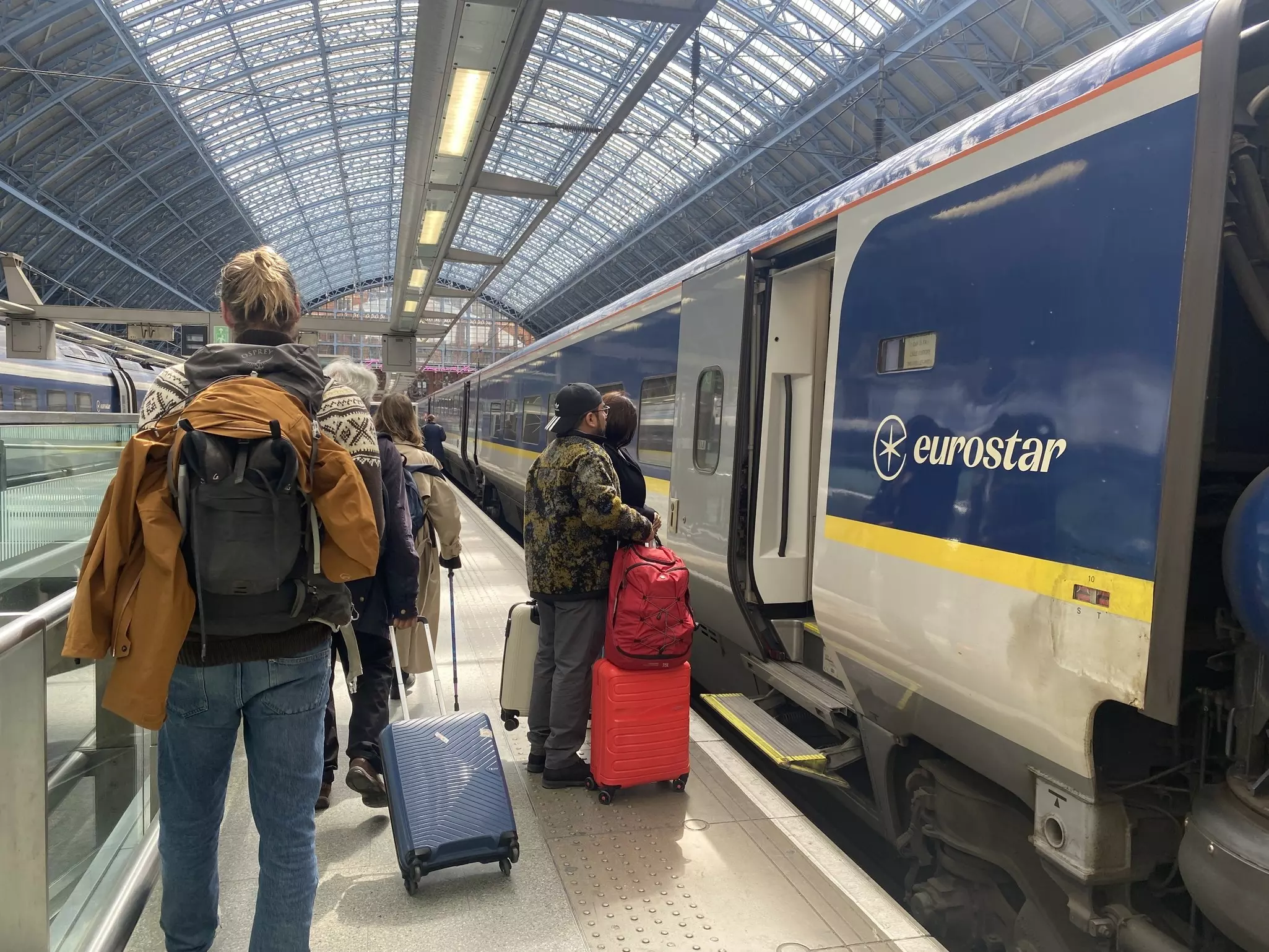
What can’t I take with me on the Eurostar?
You can find a list of forbidden items on the Eurostar website, most of which will come as no surprise (firearms, flammables, illegal drugs…). Perishable items like meat, fish and dairy are also on the no-go list; while we don’t condone the practice, this rule is often flouted.
Sadly, given the exploding interest in cycling holidays, taking a bike on the Eurostar is harder than one would hope. For full-size bikes, you need to pre-book passage and disassemble your bike to check it in as luggage. Folding bikes and children’s bikes can be brought on board with you, but they need to be in a protective bag.
Planning tip: Offered by the operator of the Channel Tunnel, LeShuttle transports both cars and bicycles between the tunnel’s two termini, Calais in northern France and Folkestone, Kent.
Can I buy food onboard the Eurostar?
A cafe car sells snacks and light meals for Standard-class travelers (Plus and Premier passengers get a meal delivered to their seats, as on a plane) – though we wouldn’t call it a gourmet experience. Even though the Eurostar menu changes twice a year, the options are limited – so it’s often better to bring your own food, especially if you have dietary restrictions.
Planning tip: Leave extra time to shop for provisions in and around the station before your trip.
What are some must-pack items for a trip on the Eurostar?
You’ll find sockets (to fit both UK and European plugs) at seats to recharge phones and laptops, although there are no USB sockets at Standard class seats. Also bring your own water as there are no water refill stations available.
Planning tip: Bring an old-fashioned book, or download whatever you’d like to read or watch before your train pulls out as the wi-fi and phone signals drop out regularly en route.
Do I need to print my Eurostar tickets?
No. With the Eurostar app, you can scan your tickets at the departure and arrival gates (though you can always print your ticket if you want a paper backup or souvenir). If your seat has changed for whatever reason, a fresh paper ticket will be printed for you at the gate.
Next, you move onto border control via security, as at an international airport.
Do I need a visa as well as my passport?
Make sure you are up to date on what documents you need for European travel, which varies by nationality. Citizens of Schengen member countries can enter France with only a passport or national ID card. Since the UK is not a member of the Schengen area (or the EU), Britons might need a visa to enter its territory. Check if you need a visa to the UK beforehand to avoid any complications.
All non-EU citizens (including Britons) will need an ETIAS (European Travel Information and Authorisation System) – a €7 visa-waiver scheme like the USA’s ESTA – to enter Europe from the last quarter of 2026.
As well as your passport, biometric information (a face scan or fingerprints) will be collected at European borders starting in 2026, which may slow down the check-in process.
What are the check-in and boarding procedures for Eurostar?
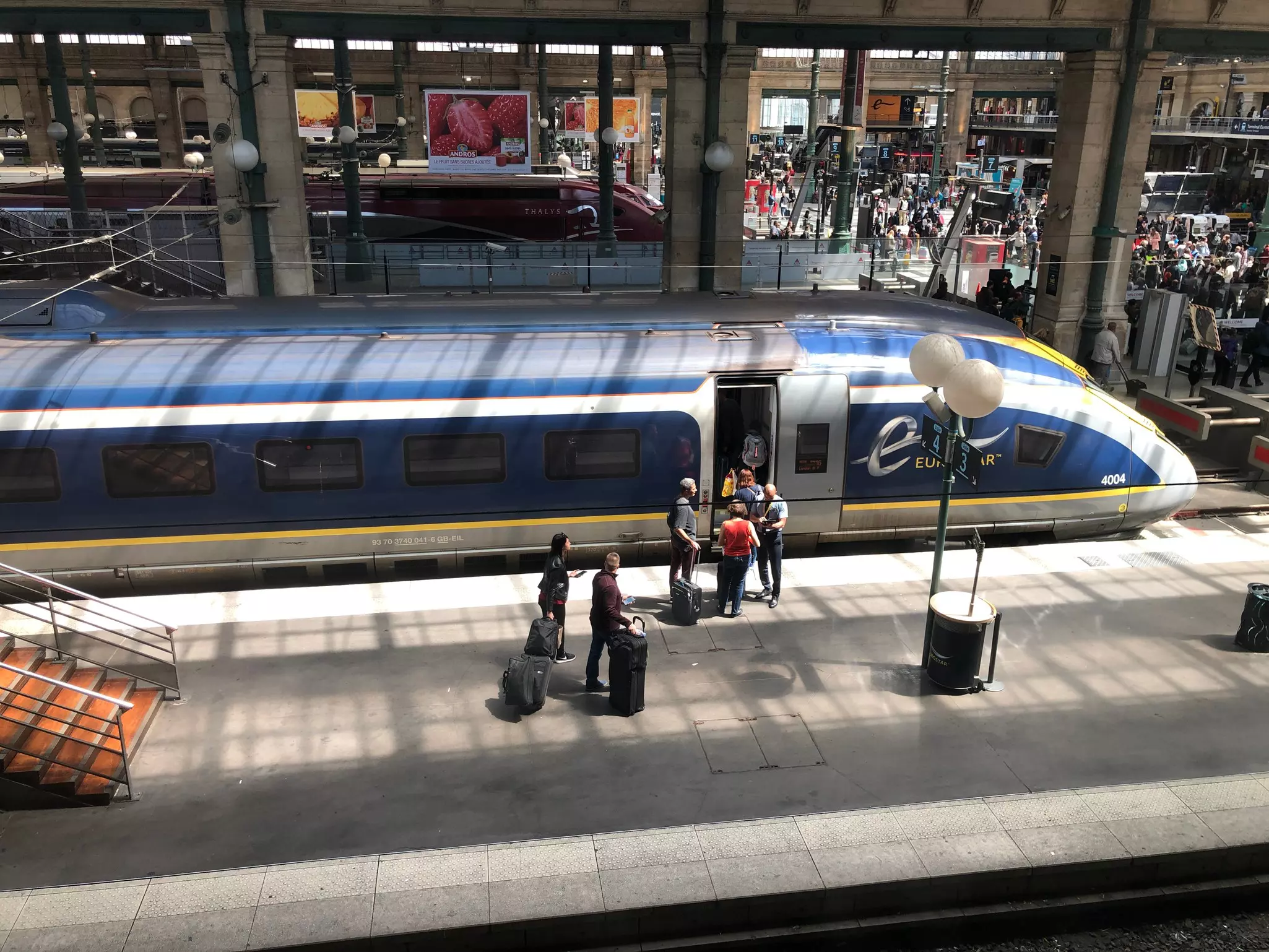
Eurostar is an international train that crosses the border of the European Union – which makes the check-in process different from your standard hop-and-ride rail trip. Each station served by Eurostar has a dedicated departure area where passport checks and customs take place; you should arrive prepared to queue. During weekends and holidays, standing in line to check in can take longer. Be aware that the gate closes 30 minutes before departure.
Once you pass through security, there’s a waiting area with free wi-fi and cafes. Premier ticket holders in London, Paris and Brussels can wait in the business lounge.
Do you really need to get there 90 minutes before your Eurostar train departs?
Yes, you really do. Cutting it close can work out, but since there are sometimes multiple departures boarding at once, queues can build quickly. Also, seating inside terminals is limited, so do yourself a favor and get there with plenty of time to spare.
What happens if I miss my train?
Eurostar will rebook passengers who miss their departures, subject to availability and with a hefty €50 rebooking fee. You will no longer have a choice over your seat – so if you cut it close you may find yourself not just on a later train, but in a backward-facing, window-free seat, too.
What are the ticket pricing options and classes available on Eurostar?
Eurostar offers three classes of service: Standard, Plus and Premier. Standard offers the lowest fares; seats in Plus have more space; while you’ll enjoy served meals, lounge access and other perks in Premier. Tickets in the different classes have degrees of flexibility and refundability – though you’ll find the rules for just about any Eurostar ticket far less strict than for airline tickets.
As a rule, the earlier you book, the cheaper the fare. One-way fares can be as low as €44 for Standard and €80 for Plus; Premier runs a premium, with seats starting at €285. Note that tickets purchased at the station incur a €14 fee – so buy ahead online or via the app.
Eurostar’s website has a helpful lowest-fare finder page that makes searching for cheap tickets a breeze.
If you have some flexibility on when and where you want to travel, or you're looking for a one-way fare only, there are last-minute bargains to be had on Eurostar Snap.
Planning tip: It's worth signing up for the Eurostar email list to get informed of short-term sale fares, and act quickly.
How do you choose seats?
You’ll be assigned seats at the time of booking, but you can change these online or via the app. We recommend verifying that you have a window seat right away, so you can enjoy the views of the varied landscapes as they zoom by (apart, of course, from the 30-minute jaunt under the Channel).
Planning tip: Consider packing a kitchen towel or wet wipes to give your window a clean – inside and out if you can – to improve your view.
Is the Eurostar a sleeper train?
No. Eurostar doesn’t have a couchette service – and the duration is too short for a good night’s sleep in any event.
With some planning, it’s not too hard to combine a trip on the Eurostar with an onward overnight-train journey. The European Sleeper links Brussels with Berlin, while Nightjet offers overnight service from Paris to Vienna and Prague.
Is there an alternative to taking the Eurostar to cross the Channel Tunnel?
Besides Le Shuttle, which is a car ferrying train service, other competitors are set to enter the market soon, with Virgin Trains and Spanish start-up Evolyn among the potential bidders. Competition on the Channel Tunnel rail route is expected to bring competitive pricing, which can only be good news for Europe travelers.
Advertisement