Advertisement
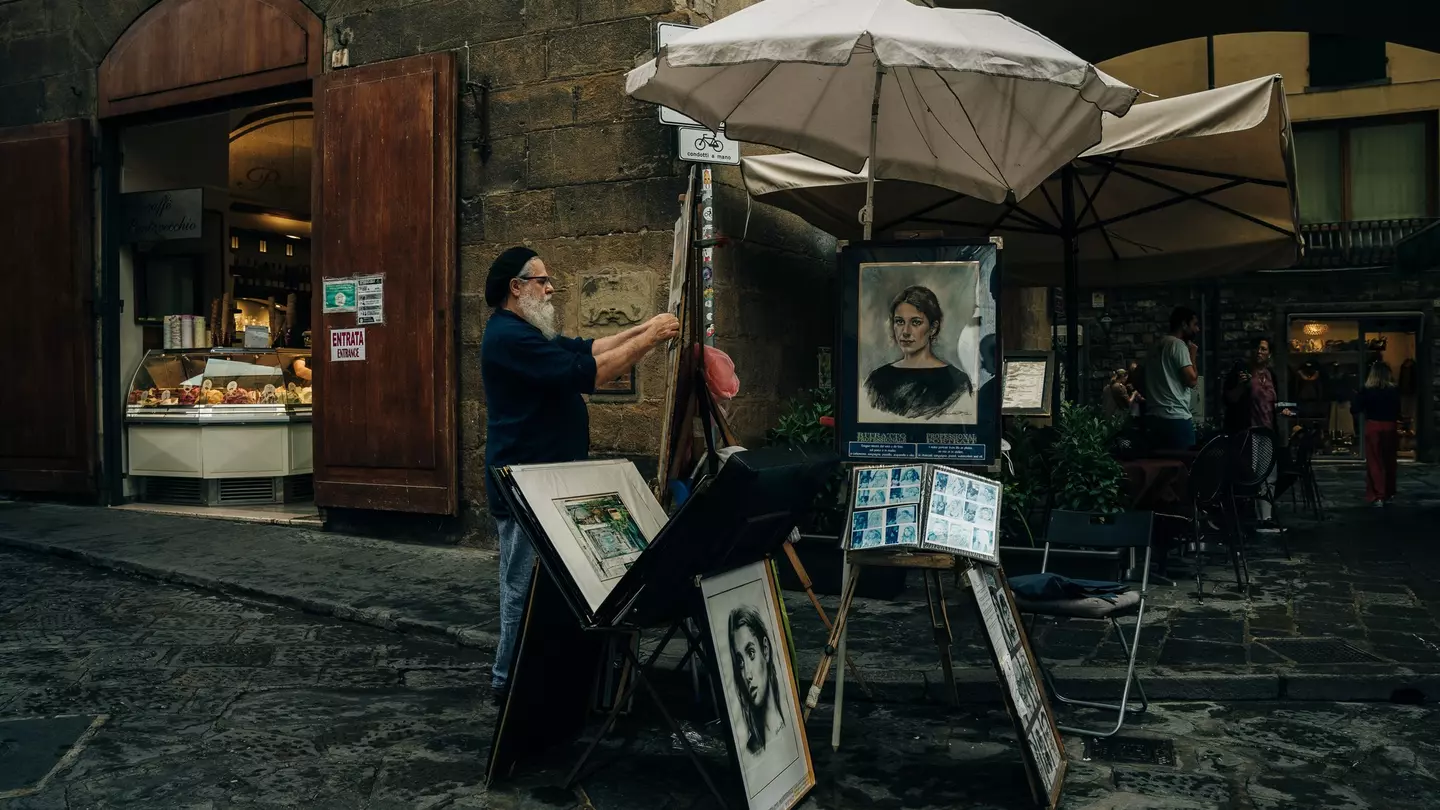
A street artist near the Cathedral of Santa Maria del Fiore. Brester Irina/Shutterstock
Originally bound by its 14th-century walls, inner Florence is split in half by the Arno River, which runs under the historic Ponte Vecchio and links the two sides of the city. This relatively compact historic core, recognized as a UNESCO World Heritage Site since 1982, groans with architectural landmarks and museums of medieval and Renaissance art, attracting millions of visitors to the city's top sights each year.
While the tourism industry has transformed the city and created an increasingly international atmosphere, Florence’s neighborhoods have continued to maintain a distinct identity – offering visitors the chance to discover a different side of the city’s character. Each area is typically centered on a square where markets, religious celebrations and public events once took place and sometimes still do.
Whether you want to stay close to the train station or wake up to dramatic city views, this neighborhood guide tells you everything you need to know about exploring these delightful districts across Florence.
Advertisement
1. Piazza del Duomo and Piazza della Signoria
Best for art and architecture
Most of Florence’s globally famous sights are concentrated in the area roughly stretching from Piazza del Duomo to Piazza della Signoria.
Topped by Filippo Brunelleschi’s red-tiled dome, the impressive Cattedrale di Santa Maria del Fiore, or simply the Duomo, took over 140 years to build, standing as Florence’s main religious structure since the late 15th century. The church's intricately carved marble facade (added in the 19th century) is a spectacle worth admiring from up close, before or after a visit to the Museo dell'Opera del Duomo, the cathedral, the Battistero di San Giovanni and Giotto's Campanile. It is possible to climb up the bell tower and the cathedral's dome for a bird's-eye view of the city's terra-cotta rooftops – that is, if you're ready to tackle hundreds of narrow steps (if you're not a fan of confined spaces, maybe skip this experience).
Connecting Piazza del Duomo and Piazza della Signoria is the bustling Via dei Calzaiuoli, one of the city center’s busiest arteries. Short detours lead to Piazza della Repubblica, the contemporary art museum at Palazzo Strozzi and the medieval buildings housing Dante’s museum.
Once you reach Piazza della Signoria, you’ll find yourself face-to-face with the Torre di Arnolfo, the clock tower marking the castle-like Palazzo Vecchio, the city’s center of power for seven centuries. This is where the Medici ruled over Florence and commissioned projects such as the Uffizi. The galleries, which are a few steps away, now house Florence’s most important art museum, but once functioned as administrative offices. Step inside to admire works by Giotto, Botticelli, Caravaggio, da Vinci and Michelangelo.
Where to eat: Behind the Duomo, Coquinarius combines Tuscan tradition with international wine. Just up from Piazza della Signoria, Osteria Buongustai serves homemade pasta under the arches (lunch only).
Where to stay: With unchallenged views of the Duomo, the 16th-century Palazzo Niccolini al Duomo takes guests back to an era of golden frames, frescoed walls and hand-carved furniture.
2. Santa Maria Novella
Best for transportion links
Radiating out from the railway station, this neighborhood is Florence’s transportation hub. High-speed trains connect Florence to most major Italian cities, so hectic and diverse Santa Maria Novella is often a visitor's introduction to the city. A 10-minute walk from the station takes you directly to the Duomo and the central market.
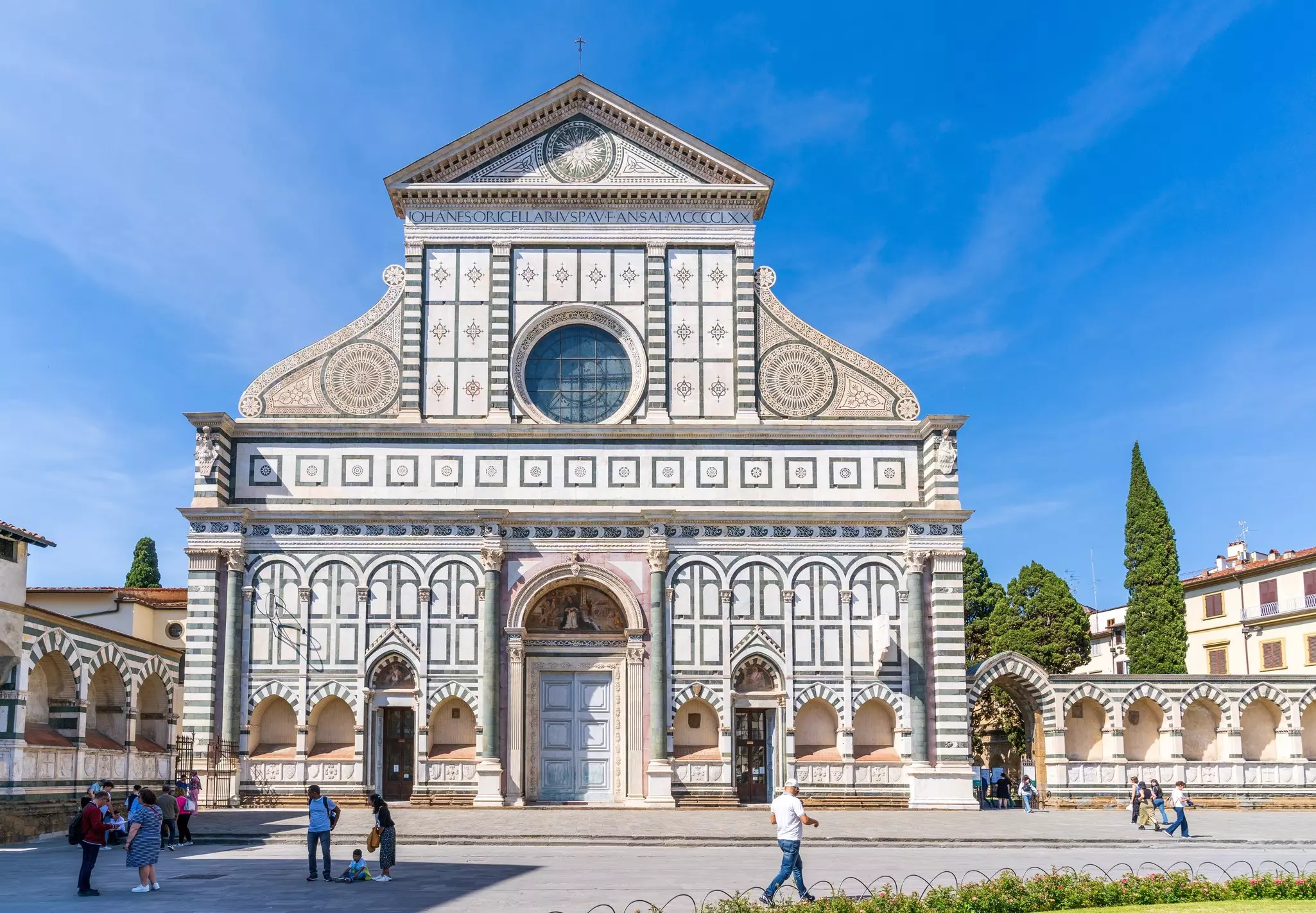
The imposing Basilica di Santa Maria Novella – founded by Dominican monks in the 13th century – marks the heart of the neighborhood, facing Museo Novecento across the square. Take some time to admire the symmetrical facade rich in symbolism, designed by Leon Battista Alberti, before entering the church to see works by Giotto, Masaccio and Ghirlandaio.
For an abrupt change from the Gothic and Renaissance styles, visit the Street Levels Gallery, the first urban art gallery in Florence, which exhibits works by many Italian street artists.
Where to eat: A long list of Tuscan classics make up the menu at Mattacena , a steak restaurant around the corner from Santa Maria Novella.
Where to stay: If you need to catch an early train, sleek Hotel Ambasciatori is right outside the station.
Advertisement
3. San Lorenzo and San Marco
Best for shopping and a Renaissance star
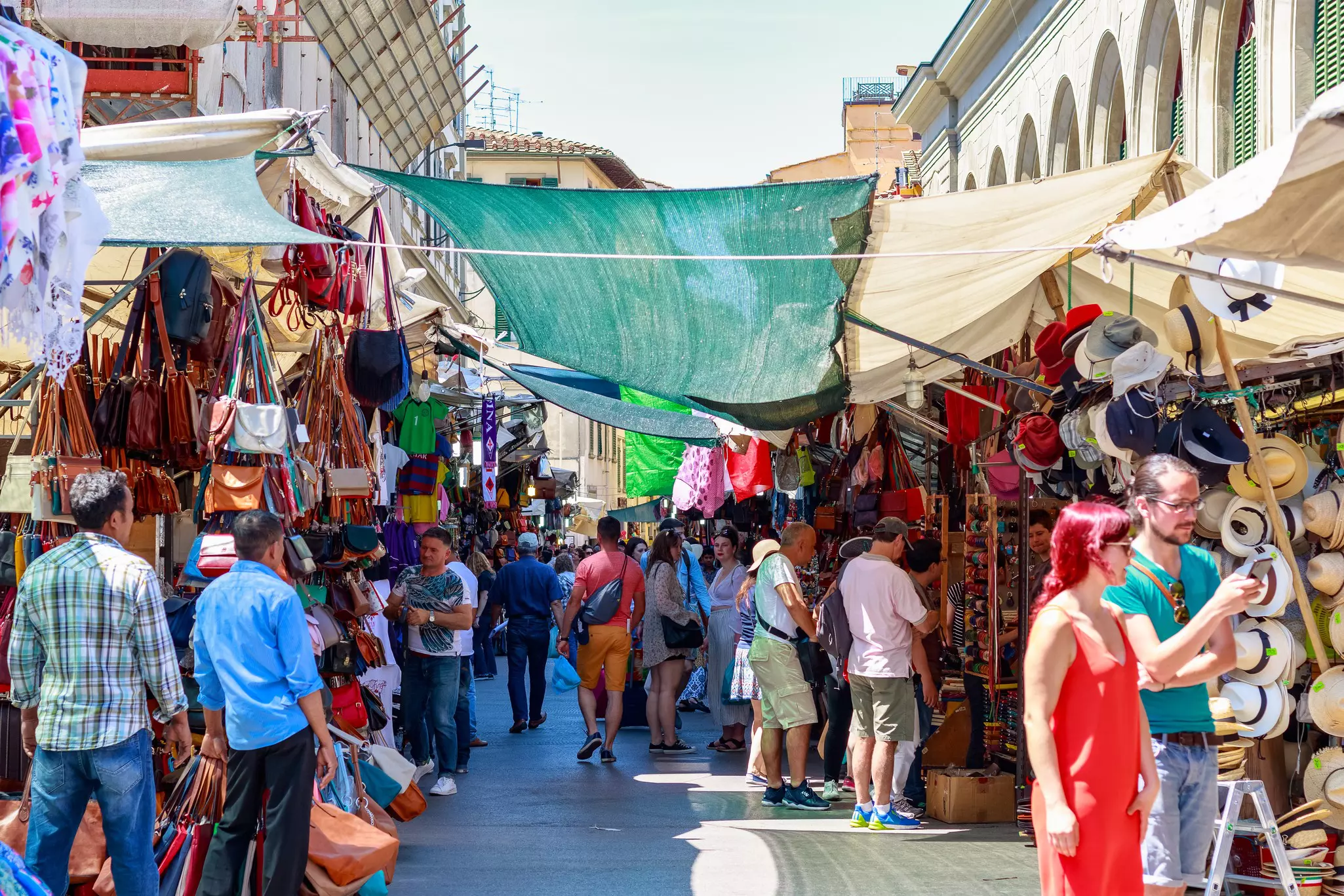
Easily reached from Florence’s railway station through Via Nazionale, lively San Lorenzo expands around the city’s largest market. This crowded, loud and multicultural commercial district is where you’ll find both mass-produced souvenirs and century-old enotecas (wine bars) standing side by side. The central market’s outdoor area is primarily dedicated to leather goods, while a 19th-century building houses two floors of stalls selling everything from fresh produce to traditional meals.
Shopping isn’t all there is to do in San Lorenzo. In this neighborhood, you can trace the history of the Medici family, who ruled over Florence for 300 years and left an indelible mark on its heritage. The Palazzo Medici Riccardi was their first Florentine residence, while in the Museo Delle Cappelle Medicee, you’ll find the monumental tombs of some of the most prominent members of the dynasty, including those contained in Michelangelo’s spectacular Sagrestia Nuova.
The San Marco neighborhood, north of San Lorenzo, is Florence’s university hub. Students gather on the staircases of Piazza Santissima Annunziata in the late afternoon, and most of the university-managed museums – such as the Giardino dei Semplici and the natural history museum – are found in the area.
Notably, San Marco hosts Michelangelo’s best-known sculpture: David. Steps away from Piazza San Marco is Galleria dell’Accademia, where the Renaissance idol is exhibited. This is not the only major museum in the area – tour the neighborhood to see the works of Fra Angelico at Museo di San Marco and find 15th-century paintings at Museo degli Innocenti.
Where to eat: In San Lorenzo, the rustic-chic atmosphere and wood-fired pizzas are SimBIOsi’s main draws, but there’s also good coffee and handmade pasta. Sicilian specialities are available at little Arà, a food store on Via degli Alfani, steps away from the Galleria dell’Accademia.
Where to stay: Ostello Bello is a bit pricier than your average hostel, but the Florentine outlet of this Milan-based hostel chain has a bar and many activities for its San Lorenzo guests.
4. Santa Croce and Sant’Ambrogio
Best for late-night drinks
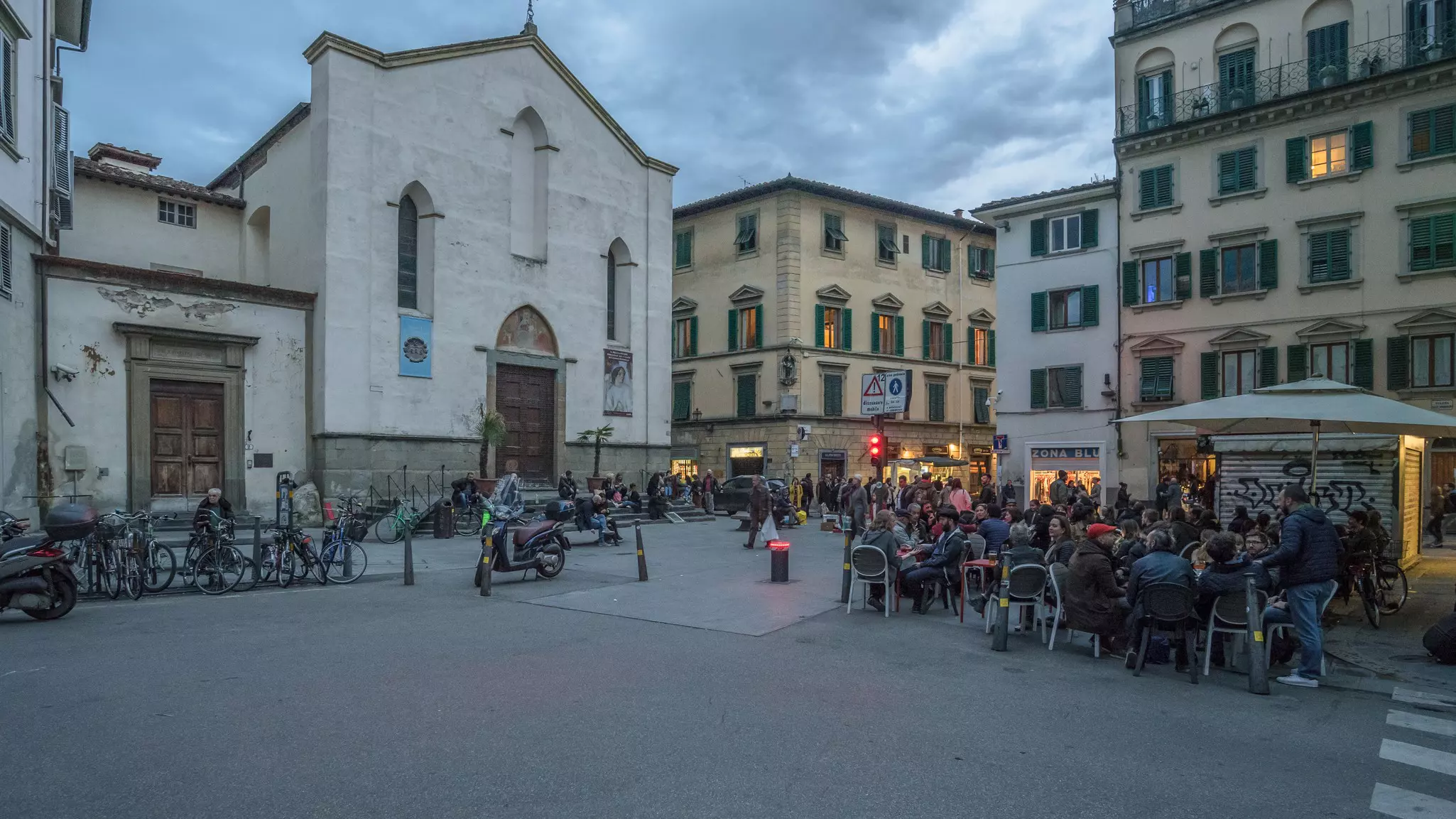
Piazza Santa Croce extends under the shadow of the majestic Basilica di Santa Croce, designed by Arnolfo di Cambio in the late 13th century and embellished with a neo-Gothic facade by Niccolò Matas in 1863. In June, the square is transformed into a sand arena for the Calcio Storico tournament, during which Florence’s historic districts compete in a brutal game that blends elements of soccer, rugby and boxing.
At night, Santa Croce becomes a playground for the thousands of exchange students who seasonally populate the neighborhood. Enter pubs like Lion’s Fountain, Kikuya or Red Garter, and you’ll hear hardly a word of Italian. Locals tend toward the Sant’Ambrogio area, less than a kilometer from Santa Croce, gathering outside of bars such as Enoteca alla Sosta dei Papi, Art. 17 and I Macci.
Sant’Ambrogio is also home to Florence’s oldest market, running since 1873. Visit during the day to stock up on fruit and vegetables, or stop for lunch in the food court inside the covered hall.
Where to eat: At Club Culinario Toscano off Santa Croce, you can try specialities from Tuscany’s subregions, from pici all’aglione (a long pasta in garlic sauce) to testaroli (thin pasta sliced into diamonds). La Ghiotta has simple decor, generous portions and a friendly staff in the heart of Sant’Ambrogio.
Where to stay: Numeroventi, housed inside a former syrup factory, is an international artist’s residence with big Scandinavian-inspired rooms, a frescoed coworking space and an exhibition hall that adds to the creative vibe.
5. San Frediano and Santo Spirito
Best for crafts and design
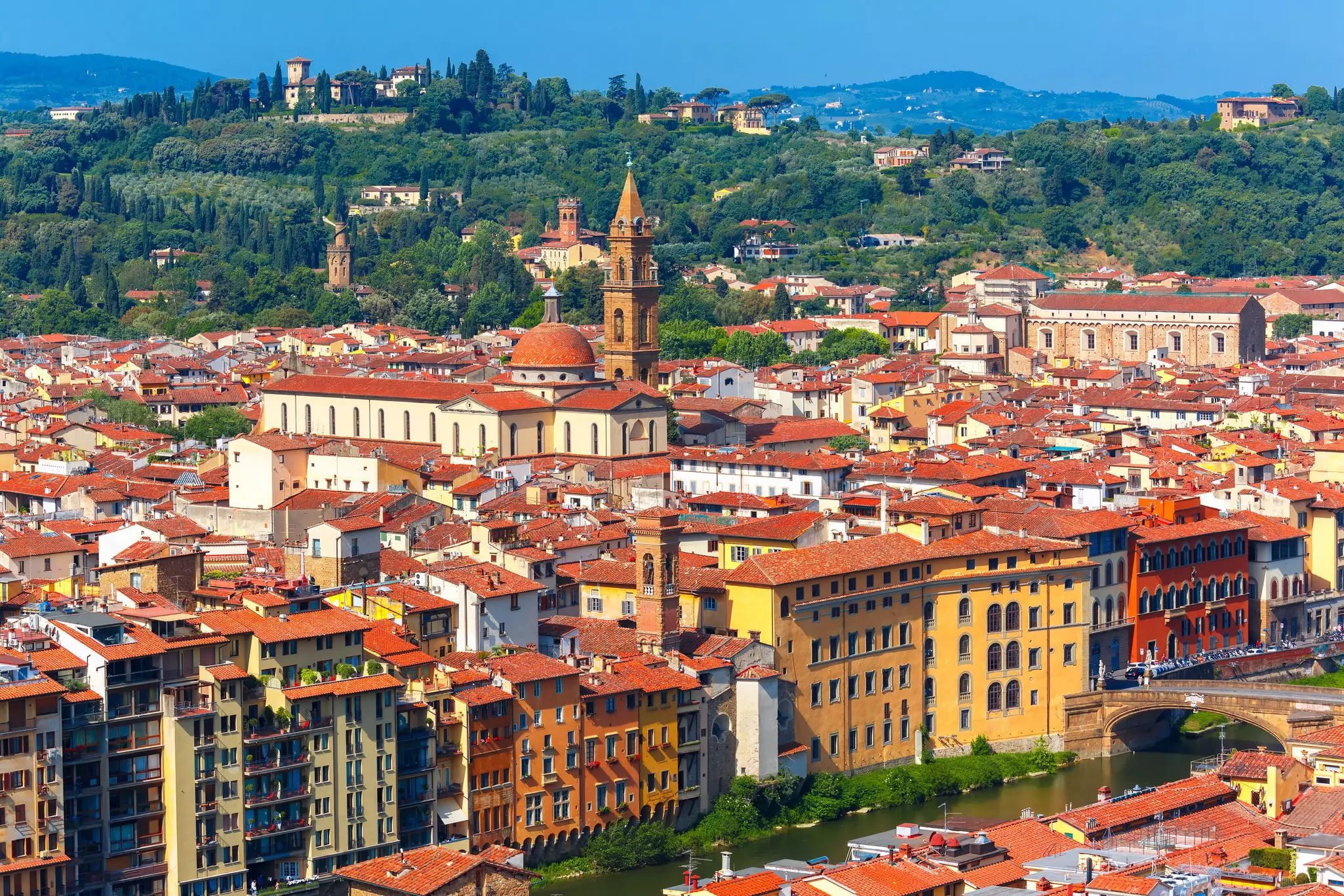
Jointly referred to as the Oltrarno – meaning “on the other side of the Arno” – the neighborhoods of San Frediano and Santo Spirito are dotted with bars, vintage stores, ateliers and restaurants.
After WWII, many Florentine artisans began moving their workshops to this part of the city, drawn by lower rents. Framers, bookbinders, sculptors and tailors came to define the character of the historically working-class district. Much has changed over the course of the past couple of decades, and both San Frediano and Santo Spirito have been transforming under the pressure of tourism. Despite the visible gentrification, these areas remain dedicated to creativity and crafts.
Browse the city’s favorite antiques market in Piazza Santo Spirito on the second Saturday of the month, stop at Sbrino for artisanal gelato, or come in the late afternoon for an aperitivo (predinner drink) at Volume.
Where to eat: Expect to stand in line at Osteria Santo Spirito – the chairs spilling onto Piazza Santo Spirito fill up quickly. I’Trippaio di San Frediano is a legendary street-food spot with all the Florentine classics, including lampredotto, tongue and tripe.
Where to stay: The preserved frescoes on the tall ceilings at Hotel Palazzo Guadagni contribute to any art getaway. The highlight, however, is the Loggia Roof Bar, overlooking Santo Spirito.
6. Boboli, San Niccolò and San Miniato
Best for gardens and city views
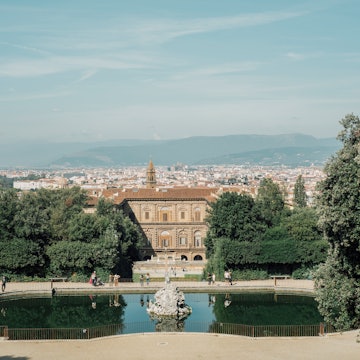
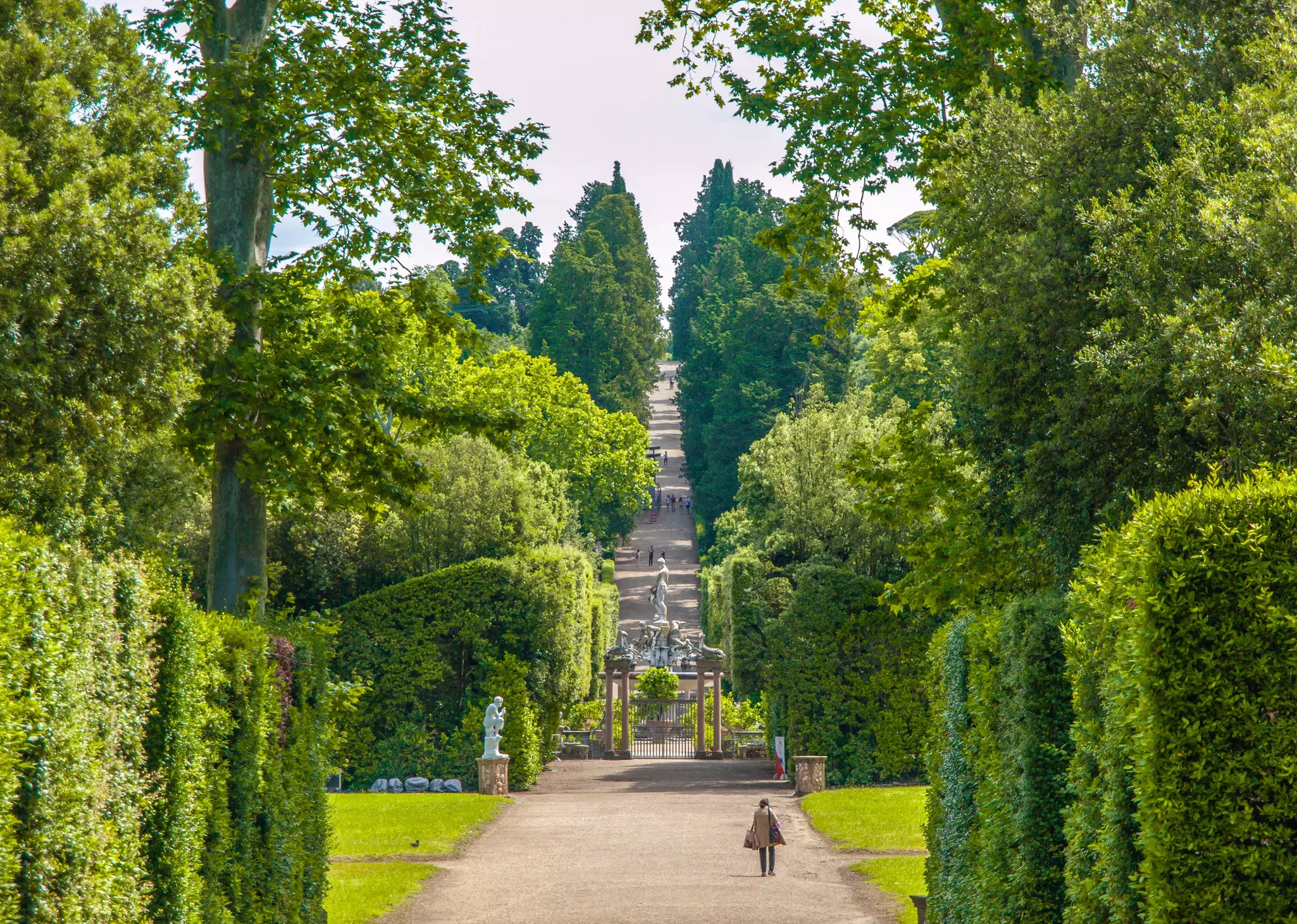
Behind Palazzo Pitti, the last residence of the Medici family, are the Giardino di Boboli, a pioneering example of Italian landscape architecture in the Renaissance; the style would eventually influence aristocratic gardens all over Europe.
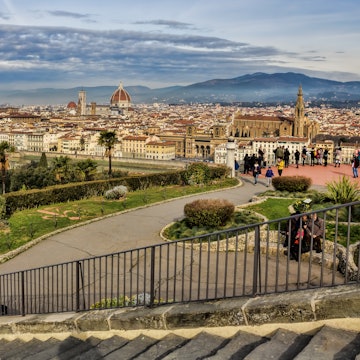
On the eastern side of the Oltrarno, the city climbs up to San Miniato on the hillside, reaching Piazzale Michelangelo and Basilica di San Miniato al Monte, two prime spots for admiring Florence from above. As you walk the paths to the top, you’ll notice the stark difference with the rest of the city – it’s not a coincidence.
Following the unification of Italy in 1861, Florence was named the capital for a brief period of time. A redevelopment project was commissioned to architect Giuseppe Poggi, who took up the responsibility of modernizing the city, adding large avenues and monumental squares like those in other major European urban centers. To achieve his objective, Poggi tore down the ancient city walls in the San Niccolò district (only the city gate, Torre San Niccolò, still stands), constructed a monumental walkway and built Piazzale Michelangelo, the terrace overlooking Brunelleschi’s Duomo in one of the highest locations in the city.
Where to eat: Saporium chef Ariel Hagen serves up outstanding meals in San Niccolò using only hyperlocal ingredients.At Olivia, across from Palazzo Pitti, Frantoio di Santa Téa’s olive oil is the star of every dish.
Where to stay: Cozy FuordArno has rooms inspired by different cities from around the globe, and Serristori Palace has quiet studio apartments and a little terrace with great views of the Duomo and the National Library.
Advertisement
Explore related stories

Feb 21, 20244 min read
Florence in 5 Shops: Tuscan leather, hand-painted ceramics and sculpture souvenirs