Advertisement

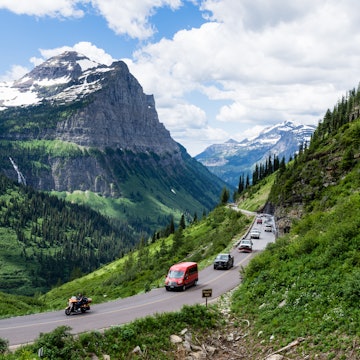
Avalanche Lake in Glacier National Park, Montana. Justin Foulkes for Lonely Planet
A star of the Western USA, Montana is simply magical to visit. Wild rivers flow across plains framed by giant mountains in the vast state – and even the manmade additions to the landscape reflect encounters with nature (the State Capitol in Helena, for example, was built near a mining camp known as “Last Chance Gulch”). The values of Western culture – a connection with nature, a commitment to responsible sportsmanship, a proud independence – infuse every Montana attraction (such as the recently opened Montana Heritage Center in Helena) and experience. Also key to the vibe here: the thrill of exploration, the sense that each day is the one you’ll strike it rich.
Outdoor recreation is the core of any Montana vacation, and in no other state is there as much to discover in nature. The state’s magnificent parks all offer uncrowded trailheads, ample campsites and the chance to claim your own slice of Big Sky Country. In between outdoor adventures, Montana’s small towns and “big” cities serve up a friendly dose of community events, plus charming local shops and restaurants.
As you start planning your dream trip, consider our roundup of 12 of the best things to do in Montana.
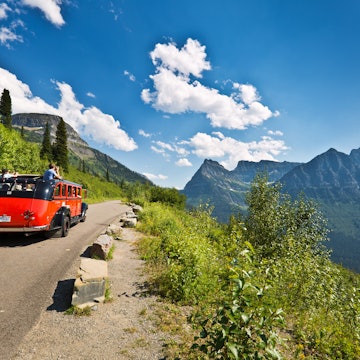
1. Spend the night in Glacier National Park
The Continental Divide cuts straight down the middle of Glacier National Park, providing prime habitat for mountain goats, grizzly bears and amazed tourists witnessing the mountain majesty that makes Glacier the “Crown of the Continent.”
Advertisement
Even if you have just one day in Glacier, following a trailhead or two will give you a taste of adventure. Yet you really need to spend the night, and gaze up at the millions of stars, to appreciate the utter remoteness of this country. Several overnight options within the park include 13 campgrounds and a quaint collection of historic lodges.
Planning tip: With the shores of Swiftcurrent Lake and the dominating profile of Mt Grinnell beyond visible from its back porch, the Many Glacier Hotel might have the most outstanding views in the entire park. You’ll need to reserve many months in advance to check in for the night – though anyone is welcome to check out the lodge’s lobby and lakeshore.

2. Go fly-fishing
Ever since Robert Redford and Brad Pitt made fly-fishing sexy in the 1992 classic A River Runs Through It, Montana has been closely tied to the sport. Indeed, fly-fishing is more than a hobby for many Montana anglers: engaging in this patience-rewarding practice in the state’s free-flowing, abundant rivers represents a way of life.
Montana’s rivers and tributaries – the Blackfoot, Clark Fork, Madison, Missouri and others – all but swarm with trout. For DIY trout fishing, the Gallatin River has the most consistently accessible angling spots. But you can’t talk about fly-fishing in Montana without mentioning the Yellowstone. This remarkably free-flowing river traverses nearly 700 miles from Yellowstone Country over to North Dakota; the approximately 100-mile stretch from Gardiner to Livingston sees the most shoreline fishing and floating. The river runs through the aptly named Paradise Valley in this postcard-perfect section, with the Absaroka and Gallatin Mountains looming in the distance.
Planning tip: Outfitters such as Yellowstone River Adventures in Livingston offer excellent trips for both novice and experienced anglers. Montana Angler and Gallatin River Guides also offer guided fly-fishing trips and equipment rentals.

3. Hit slopes big and small
Many travelers come to Montana in the winter for its 15 ski areas, which include big mountains at popular resorts and smaller, budget-friendly and no-less-fun areas like Lost Trail in the Bitterroot Valley and Showdown in central Montana.
If you prefer big mountains, popular areas include Whitefish Mountain Resort, which is great for families as well as expert skiers and snowboarders willing to hike up then rip up off-piste double-black-diamond glades. Located between Bozeman and Yellowstone National Park, Big Sky is the fourth-largest ski hill in North America, covering 5800 acres of skiable terrain across four mountains. It’s known for its steepness (4350ft vertical drop) and its surplus of advanced and expert trails.
Not far from Big Sky and just 16 miles north of Bozeman, Bridger Bowl is a 2000-acre community-owned gem. The nonprofit resort has a fiercely loyal following and is a true skier’s mountain, with serious terrain and an unpretentious mood (and affordable lift tickets, to boot).
Planning tip: At Big Sky, take the tram to Lone Peak (elevation 11,167ft) for 360-degree views and expert-only runs.
4. Meet dinosaurs in Bozeman’s Museum of the Rockies
If Jurassic Park’s CGI dinosaurs left you cold, the Museum of the Rockies in Bozeman, with its real-life (and really big!) dinosaur bones, will surely raise your pulse. Triceratops skulls and a fully mounted T rex are just a few of the impressive displays at the Siebel Dinosaur Complex.
Expect to spend more time than you think among the engaging dinosaur displays – but don’t miss out on the museum’s other offerings, including galleries devoted to native populations and the boom of Yellowstone Country as a tourist destination. The 20-some-minute eye-popping presentation at the Taylor Planetarium also wows.
In summer, don’t miss the outdoor Living History Farm, a preserved 1889 homestead worked by staff in period clothing who happily engage with you, interactively evoking Montana’s pioneer days.
Advertisement
Planning tip: The Museum of the Rockies is just one stop on Montana’s statewide Dinosaur Trail, which includes some 14 museums and other sights the dino-obsessed will love.

5. Immerse yourself in Butte’s mining history
The vast copper resources extracted from Butte in the late 1800s earned it the memorable nickname “Richest Hill on Earth.” While mining operations have now ceased in Butte, its history remains on full display throughout the Butte-Anaconda Historic District, which encompasses some 6000 historic properties. The history is palpable on even just a short walk around town.
The World Museum of Mining offers a deeper dive into Butte’s underground legacy. Visitors start their tour of this immersive museum by kicking up dust down Hell Roarin‘ Gulch, a careful recreation of a 1890s-era mining town. To get a feel for what it was like to work in a copper mine, book a spot on the underground mine tour, which takes you 100ft down into the Orphan Girl Mine (mandatory hard helmets and headlamps are included).

6. Drive the Beartooth Highway
The Beartooth Highway covers 68 miles of southern Montana, from Red Lodge to Cooke City and the Northeast Entrance of Yellowstone National Park, with a small dip into Wyoming. And the staggeringly beautiful drive might just convince you to move to Montana for good. The upright Beartooth Mountains, the tallest in the state, make the biggest impression, and lay a foundation for the outdoor opportunities found everywhere along the route.
This seasonal highway tops at 10,947ft, with national forest trailheads, campgrounds and points of interest accessible from both highway shoulders. The road also lends easy access to the alpine-lake-infused Absaroka-Beartooth Wilderness, where you can get truly lost in nature.
Planning tip: The Beartooth Highway operates between Memorial Day (late May) and October 15. Opening and closing dates are weather-dependent.

7. Check out First Fridays in Missoula
On the banks of the beautiful Clark Fork River, the city of Missoula has a wonderful community feel. This is especially apparent on the first Friday of every month, when local art galleries pop up throughout town, and every sidewalk becomes an open-air party. Alongside the art on display, expect to encounter live music, free drinks and plenty of people swapping adventure stories.
Start your First Friday tour on the Hip Strip, on the south side of the Beartracks Bridge (Higgins Ave). This eclectic collection of shops and restaurants is always buzzing on First Fridays – especially at the beer garden at GILD Brewpub.
Planning tip: On First Fridays, ditch your car. Instead, follow the Clark Fork River Trail or Bitterroot Trail, which weave throughout Missoula and deliver visitors downtown.

8. Get out on Flathead Lake
Flathead Lake anchors the Flathead Valley between Missoula and Whitefish in Montana’s northwest corner. The lake is simply enormous – and the best way to put it into perspective is by taking a boat out onto its famously flat waters.
Seek out a rental boat and/or guided tour in Polson and Kalispell, neither far from the shoreline. If you want to captain your own vessel, several sites with Flathead Lake State Park provide easy access to the water. Five mainland units compose the state park; these include the bustling West Shore Unit, where visitors can rent kayaks in the summer.
Planning tip: The Confederated Salish and Kootenai Tribes operate the southern half of Flathead Lake. You’ll need a Tribal Wildland Recreation Permit to explore outside the state-park units.

9. Hike through towering trees at Ross Creek Cedars Scenic Area
Whether you’re into hugging them or not, it’s hard not to marvel at the trees that punctuate this special grove in Kootenai National Forest. Some of the western red cedars here predate the voyage of Christopher Columbus, to which their height and girth – some are more than 12ft in diameter – attest.
Sitting benches line the nearly mile-long accessible loop from the parking area, letting you contemplate the big trees. The paved path is popular with families with young kids, as well as anyone looking to stare up at giant tree trunks without much of a sweat. Those wanting to explore further can follow the ambling Ross Creek Trail #142 for up to 4 miles.
Planning tip: The last 4 miles of the access road to Ross Creek Cedars Scenic Area are steep and windy, and difficult for trailers and bigger rigs. The entrance road is gated off between December 1 and approximately mid-May – a period when the route becomes a favorite for groomed cross-country skiing.
10. Tour the CM Russell Museum in Great Falls
Even if you aren’t familiar with the name Charles Marion Russell, you’ll likely recognize his work. For he helped invent the all-American genre of Western art, creating masterly, naturalistic paintings of such subjects as buffalo hunts, horse-riding marauders and Lewis and Clark’s encounter with the Flathead people.
Charles M Russell lived nearly his entire life in Montana and spent the peak of his career in Great Falls. Today, his modest home and log cabin studio are central attractions of the CM Russell Museum, as is the largest repository of the artist’s work, plus galleries dedicated to the work of his contemporaries.
Planning tip: Expect to spend at least 4 to 5 hours exploring all the site has on view.

11. Admire the animals at the CSKT Bison Range
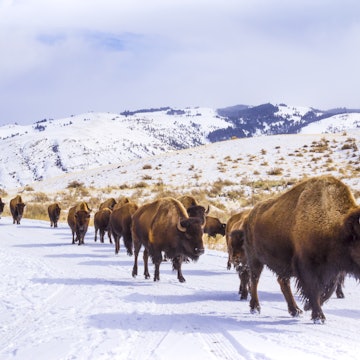
Home to over 350 bison, the CSKT Bison Range (formerly the National Bison Range) spans 18,500 acres of grasslands, forests and rolling hills on the Flathead Indian Reservation, in western Montana. These majestic animals are direct descendants of a small herd protected by tribal members in the 19th century – a time when bison went nearly extinct. This makes today’s herd significant both biologically and culturally.
Two dirt roads traverse the range: the 14-mile Prairie Dr and 19-mile Red Sleep Mountain Dr (open summer only), which climbs 2000ft and provides sweeping views of the Mission Mountains and surrounding valleys. Along the way, keep your eyes peeled for bison grazing, calves nursing and bulls wallowing in the dust. You might also see elk, bighorn sheep, pronghorn and even black bears. Entry is $20 per vehicle.

12. Experience American Rodeo, Montana’s official state sport
American Rodeo was declared Montana’s official state sport in 2025, and this living tradition continues on at a variety of long-running events throughout the state. The Livingston Roundup, for example, celebrates its 102nd year in 2026, while the Wild Horse Stampede in Wolf Point started in 1915. The annual Missoula Stampede, going strong since 1915, is a smaller yet still-thrilling rodeo at the Missoula Fairgrounds that features Professional Rodeo Association contestants competing for points to qualify for the Wrangler National Finals Rodeo in Las Vegas.
In Billings, the annual Crow Fair in August is one of the largest Indigenous gatherings in the country. At heart a social event, the Crow Fair is a powerful expression of community, where all are welcome. Each day begins with a parade of families filing past tipis on horseback, in traditional regalia; afternoons bring powwows with competitive dancers in beaded dress and feathers, all-Native rodeos and death-defying relay races. Plenty of food vendors make it easy to fill up on classic Indigenous treats (fry bread with powdered sugar, anyone?), while nearby artisans showcase handcrafted jewelry and goods.
Advertisement
Take your United States (USA) trip with Lonely Planet Journeys
Time to book that trip to United States (USA)
Lonely Planet Journeys takes you there with fully customizable trips to top destinations – all crafted by our local experts.

Explore related stories

Nov 26, 202512 min read
See the best of Grand Teton and Yellowstone National Parks on this road trip