Advertisement
The 7 best day trips from Porto, Portugal


Aerial view of Guimarães, near Porto in Portugal. Sopotnicki/Shutterstock
The charming city of Porto pulls you in with its historic streets, riverside walks and independent spirit. But as much as it’s nice to linger here with a port and tonic in hand, there’s a whole world to see just outside the city.
And even better, most of these day trips from Porto can be done by public transport. If you don't have a car at your disposal or you want to do some wine-tasting while you're here, Porto is a great base to explore nearby towns and countryside. A train can whisk you through the middle of the Douro Valley, where vineyards grow in steep terraces, to the heart of medieval towns, and down the coast where windswept beaches await.
So whether you're into hiking and wild swimming, meandering through an historic university and library, or tasting new food sensations, here are our picks of the best day trips to do from Porto.
Advertisement

1. Amarante
Best for traditional food and wine
Travel time: 50 minutes
Set along the banks of the Tâmega river, Amarante is not your average small town. Peek into its cafe counters, and you’ll notice an oddly phallic pastry. Some say it started as an homage to São Gonçalo, the town’s patron saint and apparently a successful matchmaker. Whatever the reason, the tradition stuck and now doces fálicos are sold all over Amarante. Confeitaria Lailai and Confeitaria da Ponte whip up a delicious version of these alongside other less suggestive treats like the papos de anjo, a half-moon wafer filled with an egg and almond mix.
If sweets aren’t your thing, you can always hit the small tascas along Rua 31 de Janeiro. Adega Kilowatt (a favourite among passing motorbikers) and Taberna Don Rodrigo are some of the top spots to sample Amarante’s iconic ham sandwich. Meanwhile, Casa Herédio across the bridge focuses on a mix of petiscos. Wherever you go, be sure to ask for a glass of the regional vinho verde (green wine). Despite the name, vinho verde (green wine) isn’t green – it’s basically young Portuguese wine that can be red, white or even rosé, and Amarante has a selection of it all.
How to get to Amarante from Porto: Rede Expressos provides regular buses from Porto’s Campanhã bus terminal to Amarante.

2. Braga
Best for churches and coffee
Travel time: 40 minutes
Braga has the biggest collection of churches in Portugal, including the country’s oldest cathedral. When Holy Week (Semana Santa) comes around, the whole city becomes a pilgrim magnet. Even if you’re not a devotee, it’s worth visiting Braga for the Santuário do Bom Jesus do Monte, a striking Baroque sanctuary sitting at the top of 500-plus stairs. Don’t worry, there’s a funicular ride available.
Note: if you are visiting during Holy Week, you may feel slightly less spiritual if you're not into crowds.
What I like most about the city, however, is its laid-back coffee culture. From the century-old A Brasileira to the bookstore cafe of 100º Página, there are plenty of spots to hunker down with a top quality brew. Or you can switch things up with a local craft beer from Letraria.
How to get to Braga from Porto: You can easily reach Braga by train or bus.
Advertisement

3. Peneda-Gerês National Park
Best for pristine nature
Travel time: 1.5 hours
Explore the wilderness of the Parque Nacional da Peneda-Gerês where you can swim in the hot springs, hike to the Cascata do Arado, and climb the Miradouro da Pedra Bela for incredible views over the mountains.
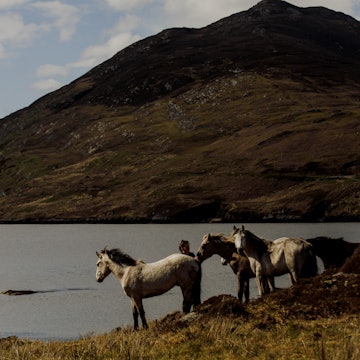
Established in 1971, Peneda-Gerês is still Portugal's only national park. The nearly 700 sq km protected zone spreads across four mountain ranges – the Serras of Peneda, Amarela, Gerês and Soajo – and is home to some of the most fragile ecosystems and endangered animals in the country. Besides granite-clad mountains, the park is made up of old-growth oak forests, peat bogs and dry shrubland, where minks, salamanders, bats, otters, roe deer, Garrano horses and Iberian wolves roam. It's also home to dozens of small villages, many with centuries-old history, where ancient traditions are kept alive.
How to get to Parque Nacional da Peneda-Gerês from Porto: It is possible to reach Peneda-Gerês National Park by bus, service is limited and infrequent. Mobilidade Cávado has bus services from Braga to the Vila do Gerês that passes through Rio Caldo, as well as a line to Campo do Gerês. However, a rental car is the best way to do the park justice.
4. Guimarães
Best for medieval architecture
Travel time: 40 minutes
Before Lisbon took the capital title, Guimarães was first. This UNESCO-listed medieval town still feels kind of frozen in time with its maze of stone houses and a crenelated castle looming on a hill. The Paço dos Duques de Bragança offers a glimpse of what would have been a rich royal settlement – think Flemish tapestries, porcelain, and antique furniture. When it comes to food, you can splurge on modern fine dining in places like A Cozinha or Le Babachris, but also kick back at Taberna Trovador with wine and a round of petiscos or at one of the many student haunts.
How to get to Guimarães from Porto: Guimarães is accessible by train or bus from Porto Campanhã.

5. Aveiro and Costa Nova
Best for coastal adventures
Travel time: 40 minutes to 1 hour
A string of canals surrounds the city of Aveiro, just south of Porto. You can navigate these by hopping on a moliceiro, a colorful boat once used to carry seaweed, but now transformed into a tourist attraction. The panels drawn across the bow and stern have somewhat suggestive depictions, but you can also get the classic image of Amália (the queen of fado) thrown in there, too.
Aveiro is equally known for its art nouveau architecture, freshly caught oysters (try them at Ostraveiro), and ovos moles, a sweet delicacy combining egg yolk and sugar wrapped in wafer-like cases with sea motifs. Confeitaria Peixinho has been dishing out boxes of these since 1856!
Next venture further around to Costa Nova, a seaside town famous for its row of colorful striped cottages, or tour the ceramic factory at Museu Vista Alegre.
How to get to Aveiro from Porto: Aveiro can be reached by train or bus. Trains leave from São Bento and Campanhã stations, though you’ll have more options from the latter. Buses also leave from the Campanhã terminal.

6. Coimbra
Best for visiting a center of education
Travel time: 1 hour
Students in black capes roam the streets of Coimbra all year round. This university town really comes alive in late May during the graduation festivities known as Queima da Fitas. Thousands gather for the one-week celebration, which includes traditional music performances. But even on most nights, you can hear a group bursting out a fado tune in a city square (or you can head to Fado ao Centro for the regular daily show). Parts of the university grounds are open to visitors, including the Biblioteca Joanina, a Baroque library that holds over 40,000 titles.
From here, you can reach a variety of other attractions, including medieval churches and Coimbra’s peaceful parks and gardens. And if you’re up for an adventure, you can always kayak down the Mondego River.
How to get to Coimbra from Porto: There are direct trains from the Campanhã station to Coimbra-B on the outskirts of town. Alternatively, you can get the Rede Expressos bus, which stops slightly closer to the center.

7. Douro Valley
Best for wine tasting and river views
Travel time: 2 hours and 30 minutes
Portugal has some extraordinary wine regions, but when it comes to the landscape, the Douro Valley is pretty hard to beat. Those steeply terraced vineyards are a sight to behold, whether you’re down by the river sailing amid them on a quiet solar boat (my personal favorite) or up on one of the quintas taking in the views with a wine in hand. A visit to the Museu do Douro in Peso da Régua is a must if you want to learn more about the history of the region. But if you’re picking a place to base yourself, Pinhão is always a safe bet. There are a handful of estates here, outstanding viewpoints like Miradouro Casal De Loivos, plus some good restaurants like Veladouro, which serves delicious meat on the grill.
How to get to the Douro Valley from Porto: Several trains depart from the São Bento train station to Régua or Pinhão, two easy gateways to the Douro Valley. In summer, you can book the steam train for a change of scenery. It’s also possible to drive along the valley following the scenic road N222. With a car, your options are endless, but you’ll have to go light on the tastings.
Advertisement
Take your Portugal trip with Lonely Planet Journeys
Time to book that trip to Portugal
Lonely Planet Journeys takes you there with fully customizable trips to top destinations – all crafted by our local experts.