Advertisement

An aerial view of Wasaga Beach, Ontario, Canada. Content zilla/Shutterstock
A visit to one of Canada’s countless beaches means more than lying out in the sun, a bracing dip in the ocean and an ice cream.
If you’re lucky, a Canadian beach day might also include a bear encounter, a windswept walk amid driftwood and the chance to lob a snowball into the surf. (Who needs mere pebbles?)
This continent-size country offers up a diverse array of beach options. In the Maritime provinces, the North Atlantic whips the coast, creating dramatic cliff-fronted shorelines – with a few surprisingly lovely beaches tucked in between the rock formations. In British Columbia, dense pine forests give way to the vast Pacific, making for excellent surfing conditions and outdoor adventures. In between the two oceans, some of Canada’s sandiest and loveliest beaches abut large and relatively placid freshwater lakes, especially the Great Lakes.
When, exactly, is beach season in Canada? You’ll find the sand packed during the peak summer season, from mid-June through early September – though if you’re interested in taking a dip, expect relatively cold waters, especially in ocean surf. (Lake waters tend to be warmer.) Yet you don’t have to stay away from the coast the rest of the year: surfers can enjoy the waves year-round, while hikers can always bundle up to enjoy off-season walks on the sand. Some beaches in national parks even accommodate cross-country skiers in the snowy winter months.
Advertisement
Get excited about your waterside options with this guide to the best beaches in Canada.

1. San Josef Bay, British Columbia
Best beach for wilderness
With a reputation for tempestuous weather and tricky access, northern Vancouver Island in British Columbia excels in wild, lonesome beaches. The 1.6-mile (2.5km) trail to San Josef Bay starts at the end of a 43-mile (70km) unpaved logging road from Port Hardy. When the forest finally parts, you’ll reach a windswept expanse of crashing surf and forested sea stacks where bushes and trees have been contorted by fierce Pacific storms.
Planning tip: You can camp right on the smooth sandy beach (you’ll have to bring all your own equipment in and out). If you pack a pair of binoculars, you can spy on the resident wildlife, including eagles and ospreys. Note that cell coverage is unreliable around San Josef Bay.

2. Stanhope Beach, Prince Edward Island
Best beach for avoiding the crowds
The huge, dune-rimmed beach at Stanhope, on the north shore of Prince Edward Island, sees far fewer tourists than neighbors like Cavendish Beach. For a quiet ramble, free of bustle and bounding dogs, head to the boardwalk that traverses the park’s marram-grass dunes, an important nesting site for the piping plover from mid-March through August.
Continue west, and you’ll encounter the Covehead Harbour Lighthouse, a white clapboard structure that exudes PEI charm. Track east, and you’ll end up at Dalvay by the Sea, a handsome Queen Anne revival–style hotel built in 1895.
Planning tips: From June to September, a park entrance pass costs 10 Canadian dollars for individuals ($20 for families). Water temperatures in peak summer are generally lovely, between 15° and 20°C (60-68°F).

3. Wasaga Beach, Ontario
Best beach for swimming
While Canada may be less known for its beaches than for its stupendous national parks and cosmopolitan cities, the country can legitimately claim to possess the longest freshwater beach in the world.
Wasaga Beach, in the Ontario town of the same name, is an 8.7-mile-long (14km-long) expanse of soft sand that kisses the shores of Georgian Bay, part of Lake Huron. The beach is part of a provincial park, meaning it’s equipped with trails and opportunities to spot owls and woodpeckers. Since this is the closest full-fledged beach resort to Toronto, thousands of visitors pile in every summer, and the elongated strip can get a bit rowdy.
Planning tip: The sand is split into six zones, all with warm, shallow water that’s safe for swimming. Areas 1 and 2 are the most heavily trafficked, 5 is best for families, and 6 is the one to go to if you are looking for some space. A daily permit costs $21 per vehicle; book one in advance, or plan on arriving early as parking lots can fill up.
Advertisement
4. Chesterman Beach, British Columbia
Best beach for surfing
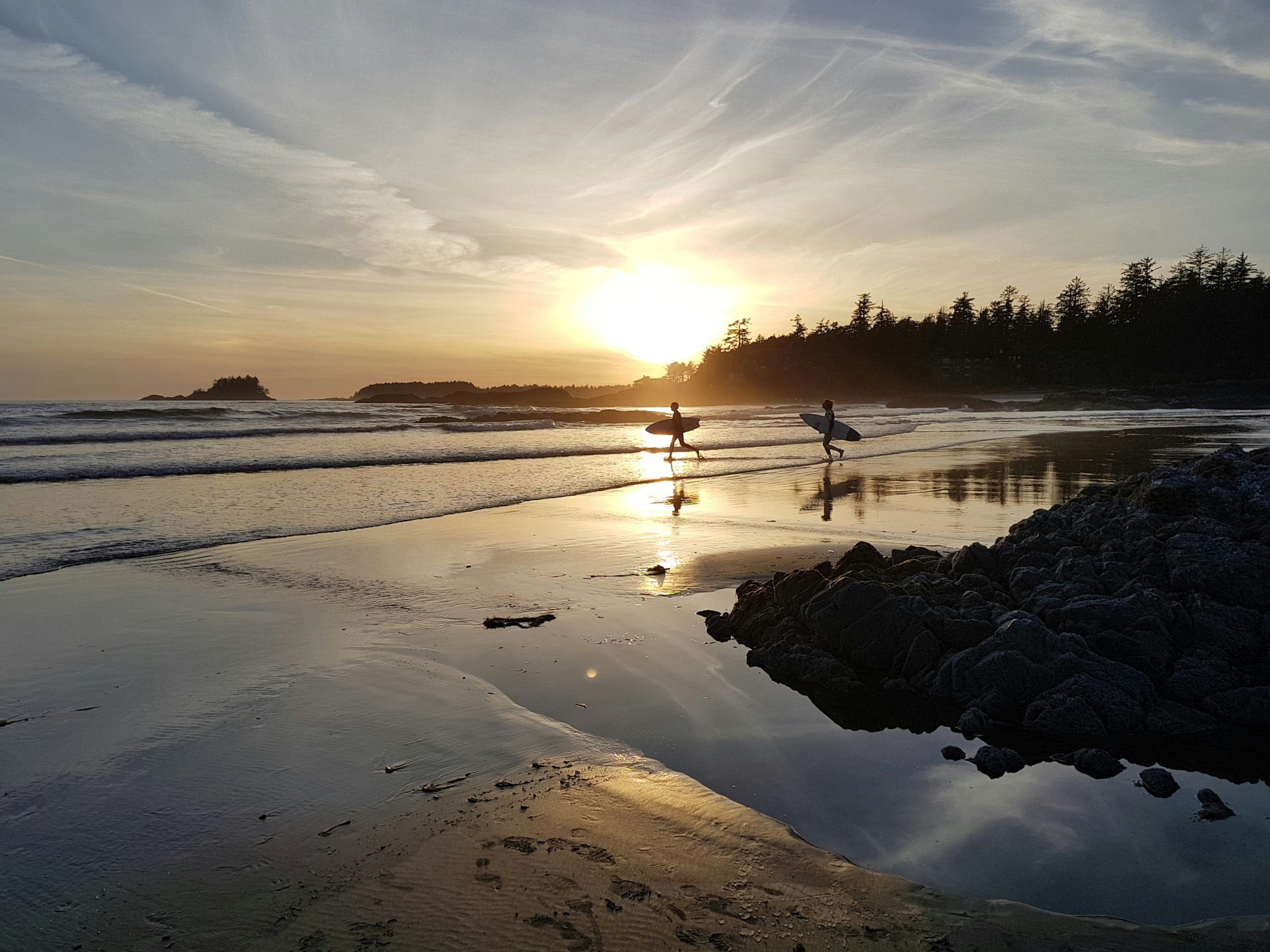
Choosing your favorite beach in Canada’s surfing capital, Tofino, is like choosing your favorite deluxe sports car: they’re all ridiculously good. Most surveys put Long Beach at the top because it’s, well, long. But many Tofitians (locals) rank the surfer’s hub of Chesterman as the most complete scimitar of sand. Ringed by rock pools, islets and a narrow sand spit, it’s beautiful in both early-morning mist and fiery orange-ripple sunset. And the surfing, of course, is sublime.
Planning tip: Unlike Long Beach, Chesterman is close enough to town to reach by bike (with your surfboard clipped to a special bike rack), and firm enough to cycle on if you need some leg exercise before cresting the Pacific waves.

5. Kitsilano Beach, British Columbia
Best summer-in-the-city beach
Kitsilano is arguably the top city beach in Vancouver (and all of Canada). Indeed, the stretch feels like a freewheeling piece of Southern California transported 1000 miles north. Backed by cool cafes and an attractive park, Kits (as the locals call it) exudes a sporty, laid-back vibe, especially in summer. The best part? It’s only a 20-minute bus or bike ride from downtown.
Beach volleyball is the game of choice here, although there are also enough grassy expanses to spread out and toss a frisbee or football. The yellow arc of sand is sugary and clean, with views across the water toward Vancouver’s glass skyscrapers and the North Shore mountains opposite.
Planning tip: If swimming in boat-filled English Bay doesn’t entice you, Kits also has an enormous nearly 450ft-long (137m-long) saltwater pool, one of the largest of its kind in the world.
6. Shallow Bay, Newfoundland and Labrador
Best beach for kayaking
The bay is indeed shallow, the beach is long and the sunsets are spectacular on Newfoundland’s west coast. Protected within the boundary of Gros Morne National Park, this gentle swathe of sand has a mellow, almost Caribbean feel – at least until you dip your toes in the 59ºF (15ºC) waters of the Gulf of St Lawrence.
Kayaking is a popular activity here. You can cast off from the beach and navigate the sheltered waters of Belldowns Islands, where arctic terns nest before undertaking their marathon migration south; whales can sometimes be spotted out at sea. When the weather turns frigid, beachside paths turn into cross-country skiing trails.

7. Annette Lake, Alberta
Best beach for wildlife
Landlocked Alberta relies on its lakes to entertain summer beachcombers. While the province has plenty of watery escapes to lure the sand-starved, few are as perfect as tiny Annette Lake in Jasper National Park, with its forested shoreline, dramatic mountain backdrop and invigoratingly cold glacial waters. Short and narrow, Annette’s patch of sand is barely the length of a frisbee throw – yet the views of the Canadian Rockies from this tiny stretch are vast indeed.
Planning tip: This is one of those rare beaches where you might want to pack some bear spray alongside your blow-up raft: grizzlies are sometimes spotted in the area. Elk and mule deer provide more innocuous company.
8. Plage de la Grande Échouerie, Québec
Best beach for kitesurfing
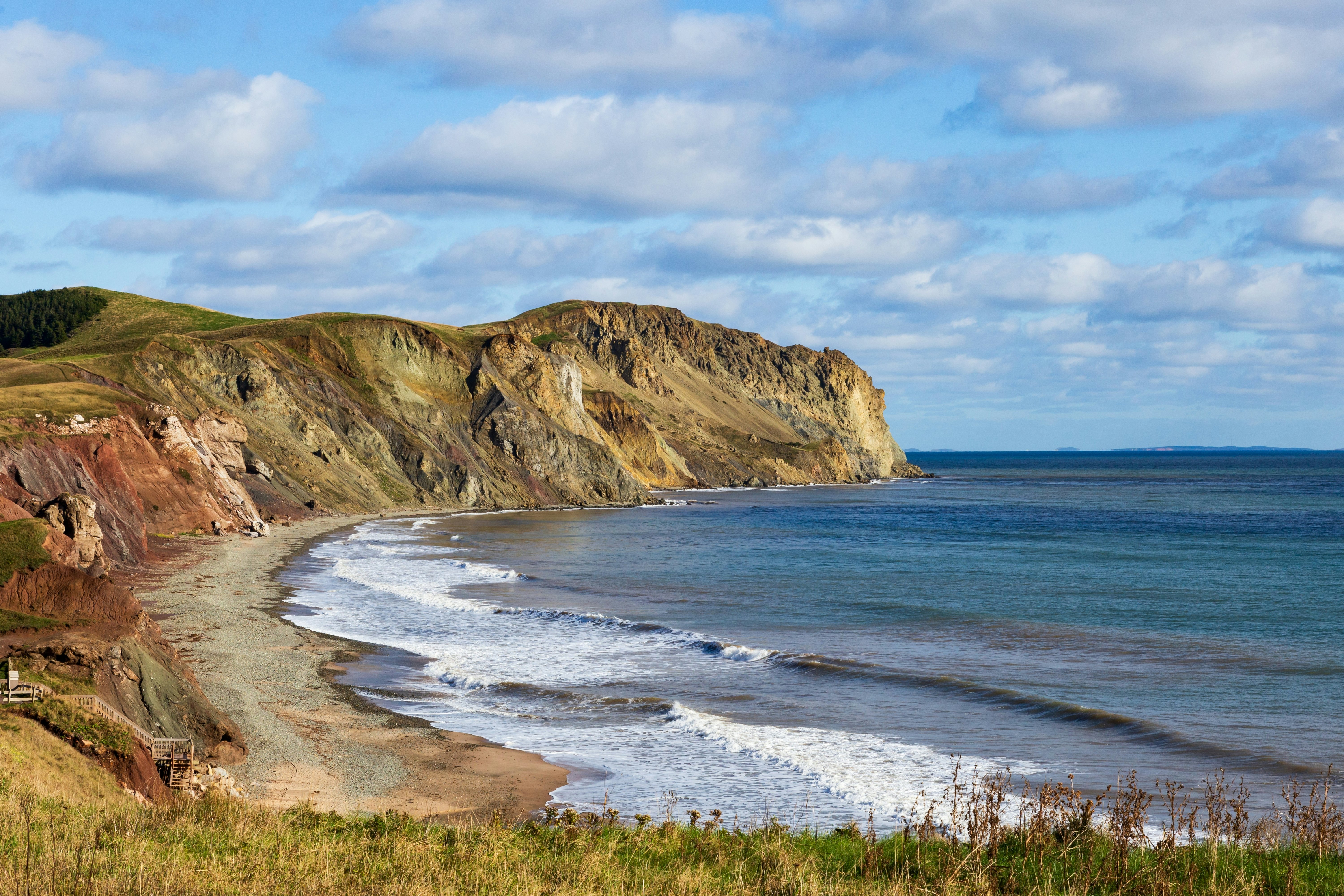
Administratively, the Îles de la Madeleine archipelago is in Québec; geographically, it’s much closer to the Maritimes. Possessing an astounding 217 miles (350km) of beaches juxtaposed against iron-rich red cliffs, its pièce de la résistance is this 6-mile (10km) sweep of pale sand on the Anglophone island of Grosse Île.
Extending northeast from Pointe Old Harry into the wetlands of the 1690-acre (684-hectare) East Point National Wildlife Reserve, Grande Échouerie invites hours of uninterrupted meditation amid tufted dunes frequented by horned grebe and piping plover.
Planning tip: The archipelago’s stiff winds make it one of the best places in Canada for kitesurfing. For the less athletically inclined, the kite flying is great here, too..

9. Dunes Beach, Ontario
Best beach for dunes
The aptly named Sandbanks Provincial Park, a 2.5-hour drive east of Toronto, juts into eastern Lake Ontario, forming the world’s largest bay-mouth barrier dune formation. Visitors will find three fabulous beaches here.
The two most popular, Outlet and Lakeshore, face west onto the main body of Lake Ontario. A little quieter and a lot more interesting is Dunes Beach, which abuts the cleaner, calmer waters of sheltered West Lake. Here, giant dunes dotted with trees and bushes rise steeply from the shore. While most beaches invite rest and relaxation, Dunes tempts you to indulge in short, sharp hill climbs before tumbling at full pelt back down into the lake.
Planning tip: You have to buy a $21 daily permit to access the park, which you can reserve in advance. There are also several camping options at Sandbanks Provincial Park.

10. Parlee Beach, New Brunswick
Best beach for families
With the warmest sea water in Canada and International Blue Flag certification proclaiming its safety, accessibility and environmental credentials, Parlee is far and away New Brunswick’s finest beach. Its ribbon of sand soft is golden, and its water is shallow and positively balmy in the summer. At the height of the season, lifeguards patrol at all hours, making it a favorite among families. Commercialization is kept to a minimum, and grassy dunes buffer a manicured strip of showers, change rooms and poutine-plying spots to eat. The Beach Boys once played a concert at Parlee; you can feel a carefree rock ’n’ roll spirit here to this day.
Planning tip: Locals in the know save their appetites for the nearby lobster capital of Shediac.
Advertisement
Take your Canada trip with Lonely Planet Journeys
Time to book that trip to Canada
Lonely Planet Journeys takes you there with fully customizable trips to top destinations – all crafted by our local experts.