Advertisement

A cruise ship deck lined with tourists sailing next to the coast of the Antarctic Peninsula. Marco Ramerini/Shutterstock
With its enormous ice shelves, vast emptiness and silence, Antarctica is like no place else on earth. Its landscapes are a study in the color white: how it reflects light, accentuates mountains and crumbles atop the sea. Yet, it’s often the animals who leave the biggest impression. There are the tuxedo-clad Adélie penguins who belly-surf out of the ocean to guard eggs from soaring skuas and feisty fur seals that keep an eye on visitors. Then there are the humpback whales, who breach from steel-gray fjords, and the doe-eyed Weddell seals, who ham it up for distant cameras while resting on wandering ice floes. Leopard seals and orcas top the food chain in this harsh but beautiful environment.
In Antarctica, everything is spectacularly extreme, from the constantly shifting weather patterns to the freezing midday temperatures. Yet the journey can be remarkably pleasant thanks to increasingly comfortable expedition cruises, which shuttle you to remote bays for half or full-day adventures before you return to a warm shower and three-course meal.
Sure, you’ll probably experience occasional rough seas and cold fingertips, but that’s a small price to pay for the journey of a lifetime and bragging rights to say you “survived the Drake Shake.” (Yes, there are commemorative t-shirts for sale on many ships.) This is everything you need to know about planning a trip to Antarctica, from choosing the best ship to what essentials you need to pack.

What is an Antarctic expedition cruise?
Antarctica cruises, and expedition cruises in general, are a world away from the cruises you might be familiar with in the Caribbean or Mediterranean. The focus is almost always on science, history, education and adventure, and crew members are naturalists and experts in polar exploration. On-board activities tend towards lectures and photography workshops, and there’s usually a ship-wide wake-up time well before 9am to get everyone through breakfast and to the mudroom on time for the morning activities. The ships are generally designed for function over form, and some may not have elevators or other accessibility features. This is especially true on smaller vessels.
Advertisement
You’re most likely to visit Antarctica as part of a group tour unless you’re part of a military or scientific trip. Any activities that involve getting closer to animals and icebergs tend to involve a zodiac – a small, inflatable boat that transports passengers from the ship to the icy shore. While there are options to fly to Antarctica as part of a tour, there are no accommodations or restaurants when you get there. Visiting the continent via ship combines your transportation, meals and a comfortable bed. It also means that no infrastructure has to be built ashore in Antarctica’s delicate environment.
Compared to a traditional cruise ship, the on-board amenities on an Antarctica polar expedition ship are typically fewer, though some may offer a small pool, Jacuzzi or library. There are typically no excursions to choose from in advance; the weather conditions will dictate the day’s activities, which only enhances the sense of adventure.
Travelers to the polar regions should generally be in good health due to the remote location, lack of infrastructure and unpredictable weather. You should be able to independently get on and off zodiacs, walk without aid on ice and snow, and safely move about a ship using stairs. Some tour operators require passengers to provide medical clearance before sailing for safety reasons.
The boats sailing the Antarctic continent are small, allowing access to bays and coves that are inaccessible to the large ocean liners typically used for traditional cruises. Additionally, since there are limits on the number of people that can be ashore in Antarctica at one time, a small ship with fewer passengers gives everyone more time to explore this beautiful landscape.
How much will my trip to Antarctica cost?
Per person, per day rates can range anywhere from 500 US dollars (US$) for a quad or triple room in the interior to US$1500 for a double suite with a balcony, including all meals, some drinks and daily excursions. This can drop slightly at the start and end of the season (which runs during the Antarctic summer from November to March), but don’t expect to pay any less than US$6000 per person for the entire journey.
There are some easy ways to cut down on costs, including booking early for “two-for-one” airfare subsidies or shipboard credits. Alternatively, you could also chance it and show up in the main ports of departure and hunt for last-minute unsold cabins, which can go on sale for up to half the retail price.
The absolute cheapest way to visit Antarctica is to do a “scenic sail” past the islands of the Palmer Archipelago on one of the extended South America cruise itineraries from Buenos Aires or Santiago (via San Antonio, Chile). Be forewarned, however, that these bigger boats do not have landing privileges, so you won’t be able to leave the ship.
What are the itineraries?
A whopping 98% of all tours to Antarctica begin at the southern tip of South America and last a minimum of eight days. Ushuaia, Argentina, has historically been the most popular departure point, though an increasing number of operators are now based in Punta Arenas, Chile. Expedition companies enjoy sailing from South America because they have relatively easy access to the Antarctic Peninsula, South Shetland Islands, King George Island and Palmer Archipelago, among other sub-Antarctic islands. Longer itineraries will tack on the wildlife-rich South Georgia, including the massive King penguin colony at Salisbury Plain and the history-rich Falkland Islands. A few companies opt instead for the glacier-filled fjords of Patagonia.
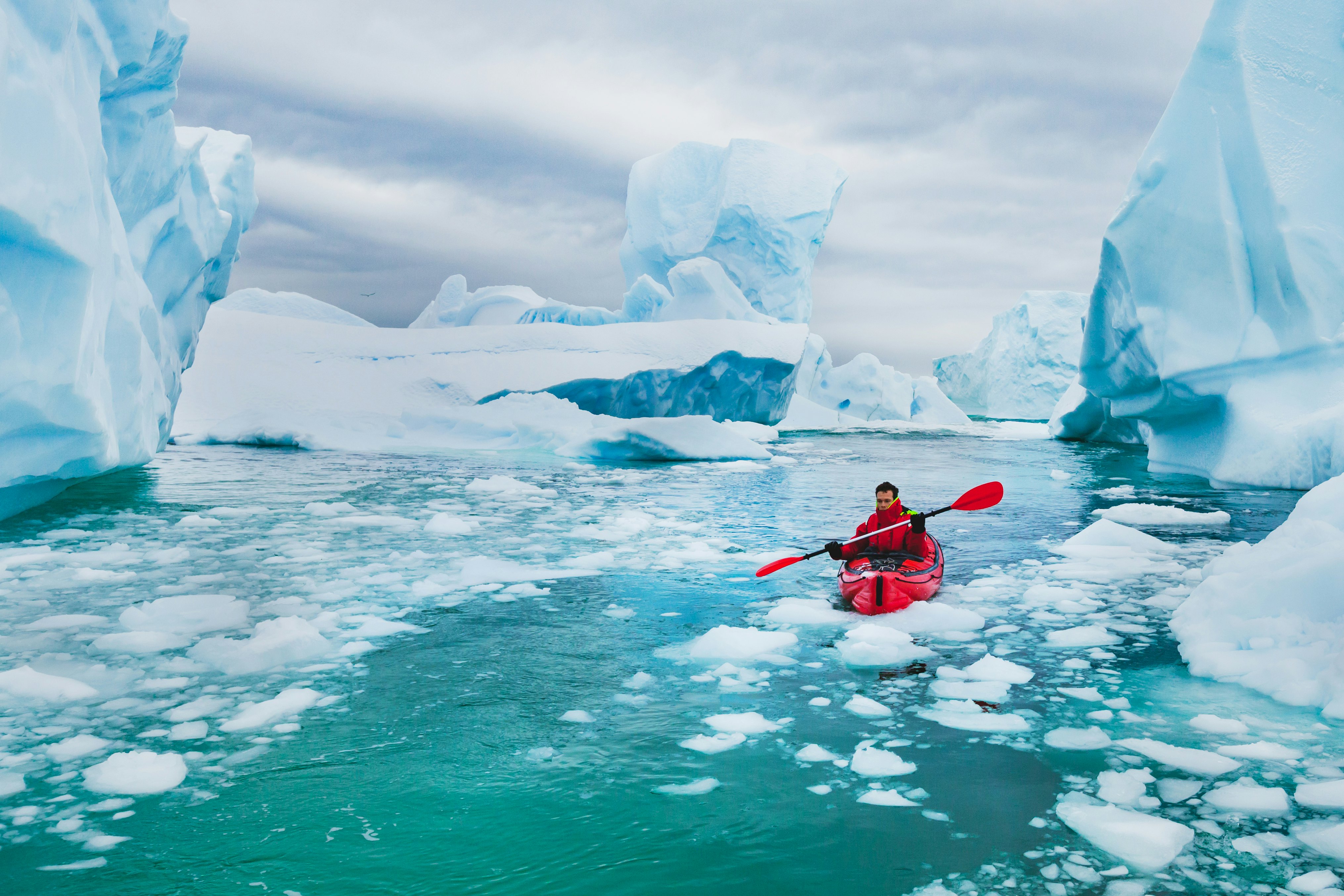
Itineraries crossing below the Antarctic Circle can take travelers as far south as the pack ice. Some tours allow passengers to camp overnight on the ice, kayak among towering icebergs or participate in a polar plunge, and newer itineraries venture into the Weddell Sea. Some offer helicopter excursions to the inland Emperor penguin colonies, either included or for an extra fee.
A handful of ships depart each year on specialized itineraries to the Ross Sea from Bluff, New Zealand and may include stops in the New Zealand sub-Antarctic islands. On rare occasions, cruises sail from Hobart, Australia, and Cape Town, South Africa, too. These tend to be longer and more expensive journeys, with about five rough days at sea before you cross the Antarctic Circle and reach the seventh continent.
All companies post general itineraries for their journeys, but the reality is that the weather, not clocks or calendars, determines timetables here. In general, most ships plan day by day, with the expected plans for the following morning announced the evening prior. Plans are subject to change based on weather or animal behavior.

When is the best time to visit Antarctica?
The best month to go to Antarctica depends on what you hope to experience. Early season, from November to December, is wildlife mating season and also when you’ll see the largest icebergs, newly calved from glaciers.
From December to February, temperatures often rise above freezing, so it is the warmest time to visit and when penguin chicks hatch. By the end of February, penguins are molting and gearing up to return to the sea. Juveniles are weaning from their parents and preparing to go off on their own. This is also the best time to see whales, and offers the greatest chance that the ice will melt enough to allow ships to cross below the Antarctic Circle.
Advertisement
Prices are often lowest at the end of the season in February because some of the wildlife will have moved out to the open ocean. Unfortunately, the infamous Drake Passage does not have a calm time of year. It can be rough, or “the Drake Lake,” at any point in the summer season.

What kind of clothing and gear should I bring on a tour to Antarctica?
Most tour operators will provide you with a packing list before departure, but it's wise to aim for loose layers and waterproof outer garments. Travel in Antarctica is wet, whether from snow, sea spray on zodiacs or “wet landings,” where passengers must step from the zodiac into the water before stepping on shore. There are no piers or docks for ships in Antarctica.
These are some key items you should pack for an Antarctica tour:
Layers: Long underwear is a good base layer. Mid-layers made of wool, fleece or other “breathable” material will help trap heat against the body.
Waterproof pants: Ski or rain pants as the outer layer are best for protecting the lower body.
Socks: Several pairs of sock liners and boot socks will keep your feet warm, and layers of socks will create the best fit possible in borrowed rubber boots.
Hats and gloves: A warm knit hat and waterproof gloves are essential for added comfort. Gloves with separate glove liners will benefit from protecting your hands while using a camera or binoculars.
Eyewear: While regular sunglasses will work, glacier glasses, or even ski goggles, will help prevent eye strain on bright days.
Neck gaiter: Scarves are a bit unruly but a neck gaiter will help protect against a wind-chapped face and cut down on the stench of penguin guano.
Camera: You’ll want to capture Antarctica in all its glory, but a fancy camera is unnecessary. The best camera to bring is the one you’re comfortable using. Most ships offer photography lectures to supplement your existing skills.
Other useful items: Binoculars, hand and foot warmers, biodegradable toiletries in reusable containers, sunscreen, lip balm and a swimsuit.
Bringing crampons or other gripping devices for your boots is unnecessary. You won’t be allowed to wear them in the zodiac due to the risk of puncturing the rubber boat. You can bring – or your ship may provide – walking sticks to assist with navigating ice and snow ashore.
Most key pieces of clothing can be rented in departure ports. In addition, many ships have donation programs where you can leave unwanted garments before you disembark.
Anything you bring ashore, including camera bags, backpacks and your clothing from home, may be fully bio-inspected during your Drake crossing.

How do I get to Antarctica?
Most travelers will fly from their home city through Buenos Aires to Ushuaia. In the United States, many major air hubs, including New York City, Atlanta, Houston and Miami, offer direct routes to Buenos Aires – it’s roughly a 10-hour flight. Travel time can run up to 16 hours or more for other US departure points requiring a connection.
Most international flights arrive at Ezeiza International Airport in Buenos Aires, and most connecting flights to Ushuaia depart from the domestic airport, Jorge Newbery Airport. Traveling between the airports can take up to two hours, so plan accordingly when booking.
Antarctica does not have immigration requirements. However, all travelers must meet entry requirements for the embarkation country. With few exceptions, US citizens do not need a visa to enter Argentina. US citizens with a Chilean departure port will be issued a tourist card on arrival in Chile and New Zealand allows US citizens to apply for the visa waiver travel program. It can take up to 72 hours to process the waiver, so it’s best to apply well in advance of your trip.

10 of the best Antarctica tours
Choosing which ship to sail on is one of the most difficult parts of planning a trip to Antarctica. All of the recommended companies below are members of the International Association of Antarctica Tour Operators, or IAATO, whose goal is to "advocate and promote the practice of safe and environmentally responsible private-sector travel to the Antarctic." All offer rubber boots to use while on your voyage, and most offer an expedition parka to keep.
1. G Adventures
The G Expedition, a ship that’s operated by tour operator G Adventures, is a ferry retrofitted as an Ice Class 1A ship, which means it has a reinforced hull that helps the ship safely navigate in icy waters. It also has gyro stabilizers and retractable fins, making sailing smoother in rough seas, and has recently been renovated.
The ship has ample public spaces for lectures, a dining area, bar, library and two Jacuzzis. The ship also offers kayaking, camping and Citizen Science participation on many itineraries. Citizen Science is a partnership between the US federal government and the public to advance inclusive participation in a wide range of scientific endeavors. No scientific background or training is required for passengers to participate.
G Expedition has eight stateroom categories, ranging from three-person bunk-style cabins with a porthole view to suites with a Queen bed, separate lounge area, and large windows. There are no rooms with balconies. With a passenger cap of 128 and a passenger-to-guide ratio of 10:1, G Expedition is an economical choice that doesn’t skimp on the essentials. Itineraries run 11–22 days.
2. Albatros Travel Group
Albatros Expeditions launched the Ocean Albatros in 2023, a well-appointed vessel that has a 50% lower carbon footprint than more traditional expedition vessels and a renowned stability in rough seas.
The ship has 94 staterooms, nearly all of which have balconies, and many are dedicated solo travel cabins with no single supplement. Albatros offers a variety of Antarctic itineraries and provides informative lectures, multiple lounges and wellness areas. It also has two restaurants, a bar and an open-deck dining facility.

3. Antarctica21
Anyone who’s heard stories about the notoriously choppy Drake Passage may want to consider an option like Antarctica21’s Magellan Explorer, which maximizes time on the seventh continent by combining flights and a cruise. These are also ideal itineraries for travelers who may be short on time, with trips as short as 6 days. Guests fly from Punta Arenas to Chile’s Antarctic base on King George Island, where the 76-passenger ship sets sail. The Magellan Explorer is intimate with all exterior-facing cabins and one of the highest guide-to-guest ratios, meaning departures from the mudroom are quick and you can spend more time at each site. As a bonus, the ship carries kayaks and a dedicated guide for those who prefer to explore each site by paddle.
4. Silversea
Silver Endeavor hosts Silversea’s Antarctica Fly Cruise itinerary, which also skips the Drake Passage. The trip includes a private charter flight from Santiago to Puerto Williams, an overnight hotel stay at The Cormorant at 55 South, a new hotel built for Silversea passengers, and then a private charter flight to King George Island where passengers board the ship. Guest capacity on the Silver Endeavor is 220 and the ratio of guests to crew is an impressive 1:1. There are multiple restaurants, bars and social spaces spread across the eight decks, and the guest suites are focused on luxury and refinement. Itineraries range from 6 days to an all-encompassing 21 days.

5. Oceanwide Expeditions
The 170-passenger m/v Hondius is one of the most economical options for travel to Antarctica, matching exceptional polar capabilities with an excellent price point. While the cabins aren’t as large or luxurious as others on this list, the itineraries boast adventurous excursions, such as camping, snowshoeing and mountaineering. For those brave enough – and experienced enough – to try polar scuba diving, it’s also one of the few ships equipped for underwater activities.
Oceanwide Expeditions offers trips to the Weddell Sea aboard small ships such as the m/v Ortelius, which includes helicopter flights to Snow Hill Island, the location of one of the only Emperor penguin colonies in the world. The helicopter will also land on sea icebergs if conditions allow. Itineraries range from 11 days to 2 weeks or longer.
6. Lindblad Expeditions
Lindblad was the original pioneer of Antarctic cruises and its newest ship, the 138-passenger National Geographic Endurance, shows that it’s mastered how to usher people to the end of the earth in style and comfort. Though this vessel was purpose-built for travel in the polar regions, it features rare-in-Antarctica extras such as a spa, yoga studio and infinity-style hot tub. There are also two glass-walled “igloos” where you can stargaze in the evening. A National Geographic photographer is part of the crew and will happily help you master those penguin shots before you set off on a polar exploration with the available kayaks, snowshoes and cross-country skis.
7. Viking Cruises
This legacy river cruise operator now also specializes in sailing the open ocean with the launch of ships like the 378-passenger Viking Octantis, which debuted in early 2022. This luxurious ship has floor-to-ceiling windows in its all-veranda cabins and lavish add-ons, including helicopters and submarines. It also replaces the traditional mudroom with an industry-first in-ship marina that lets guests depart from a stable surface, shielded from wind and waves.

8. Heritage Expeditions
One of the few ships sailing to the Ross Sea side of Antarctica, the 140-passenger Heritage Adventurer departs New Zealand each January on a 28-day journey, which typically take in the Ross Ice Shelf (the world’s largest body of floating ice), Cape Adare (Antarctica’s largest Adélie penguin rookery), and a number of historic huts that recall the “Heroic Era” of Antarctic exploration. Along the way to and from Antarctica, the ship stops at New Zealand’s Subantarctic Islands and Australia’s Macquarie Island.
9. Aurora Expeditions
Aurora Expeditions has three small ships that carry a maximum of 130 passengers on expedition trips. All three ships feature the Ulstein X-Bow, designed to enhance stability in rough seas and decrease water resistance. On-board desalination plants convert seawater to potable freshwater, which reduces the need to carry freshwater from the departure port and lowers fuel consumption.
The Greg Mortimer has hydraulic viewing platforms for unobstructed views and two jacuzzis. The Sylvia Earle has a glass atrium lounge, dedicated zodiac access points and a sauna. Aurora’s newest ship, the Douglas Mawson, set sail in 2025 and includes single-passenger staterooms, two restaurants, Jacuzzis, and a heated outdoor pool. For the exceptionally adventurous passenger, itineraries offer scuba diving, climbing and ski touring.

10. Intrepid
Itineraries on the 200-passenger Ocean Endeavor range from 11 to 24 days and include a range of activities from photography lessons to polar camping. All trips leave from Ushuaia and typically take in South Georgia and the Falkland Islands. While cabins are basic – and many rooms are in the dark interior – the boat does feature a gym, small spa and heated saltwater pool. It also has an excellent passenger-to-crew ratio at 8:1. Fares include an inner puffer jacket liner to keep and an outer expedition jacket on loan.
Advertisement
Explore related stories

Apr 4, 202217 min read
This is your brain on Antarctica: penguins, icebergs, and a lifetime supply of awe
Oct 18, 20216 min read
Virgin Voyages launched a cruise designed for Gen Z - here's one 25-year-old's verdict