Advertisement
6 of Milan's best neighborhoods: where to stay and what to do

Kerry Walker
Dec 12, 2025 • 8 min read
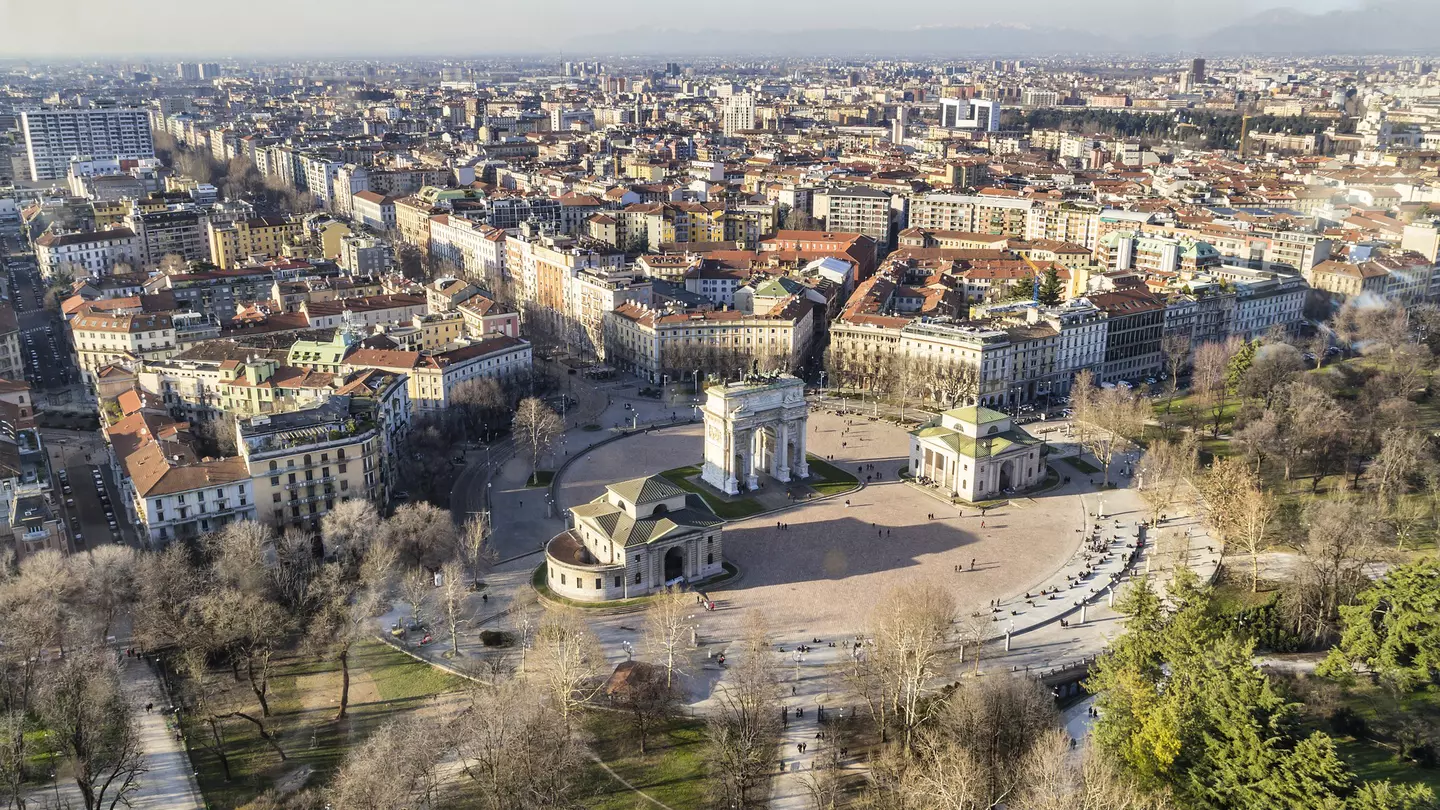
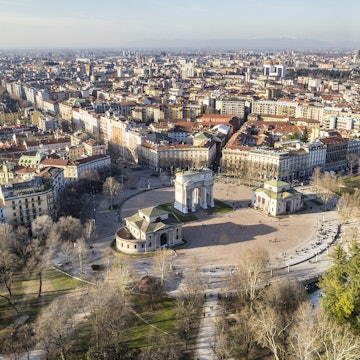
Aerial view of Milan ©PJPhoto69/Getty Images
Milan of the Gothic Duomo. Milan of da Vinci’s Last Supper. Milan of Prada. Milan of three-Michelin-starred restaurants. Milan of cool, bar-lined canals and post-industrial fashion houses. Italy’s northern powerhouse has the lot. And whether you’re after history, blockbuster art, nightlife, food or this season’s latest must-have to pep up your wardrobe, this on-the-pulse city delivers.
If you want to give the crowds the slip for a taste of the real Milan, stray beyond the historic center and venture to outlying neighborhoods. It’s when you stop randomly ticking off the sights and find hidden corners of quiet beauty that this city really works its magic. Read on for the inside scoop on Milan’s most exciting neighborhoods.
Advertisement
1. Duomo and San Babila
Best neighborhood for sightseeing
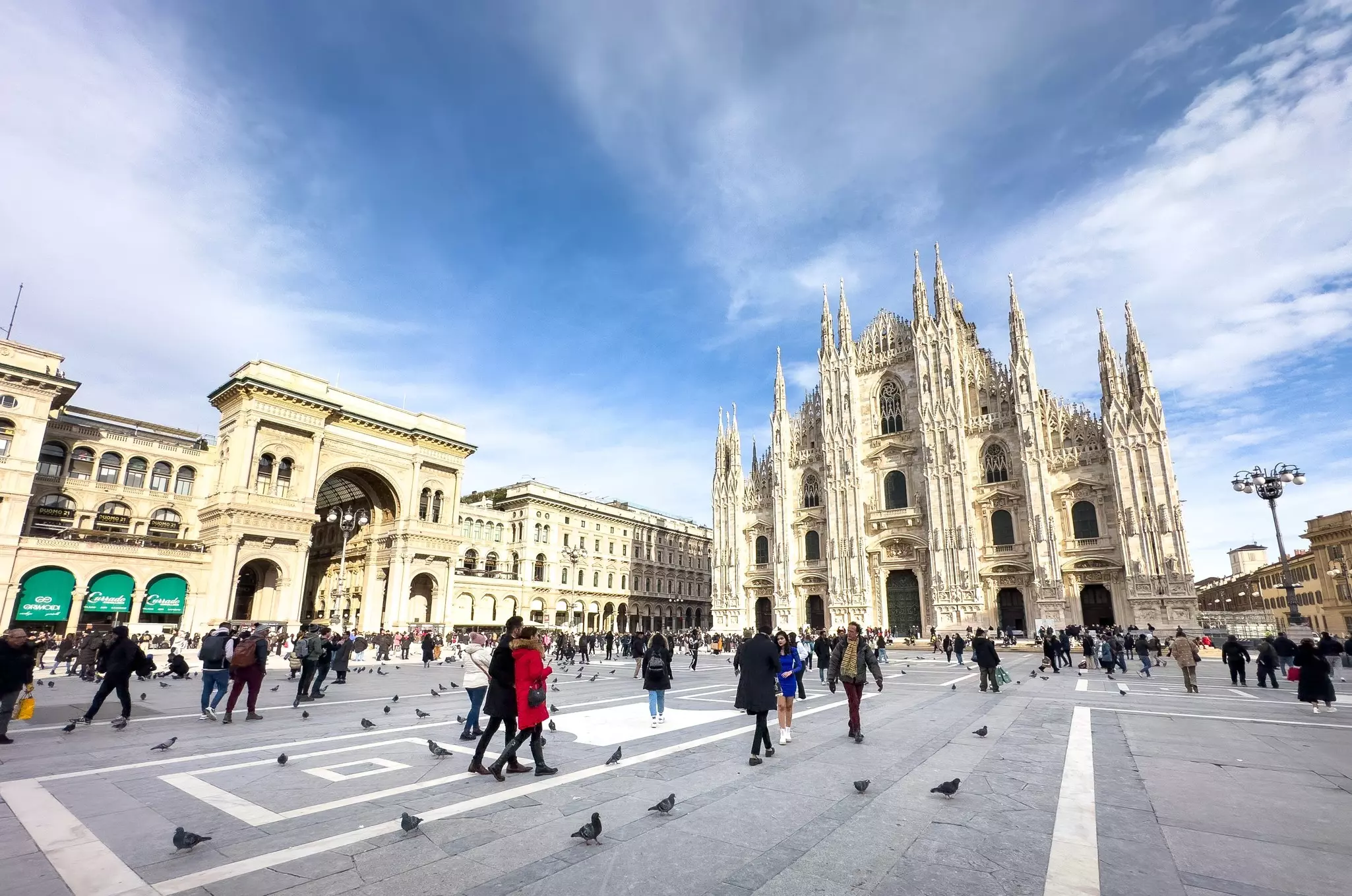
Topped off by Milan’s extraordinary Gothic Duomo, a pink Candoglia marble stunner with a riot of filigree spires, pinnacles and gargoyles, this central, pedestrian-friendly neighborhood places you right in the thick of things. If you want to cram in Milan’s unmissable experiences into a few days, base yourself here. Everything is walkable, so you needn’t even set foot on public transport.
All elegant roads lead to the vast Piazza del Duomo, where you’ll be drawn instantly to the Duomo (visit early morning for rainbows of stained glass), the treasure-crammed Museo del Duomo, and Mussolini's Arengario, now harboring the futuristic museum of 20th-century art, Museo del Novecento. Just a heel clack away is the neoclassical Galleria Vittorio Emanuele II, a temple to designer labels like Prada, the sublime Palazzo Reale, staging big-hitter art exhibitions, and the Old Master-packed Gallerie d’Italia. And you’ll almost certainly want to score tickets for a performance at La Scala, one of the world’s most famous opera stages.
Between sightseeing, factor in time for some of Milan’s hottest restaurants, cafes and bars. Days begin sweetly over bignes (chocolate-cream puffs) at Iginio Massari’s pasticceria (pastry shop), and round out with Campari-based cocktails at aperitivo (pre-dinner drinks) hour at art nouveau Camparino in Galleria.
Where to stay: Just a 5-minute toddle from the Duomo, Hotel Gran Duca di York is a charismatic mid-ranger in a 19th-century palazzo (mansion), while the equidistant Spadari al Duomo flaunts one-of-a-kind design.
2. Navigli and Zona Tortona
Best neighborhood for nightlife
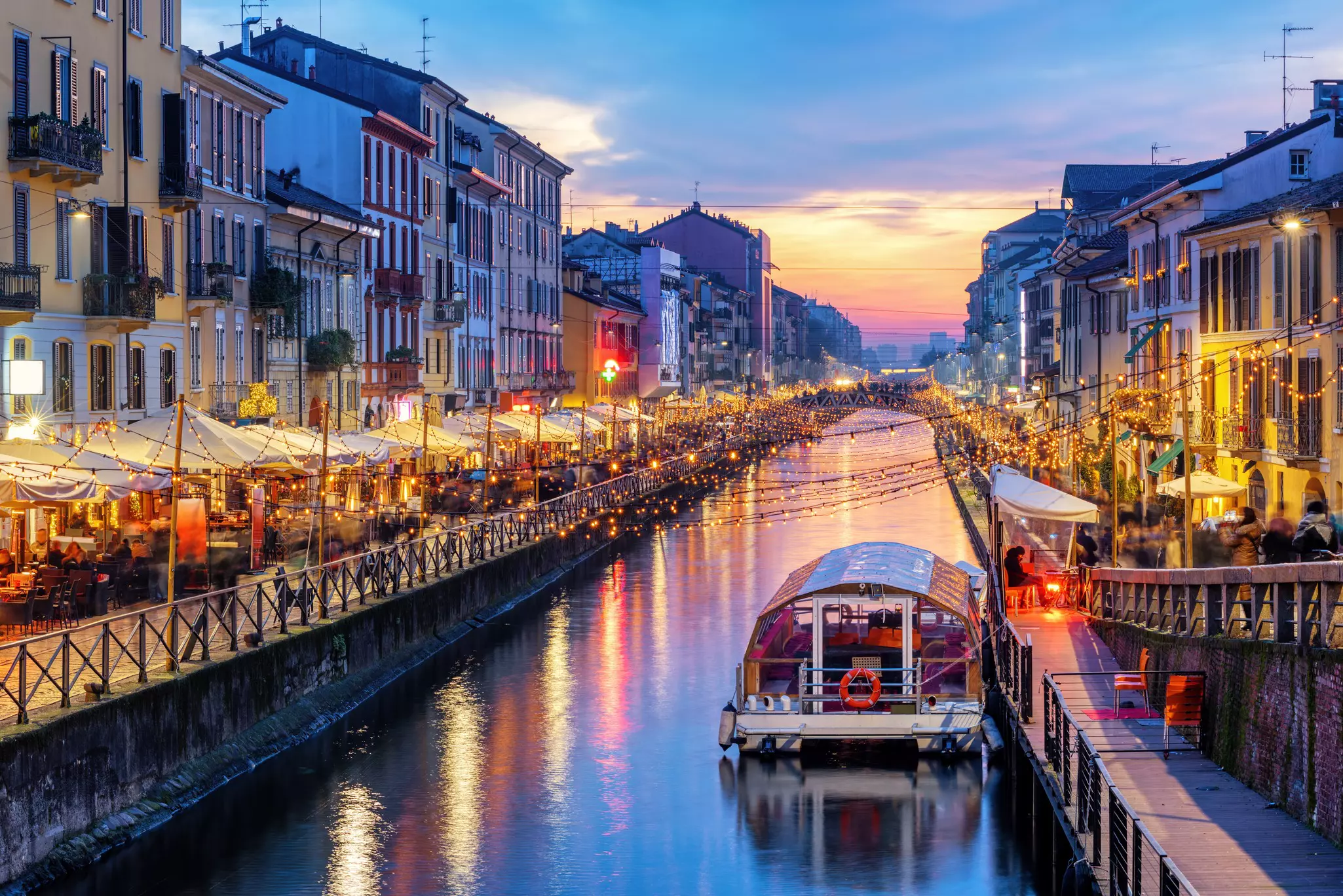
A step south of the center, Milan’s Navigli district dials up the cool. This upbeat, boho-flavored Ticinese neighborhood is where the sharp-dressed Milanese go to eat, drink and party. Named after its two canals (Naviglio Grande and Naviglio Pavese), which are crisscrossed by bridges, this district is a great place to take a breather. Tap into modern-day Milan’s relaxed beat by pedaling through the streets on a Dutch-style bike, sipping a spritz as you cruise along the canals that were once the autostrade (highways) of medieval Milan, or taking to the water canoeing or stand-up paddleboarding.
There’s history without the crowds here, too, with the past on show at the Roman Basilica di San Lorenzo and the early Christian Basilica di Sant'Eustorgio, built in the 4th century to house the bones of the Three Kings.
Skip over the tracks to newfound creative hub Zona Tortona, where industrial spaces and factories are being reborn as fashion showrooms, galleries and studios. The icing on the cake is the David Chipperfield-designed Mudec, Milan's Museum of Culture, sheltered in the ex-Ansaldo factory. On the third floor is the sensational, three-Michelin-starred Enrico Bartolini al Mudec.
From aperitivo hour onwards, Navigli’s bar-lined canals thrum with Milanese on big nights out, especially on warm summer nights. Go for a wander and take your pick.
Advertisement
Where to stay: For chic digs without the fancy price tag, bed down at canalside Maison Borella, overlooking the Naviglio Grande, a class act converted from an old casa di ringhiera (railing house).
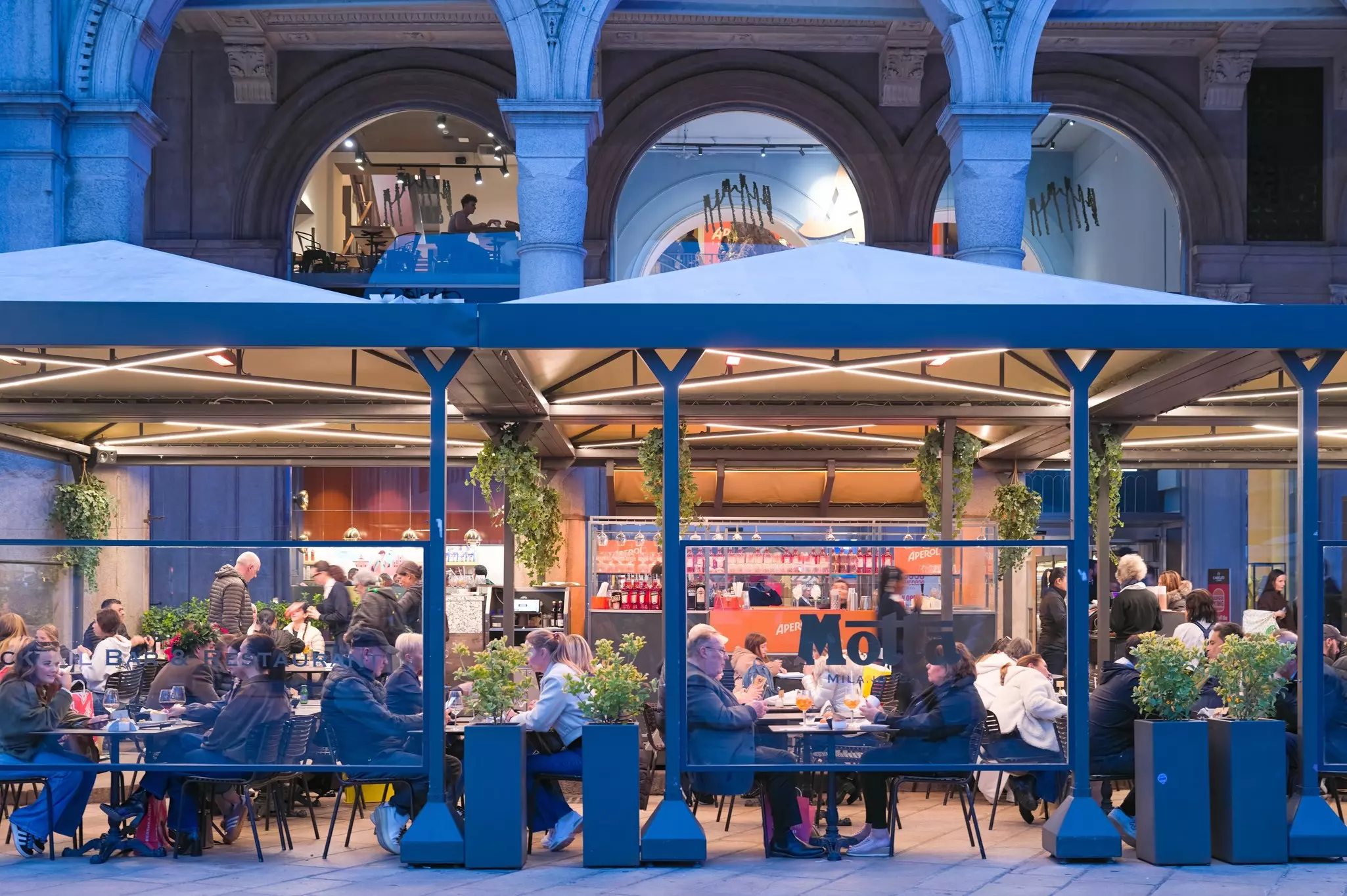
3. Quadrilatero d’Oro
Best neighborhood for haute couture
In Milan’s stylish heart, the Quadrilatero d’Oro (Golden Quadrilateral) should be your neighborhood of choice if you’re here to shop. Chanel, Armani, Gucci, Versace, Valentino, Prada – the designer labels trip of the tongue in this smart quadrangle of cobbled streets. Bounded by Via Monte Napoleone, Via Sant'Andrea, Via Senato and Via Manzoni, the district showcases the world’s top designers. But even if you have no interest in (or budget for) haute couture, the window-shopping and people-watching are riveting.
This ultra-chic district is also packed with intriguing little museums that shine a light on the neighborhood’s history, with top billing going to the likes of Museo Bagatti Valsecchi and Museo Poldi Pezzoli, palatial apartments with collections hot on Renaissance art. Napoleon’s Milanese home, the 18th-century Villa Reale, harbors the city’s modern art collection.
Swinging north, Porta Venezia pulls out architectural stops with its attention-grabbing ensemble of fin-de-siècle Liberty houses, with wrought-iron balconies and intricately patterned tiles. Get outdoors with a walk in the Giardini Indro Montanelli, home to the neo-Romanesque Natural History Museum.
Where to stay: Posh is the word. Blow the budget on the luxe likes of the flagship Armani Hotel Milano, or ramp up the royal treatment at the five-star Four Seasons Milano, lodged in a 15th-century convent and framing a colonnaded garden.
4. Porta Garibaldi and Isola
Best neighborhood for big-city vibes
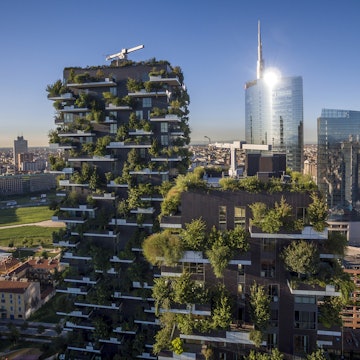
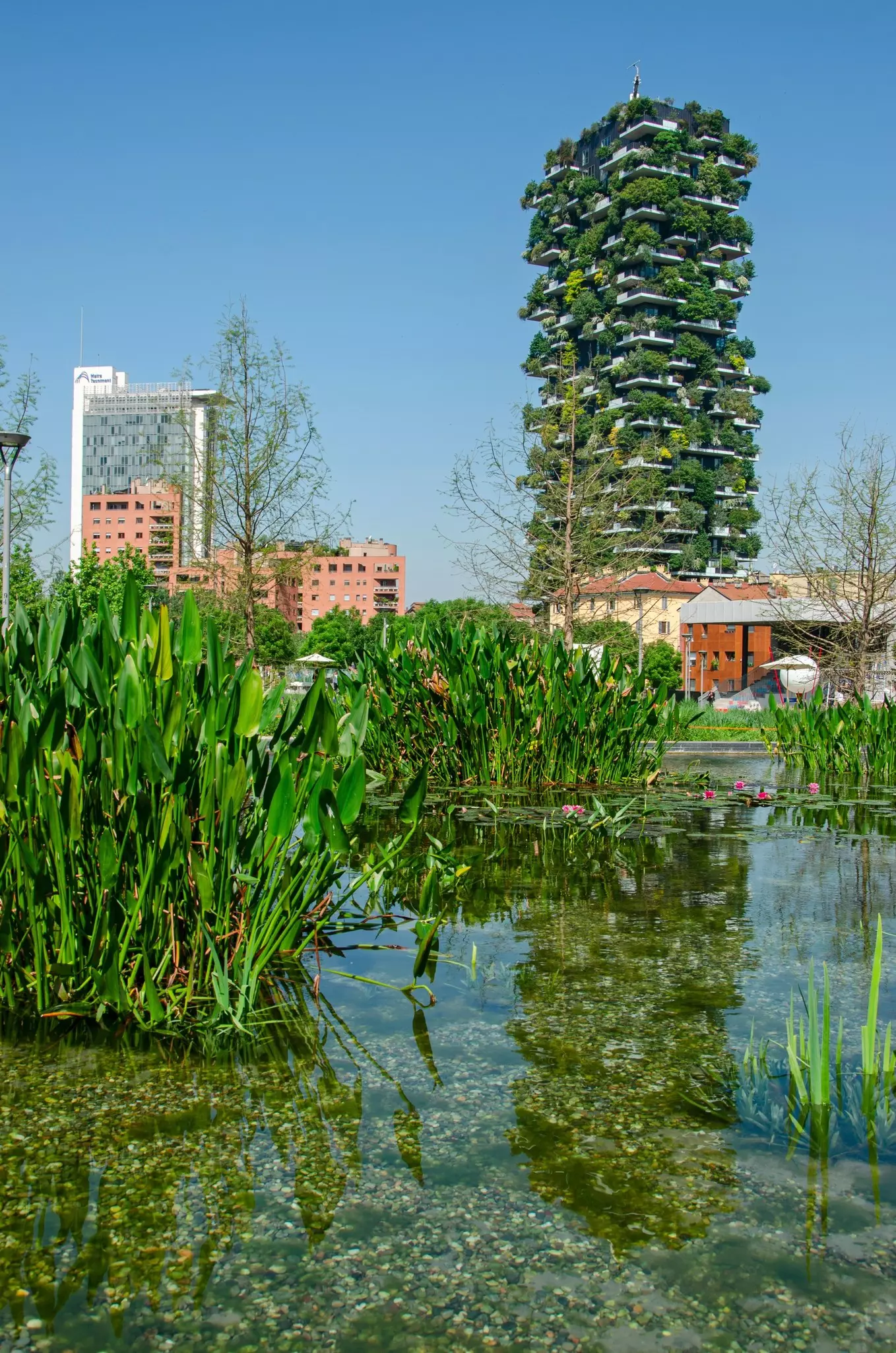
Italy’s tallest skyscraper, César Pelli’s curvaceous, 231m-high UniCredit Tower, punches high above the Porta Garibaldi neighborhood, where Milan takes a confident leap into the future. Putting the city on the global map for cutting-edge architecture like a Manhattan in miniature, the neighborhood wows with other stunners like Stefano Boeri’s striking Bosco Verticale (Vertical Forest), two high-rise apartment blocks bristling with 7000 trees and 20,000 shrubs and plants like modern-day Hanging Gardens of Babylon. Fondazione Feltrinelli
Not only the architecture is green. Get fresh air with a walk, run or bike ride through the landscaped lawns and fields of the Biblioteca degli Alberi (Library of Trees) against a backdrop of shiny skyscrapers. Swish Corso Como links Corso Garibaldi with the upbeat, multicultural neighborhood of Isola, a working-class district with newfound edge and plenty of bars, delis, indie shops and street art to explore.
Where to stay: There are some appealing midrange picks in this neck of Milan, including gorgeous travel-inspired B&B LaFavia Milano in the born-again Rabarbaro Zucca factory. The rooftop garden is a fabulous spot for summer breakfasts. Or ramp up the designer luxury in one of three suites in a revamped palazzo at 3Rooms 10 on Corso Como.
5. Brera and Parco Sempione
Best neighborhood for parks and gallery hopping
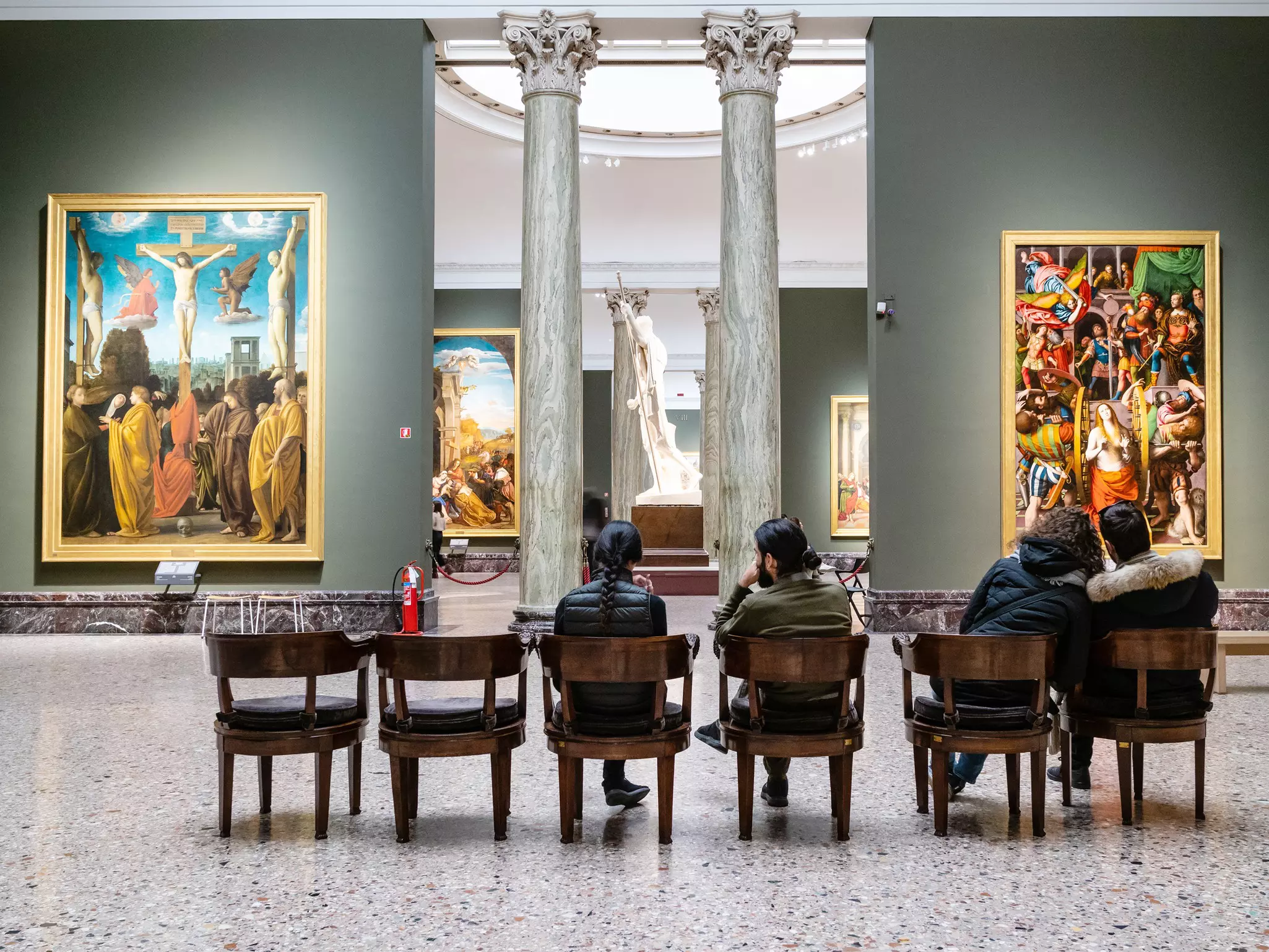
With cobbled streets, big-hitter art galleries, glam restaurants and a boho vibe, Brera is one of the most enticing corners of Milan’s Centro Storico. A stomp through its historic backstreets brings you to its centerpiece: the 17th-century Palazzo di Brera, a Jesuit college reborn as the city's acclaimed Accademia di Belle Arti (Fine Art Academy) in 1776. Upstairs is the unmissable Pinacoteca di Brera, presenting an astonishing collection of Old Masters, many of which were carted off from Venice by Napoleon. Italian greats like Titian, Tintoretto, Veronese and the Bellini brothers steal the show.
Go for a nose around streets like Via Brera, Via Solferino and Via Madonnina and you’ll find studios, galleries, cafes, vintage and indie shops, cool bars and some of Milan’s best restaurants. At the pinnacle of Milan’s food scene is two-Michelin-starred Seta at the Mandarin Oriental, where chef Antonio Guida’s wows with season-spun creations.
Hopping west brings you to Parco Sempione, a landscaped park where dukes once hunted. Here the showstopper is the red-brick Castello Sforzesco, once a Visconti fortress, later home to the powerful Sforza dynasty, who ruled Renaissance Milan. Its defenses were designed by da Vinci and its frescoed hall hides Michelangelo’s final work, the Rondanini Pietà. At the other
Where to stay: Get a taste of the five-star high life with a night or two at the opulent Palazzo Parigi Hotel & Grand Spa, or Bulgari Hotel Milan, a stunning conversion of an 18th-century Milanese palazzo.
6. Corso Magenta and Sant'Ambrogio
Best neighborhood for sacred art and da Vinci
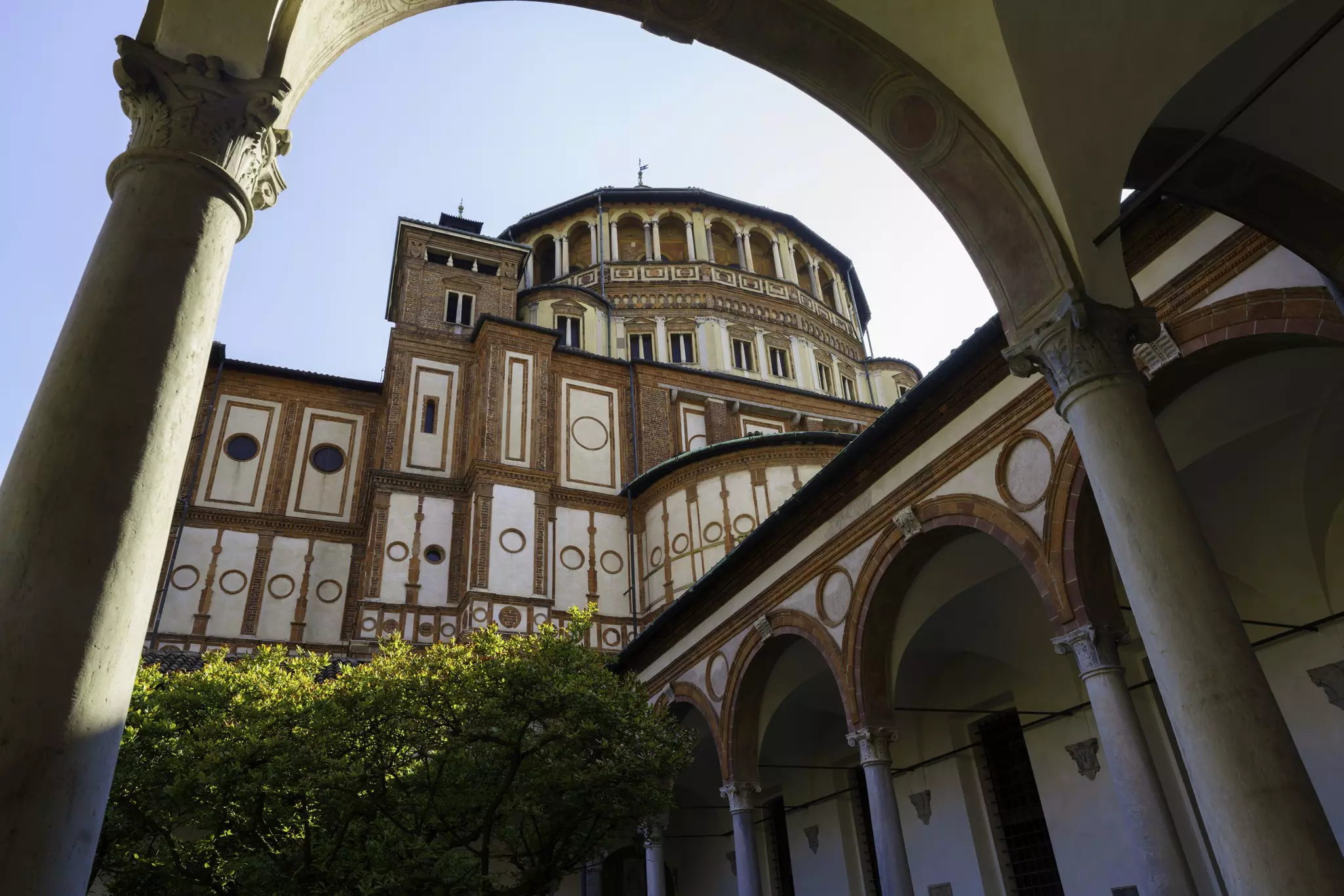
Domes, spires and a feast of sacred art make this leafy, well-to-do neighborhood west of the Duomo worth the pilgrimage. At the top of every Milan wish-list is the chance to eyeball Leonardo da Vinci’s Renaissance masterpiece The Last Supper(book tickets months in advance as they sell out in a flash). It graces the wall of the refectory that sidles up to the Lombard church Basilica di Santa Maria delle Grazie. Its beauty is rivalled by the Romanesque simplicity of mosaic-clad Basilica di Sant'Ambrogio, a red-brick cathedral founded by St Ambrose, Milan’s patron saint, in 379 CE, and the exquisitely frescoed Chiesa di San Maurizio, a 16th-century royal chapel and former Benedictine convent.
Da Vinci left an indelible mark on Milan and you’ll feel the spirit of the inventive genius exploring other neighborhood sights like the Museo Nazionale della Scienza e della Tecnologia Leonardo da Vinci, a colossal science museum in a 16th-century monastery, showing models based on his sketches, and La Vigna di Leonardo, his original vines creeping across the gardens of the 15th-century Casa degli Atellani.
The Italian stock exchange takes pride of place on Piazza degli Affari. Bankers prop up the bars on elegant Corso Magenta nearby, with its parade of baroque palazzi, fancy cafes, restaurants and boutiques.
Where to stay: Opposite the science museum, B&B Hotel Milano Sant'Ambrogio appeals with bright, welcoming, budget-friendly digs. Or stay at Antica Locanda Leonardo, a charming, family-run B&B in a 19th-century residence near Leonardo's The Last Supper.
Advertisement
Explore related stories

Aug 23, 20232 min read
Simple Pleasure in Milan: How to get a La Scala opera ticket for less than €15