Advertisement
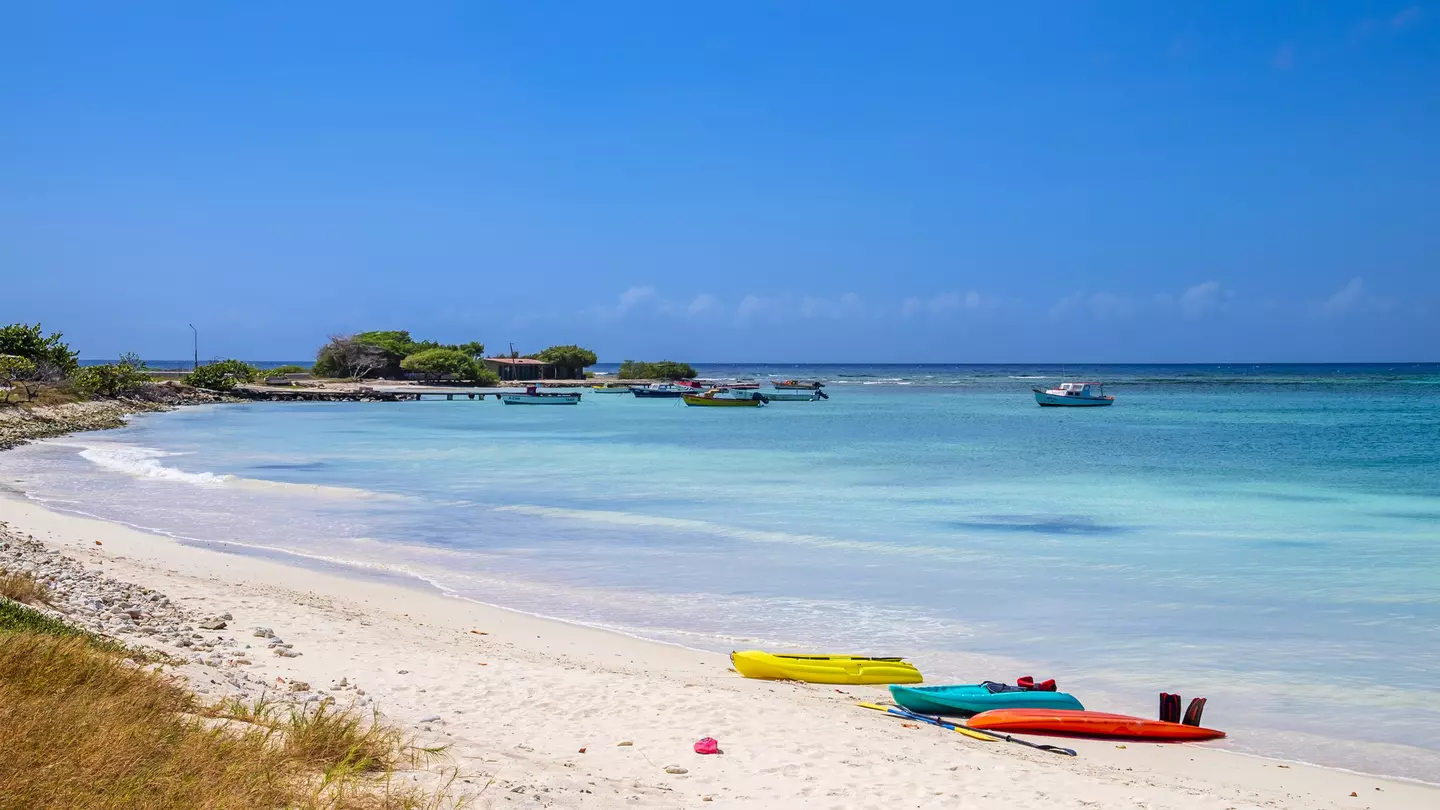
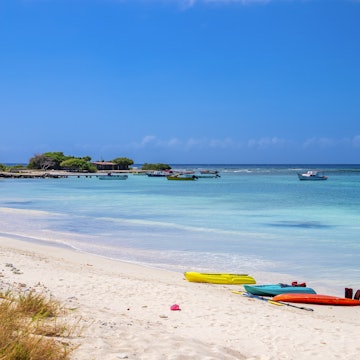
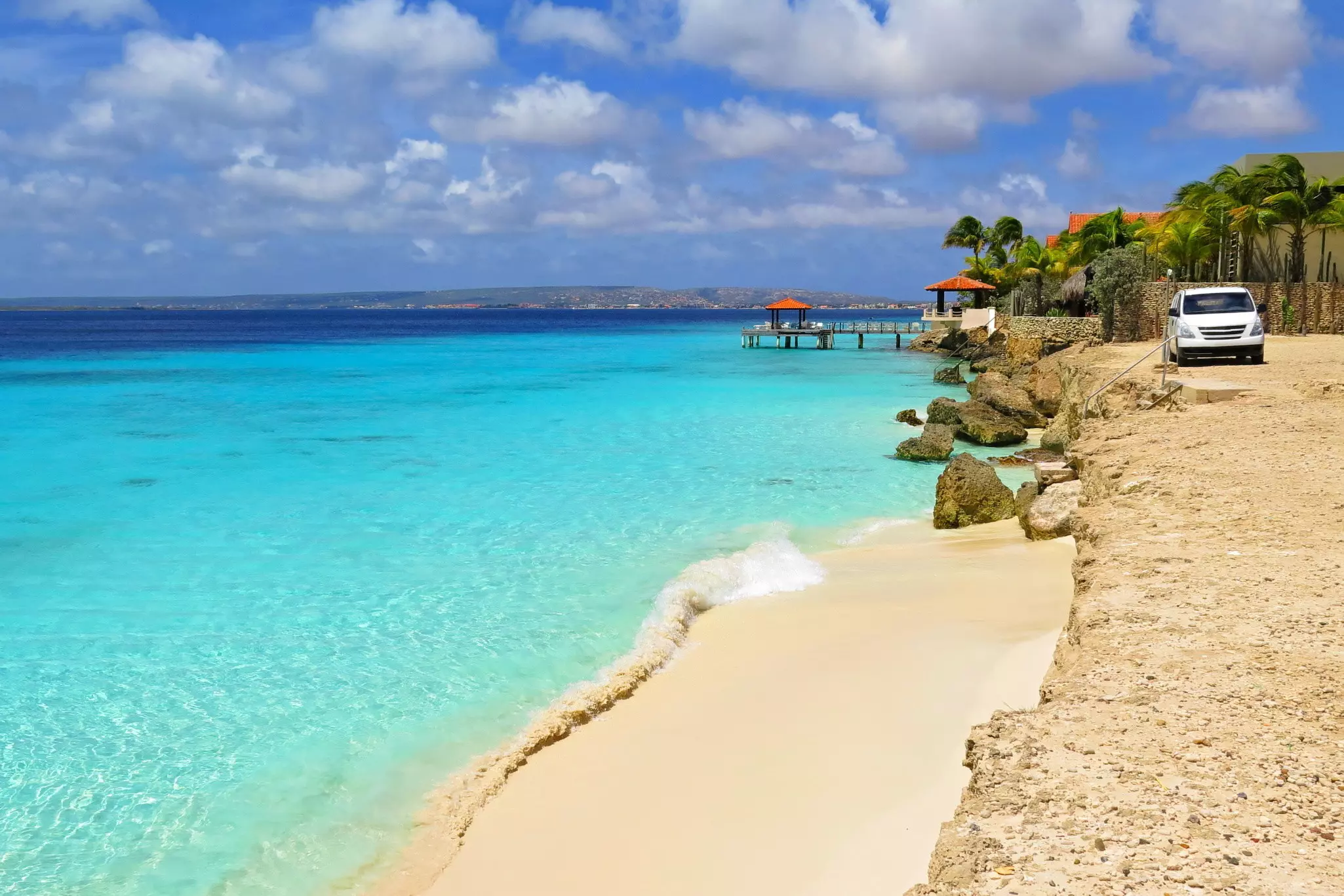
Rodgers Beach, on the south coast of Aruba. Orietta Gaspari/Getty Images
Sunseekers and beach hoppers have made Aruba one of the Caribbean’s most popular spots. But beyond its stunning white sand beaches, Aruba has amazing destinations, including the natural appeal of Arikok National Park, the vibrant murals of San Nicolas and some of the best scuba diving in the western hemisphere.
The island is as fun an escape with friends as it is a soothing getaway to relax and recharge your batteries. Intrigued yet? Plan your first trip to Aruba with these recommendations, but it surely won't be your last.
Advertisement
When should I go to Aruba?
Aruba’s weather is pleasant and warm to hot year-round, and there simply isn’t a bad-weather season. Unlike other Caribbean islands, Aruba (along with neighboring Bonaire and Curaçao) lies outside the Atlantic hurricane belt, minimizing the risk of storms. Since it’s a tropical island, rain does fall in Aruba, and the wind can pick up, but the weather overall is enjoyable and sunny just about all the time.
December and January are the peak of the high season, and prices for hotels and rental cars skyrocket. If you wish to spend the holidays in the Caribbean, then book everything as far ahead as possible and travel before Christmas Eve and after New Year’s Day. February through April is still the high season, though with enough planning you can score deals on accommodations. If a colorful Carnival celebration is on your wish list, head to Aruba in February or early March. (The dates vary each year.)
Low(er) season usually starts after Easter and lasts through November. One of my favorite times to visit the island is November: the weather isn’t as hot as in summer, and there are fewer people – allowing more freedom for spontaneous trips.
How much time should I spend in Aruba?
While you could just fly in for a weekend and have a great time on the beaches, I highly recommend staying longer. Cruise ships call on Aruba, with passengers disembarking for half-day trips to the island; think about the impact such visitors have on the environment and the local economy.
A weeklong stay in Aruba is ideal, while 10 days or more gives you time to explore, wind down, hike and maybe even try out a new sport like scuba diving or windsurfing. If you’d like to take a PADI certification course, make sure to devote 3 or 4 days to just that – ideally more – so you can gain more experience.
Is it easy to get in and around Aruba?
Several international airlines connect Aruba’s Queen Beatrix International Airport with cities in the USA, Canada, the Dominican Republic and a handful of countries in South and Central America, as well London and Amsterdam. Frequent short flights also depart for other Dutch Caribbean islands: Bonaire, Curaçao and Sint Maarten.
If you have enough time, it is possible to visit all three ABC islands on one trip. But I recommend devoting your time to just one, for a deeper visit (and less travel time).
Once you are on Aruba’s shores, you can rent a car directly at the airport and explore from there. Public transportation reaches much of the island, yet for the freedom and flexibility to get to challenging-to-reach places, a rental car is the way to go. Taxis can get very expensive, very fast.
Advertisement
Top things to do in Aruba
Scuba dive through shipwrecks
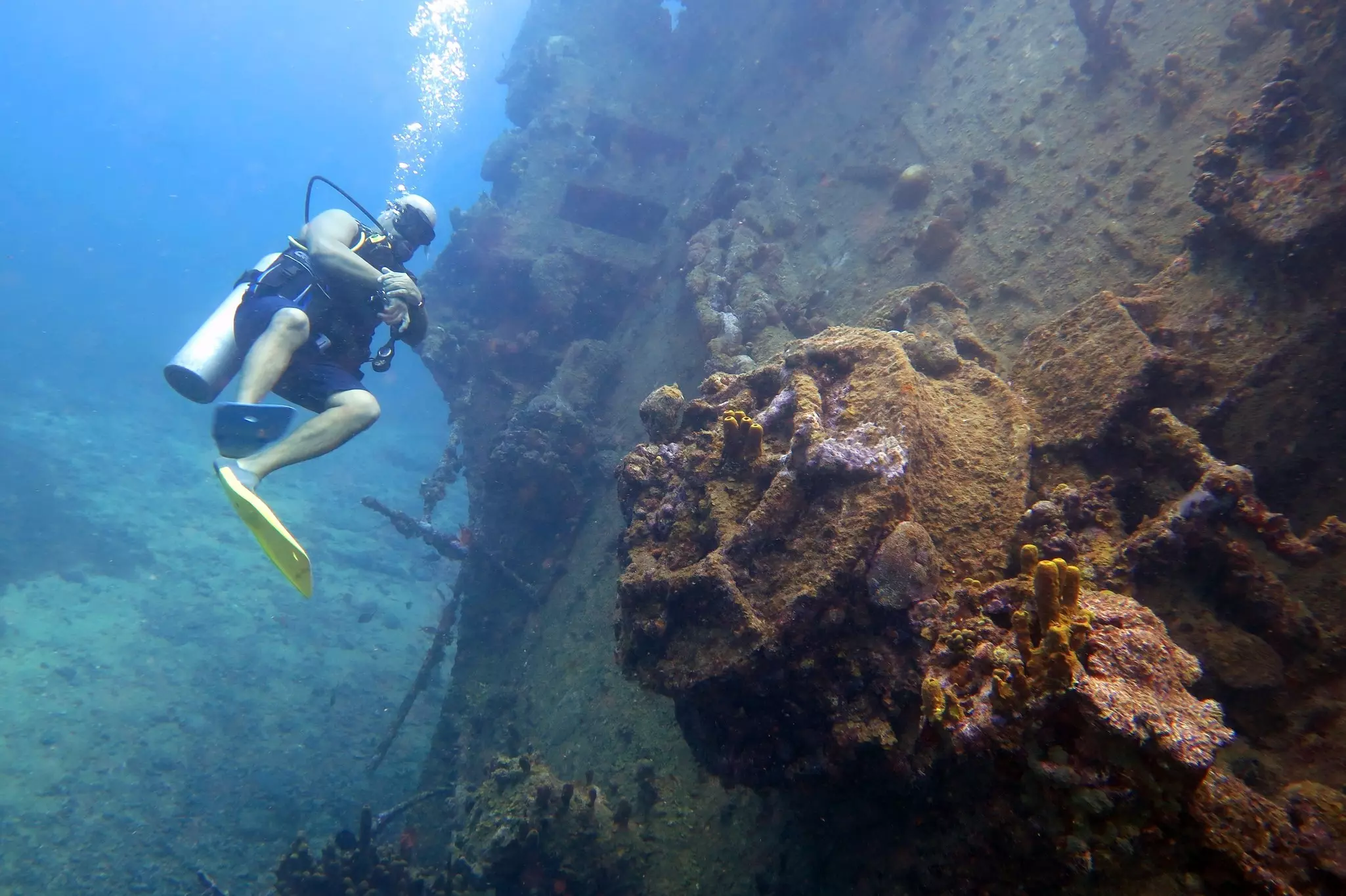
Aruba is a fairly easy scuba destination for both novice and seasoned divers. What its waters lack in spectacular coral reefs, Aruba makes up for with shipwrecks. Check out the SS Antilla, one of the Caribbean’s biggest sunken vessels, or the airplanes that were sunk to create an artificial reef.
Discover the island’s foodie side
Thanks to its proximity to South America and influences from the Netherlands, Africa, India, Venezuela and even China, Aruba’s cuisine is a unique – and uniquely tasty – mix. To get a full introduction to the island’s food, we recommend trying patacon (fried, crispy plantains), bolita di keshi (fried cheese balls), funchi (a side dish similar to polenta) and kesio (Aruban-style flan). A hop across Oranjestad on the Aruba Food Tour will give you cultural context as you snack away.
Wind down on Eagle Beach
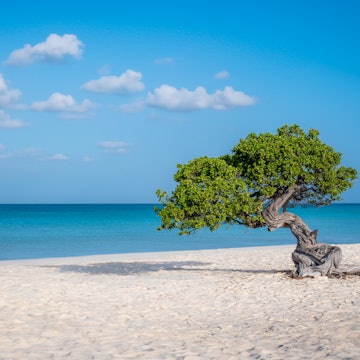
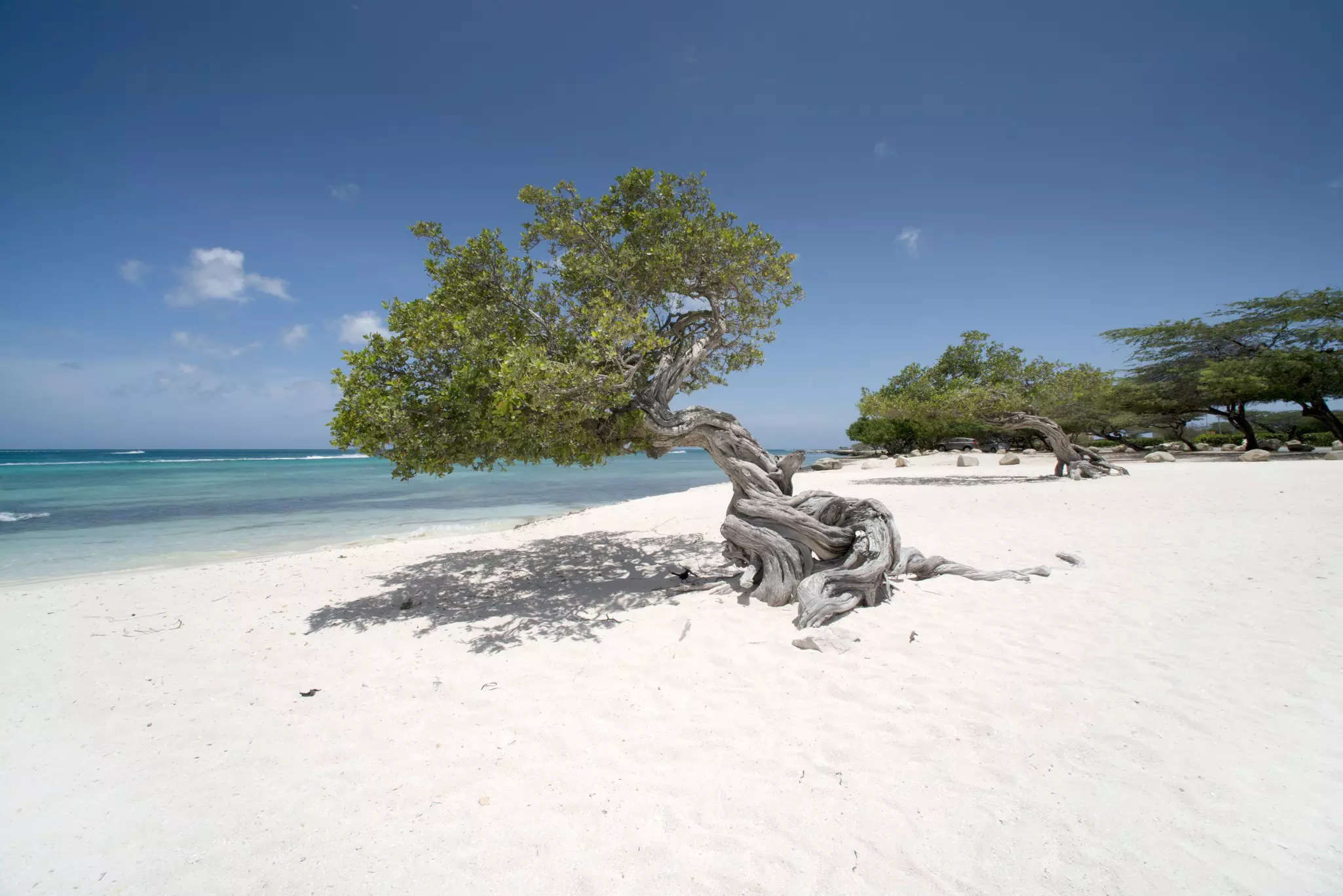
If there’s one beach not to miss in Aruba, it’s this one – a truly magical part of the island. Besides its white sand, it’s particularly famous for the gnarled fofoti trees that grow close to the water’s edge; they’re great for photo ops. If you get to Eagle Beach early, you might score one of the public palapas and spend the whole day.
Hike in Arikok National Park
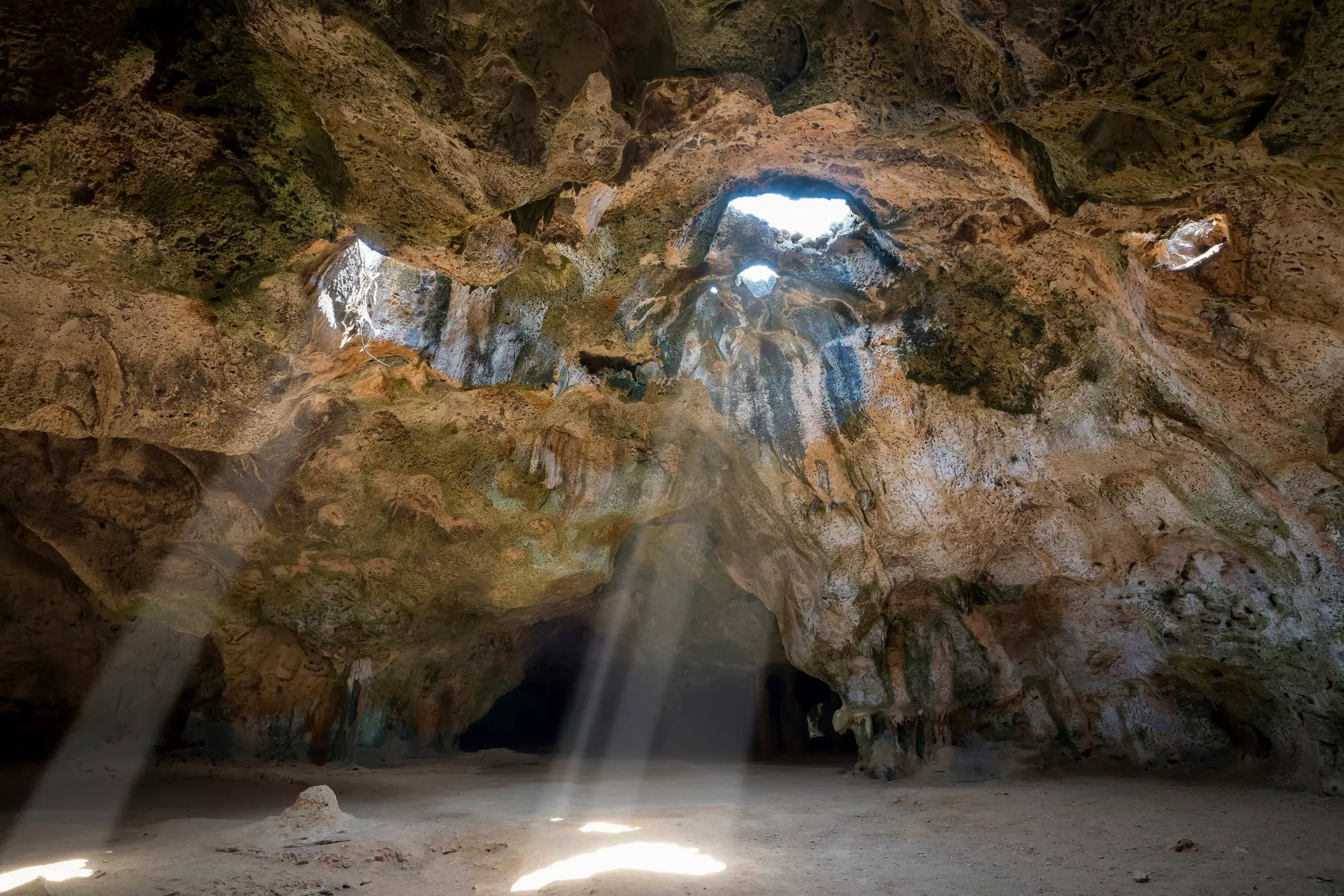
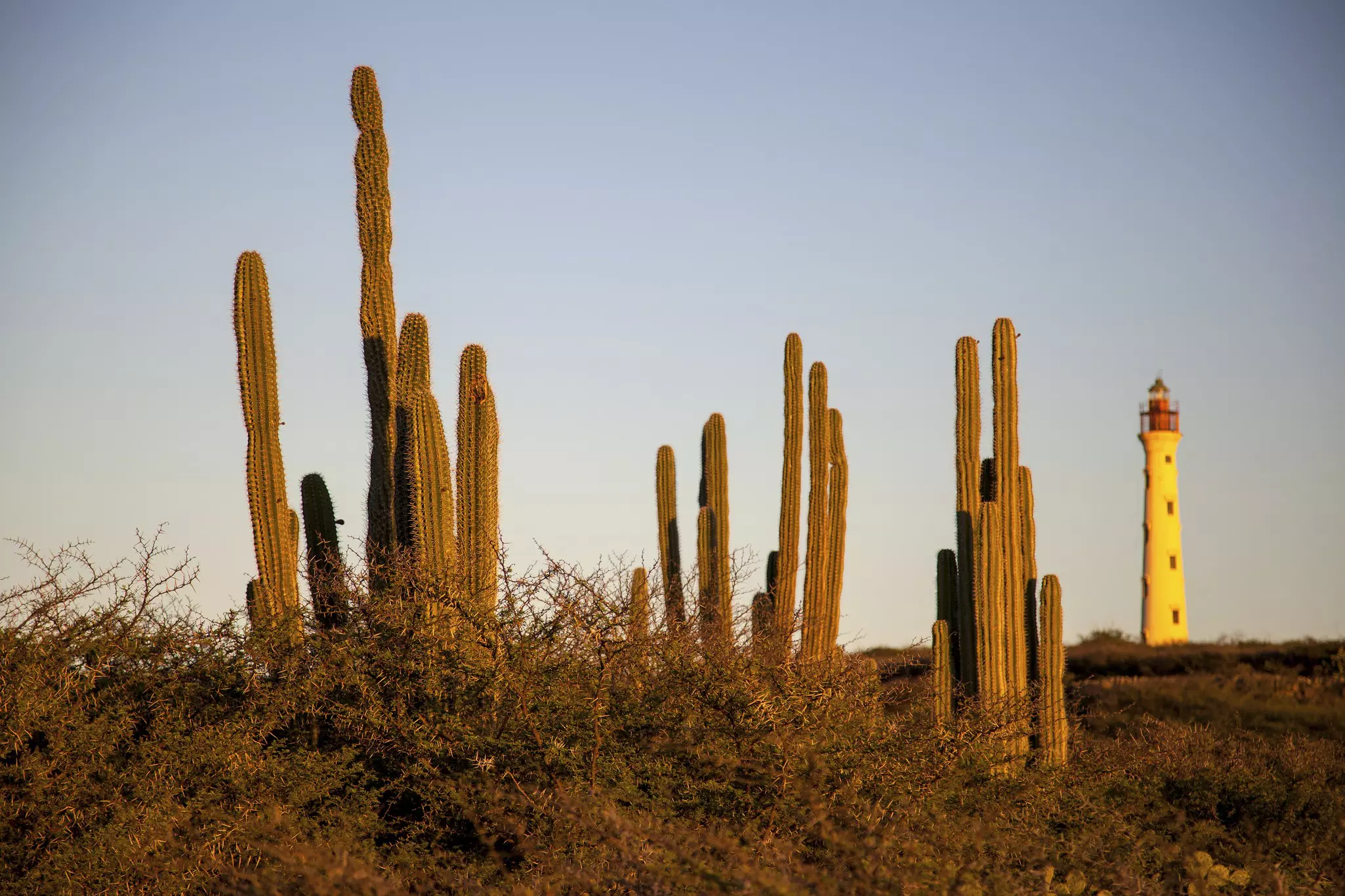
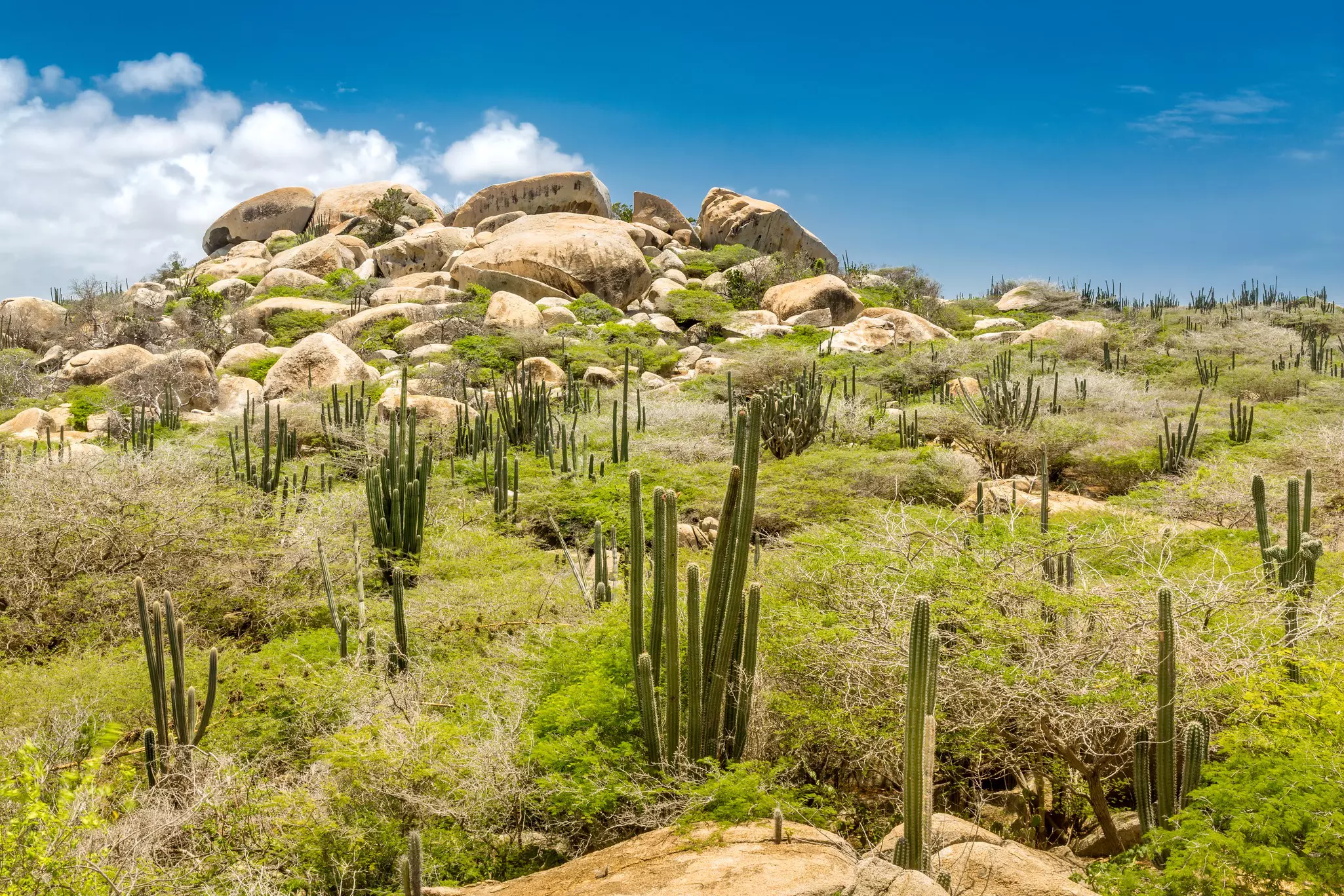
Occupying almost a fifth of Aruba’s area on the island’s eastern half, Arikok National Park is a great place to get active and up your step count. In this rugged landscapes (bring sturdy shoes), you’ll see giant cactus and other scrubby vegetation – very different from typical visions of an idyllic Caribbean island.
Watch the sunset from the California Lighthouse
As the day draws to a close, hop in your car and make your way to the north of the island to this lighthouse – and be sure to bring a beach chair so you can settle in to catch every last beam of light fading in the distance. Add a bit of sparkle by toasting to the spectacle with a cocktail or fresh coconut smoothie from the food truck in the parking lot.
My favorite thing to do in Aruba
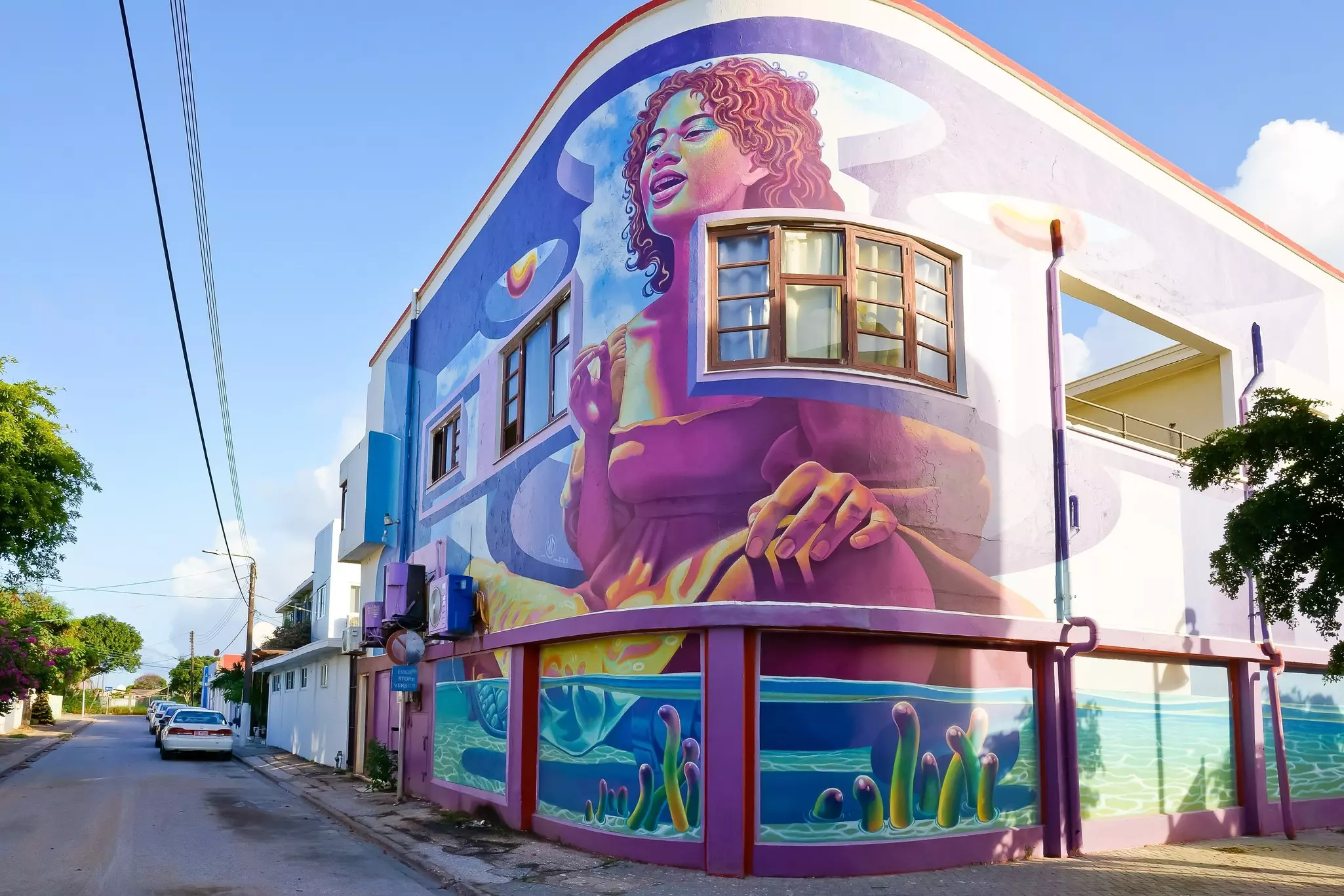
No matter where I go in the world, my research begins by googling “street art in…” And while I enjoy many types of public creativity, murals hold a special place in my heart. Lucky for me, the town of San Nicolas (just a half hour from Oranjestad) is filled with gorgeous and color-drenched murals in various styles. My favorite is one by Dutch artist Dopie. dsk: a surreal, giant lionfish in neon colors that stares down those walking by.
How much money do I need for Aruba?
Aruba presents more budget-friendly options than some other Caribbean destinations. If you are on a tighter budget, book flights well ahead, stay in a dorm or a simple accommodation, eat out only occasionally, take the public bus to get around and travel during low season.
Aruba has many lovely apartments and smaller-scale hotels, such as Kamerlingh Villa, Palms Escape Suites, Gray Door Apartments (for adults only) and Walt’s Aruba. While the beach never disappoints, why not stay inland and live more as Arubans do?
Although Aruba has ties to the Netherlands, bringing euros doesn’t really help much; the local currency is the Aruba florin (Afl). US dollars (US$) are accepted throughout the island, so bring a few.
Night in a hostel room: from Afl65 (10–20% more during high season)
Night in a self-catering apartment for two: from Afl140 (up to 200% more during high season)
Public transportation ticket: Afl4.50 for a single trip, Afl 8.75 for round trip and Afl17.50 for a day pass
Coffee: Afl7
Mojito on the beach: Afl25
Beer: Afl7
Sandwich: Afl20
Dinner for two at a midrange restaurant, including a 15% tip: Afl240
Rental of two chairs or sun beds and an umbrella: US$35–50
One-week car rental with insurance: from US$670
Sustainability fee: US$20
Do I need a visa for Aruba?
Technically speaking, the Embarkation and Disembarkation (ED) card is not a visa. Yet all visitors must apply for the ED card by filling out an online form 7 days before their arrival in Aruba. A sustainability fee of US$20 must be paid when applying for the ED card. If you miss your flight or have to reschedule your plans, you’ll have to apply for a new ED card and pay the fee again.
What language do I need to know in Aruba?
The official languages in Aruba are Papiamento (a Creole language derived from Portuguese) and Dutch. Because of the island’s location and influences, most locals speak Spanish and English as well. You’ll find it easy to get around in English but may find it helpful to learn a few key words in Papiamento:
Danki – thank you
Por fabor – please
Bon dia – good morning
Bon tardi – good afternoon
Bon nochi – good evening
Pasa un bon dia – have a good day
Can I drink the tap water in Aruba?
Yes. Aruba is a BYOWB (bring your own water bottle) kind of island. Tap water is safe to drink, and it’s absolutely unnecessary to buy bottled water in a store. You might want to bring a bigger thermos and get some ice to keep your drink cool during long days on the beach.
How much should I tip in Aruba?
Though tipping is not mandatory in Aruba, staff at most restaurants, bars, cafes, hotels and taxi companies will appreciate your tip. Some eat-in places add a service charge of 15% to the bill. Such charges don’t substitute for a tip: the service charge goes to everyone on the restaurant team, with the waitstaff usually getting the smallest share. If you were happy with your meal and the service, a tip of 10–15% is greatly appreciated.
Bring reef-safe sunscreen to Aruba
The sun is blazing hot in Aruba. Yet because of the constant and oh-so-refreshing winds, you might not notice how strong those rays truly are – so remember to reapply sunscreen throughout the day. Research a good reef-safe sunscreen and bring plenty of it for your trip, preferably as a cream or lotion as the winds blow sprays away. Also pack a hat with straps, so it doesn’t go flying off, and a rash guard or Lycra shirt. Your skin will thank you.
Pack cotton and linen for Aruba
To beat the humidity on the island, pack smart and bring comfortable, loose-fitting clothes, preferably in cotton or linen. You’ll notice that you’ll sweat a lot less and feel refreshed when the wind blows through them. Such garments are also a great way to protect your skin from the sun.
Advertisement